Sale
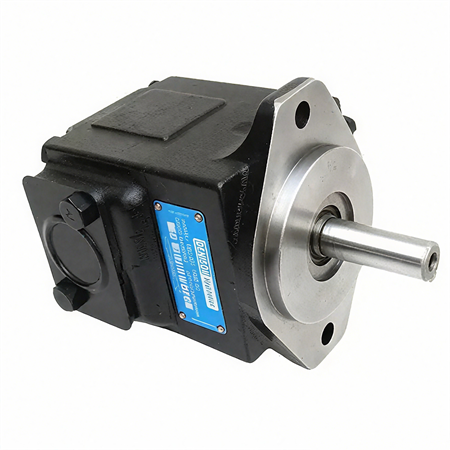


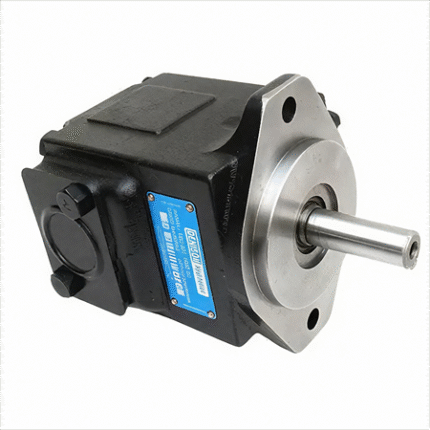
T7B/T7BS series Vane pump
T7B series: suitable for high/low pressure hydraulic circuits, supporting double or triple pump combinations, with a maximum pressure of 300 bar.
T7BS series: It is a variant or extended series of T7B, optimized for specific operating conditions.
T7D/T7DS series: high-pressure vane pump, supports SAE spline shaft, allowing the pump shaft to be directly connected to the motor shaft.
T7E/T7ES series: high-pressure cylindrical vane pump with a wide displacement range and a maximum pressure of 240 bar.
Description
Specifications of Parker Denison T7B & T7BS Series Vane Pumps
1. Basic Information
|
Item
|
Description (T7B / T7BS)
|
|
Product Series
|
Parker Denison T7B, Parker Denison T7BS Series Vane Pumps
|
|
Pump Type
|
Single Fixed Displacement Vane Pump (optimized for medium-high pressure industrial and mobile machinery applications, ideal for high-pressure small-flow clamping and low-pressure large-flow movement dual-circuit scenarios)
|
|
Core Technology
|
Denison Advanced Medium-High Pressure Vane Technology, double-lip vane design with wear-resistant coating, enhanced hydraulic balance structure, low noise design (3~5 dB lower than ordinary pumps), and strong contamination resistance to adapt to harsh working environments
|
|
Mounting Type
|
T7B: ISO 2-bolt mounting flange; T7BS: SAE B-type 2-bolt mounting flange (SAE J744 standard), both suitable for small and medium-sized motor adaptation and narrow installation space
|
|
Weight Range
|
Approx. 15kg – 28kg, varies by displacement size and optional configurations (T7BS is slightly heavier due to SAE flange structure, ensuring stable installation under high-pressure operation)
|
|
Port Configurations
|
Up to 64 port position combinations, optional port sizes (3/4″ to 1.5″), with inlet port connection up to 1.5″ 4-bolt SAE flange (J518) to adapt to medium-high pressure and dual-circuit flow requirements
|
2. Key Technical Parameters
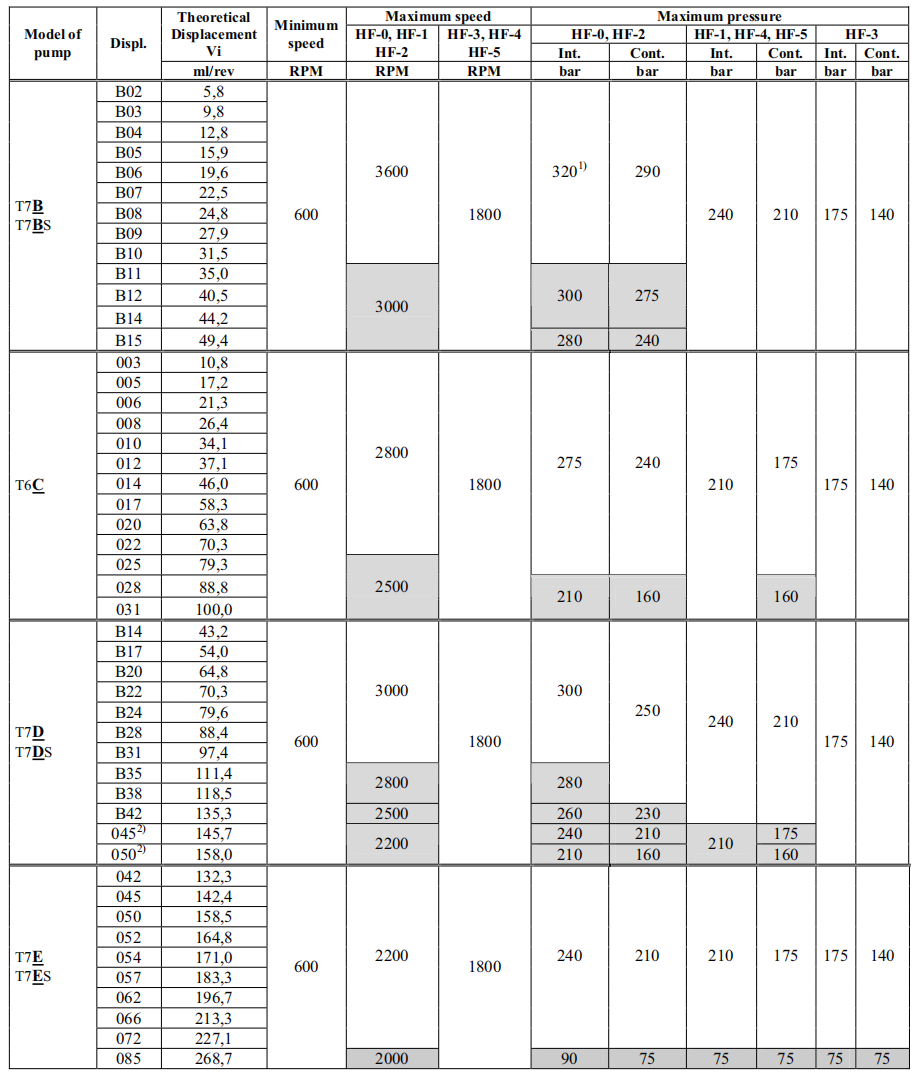
2.1 Pressure & Speed
|
Parameter
|
Value (T7B / T7BS)
|
Remarks
|
|
Maximum Intermittent Pressure
|
Up to 320 bar / Up to 320 bar
|
Intermittent operation duration: ≤ 8% of total operating time; suitable for short-term high-pressure peaks in clamping circuits and complex hydraulic systems
|
|
Maximum Continuous Pressure
|
Up to 290 bar / Up to 290 bar
|
Recommended for long-term medium-high pressure operation; ideal for high-pressure small-flow clamping scenarios, ensuring stable workpiece clamping rigidity
|
|
Speed Range
|
500 – 3000 rpm (industrial type); 35 – 2800 rpm (variable-speed servo operation); maximum speed up to 3600 rpm for short-term operation
|
Speed adjustable to meet system energy-saving needs; low-speed pressure maintaining can reach 35 rpm, suitable for servo control machines
|
|
Minimum Stable Speed
|
Approx. 35 rpm / Approx. 35 rpm
|
Ensures stable pressure maintaining at low speed, adequate lubrication of internal components, and avoids vane jamming in long-term pressure maintaining scenarios
|
|
Volumetric Efficiency
|
Typically 0.92 – 0.95 / Typically 0.92 – 0.95
|
High volumetric efficiency minimizes energy loss and system heat generation, improving the efficiency of dual-circuit hydraulic systems
|
|
Noise Level
|
≤ 71 dB(A) @ 1800 rpm / ≤ 70 dB(A) @ 1800 rpm
|
Optimized vane and cam ring profile, 3~5 dB lower than ordinary vane pumps, reducing pipeline vibration and noise pollution in workshops
|
2.2 Displacement Specifications
|
Displacement Code
|
Displacement (ml/rev)
|
Applicable Series
|
Remarks
|
|
B05
|
15.9
|
T7B, T7BS
|
Mini displacement, suitable for high-pressure small-flow clamping circuits
|
|
B08
|
25.4
|
T7B, T7BS
|
Small displacement, widely used in small milling machine tailstock clamping systems
|
|
B10
|
31.8
|
T7B, T7BS
|
Medium-small displacement, suitable for low-pressure large-flow movement circuits of milling machine tailstocks
|
|
B14
|
44.3
|
T7B, T7BS
|
Universal displacement, balanced high-pressure clamping and low-pressure movement performance
|
|
B17
|
54.4
|
T7B, T7BS
|
Medium displacement, ideal for medium-sized milling machine high-pressure clamping circuits
|
|
B20
|
66.0
|
T7B, T7BS
|
Medium-large displacement, suitable for medium-high pressure, medium-flow industrial hydraulic systems
|
|
B25
|
79.4
|
T7B, T7BS
|
Large displacement, high flow output, suitable for high-demand medium-high pressure systems
|
|
B31
|
99.2
|
T7B, T7BS
|
Maximum displacement for the series, suitable for large-scale medium-high pressure industrial and mobile machinery
|
2.3 Other Key Parameters
-
Contamination Resistance: Double-lip vane with wear-resistant coating enhances contamination resistance, adapting to machine tool cutting fluid pollution environment (NAS 6 grade or higher is recommended for optimal performance; NAS 5 grade for harsh conditions)
-
Temperature Range: -20°C ~ +85°C (T7B / T7BS); adjustable to -30°C with special low-temperature hydraulic oil, suitable for most industrial and mobile machinery environments
-
Shaft Type: Keyed shaft (SAE F) as standard; splined shaft (SAE B, 13 teeth) optional for both series, with strong torque-bearing capacity to adapt to high-pressure and variable-speed operation
-
Rotation Direction: Standard clockwise (R); counterclockwise (L) optional, stable transmission and consistent output even under variable-speed and high-pressure conditions
-
Seal Type: Standard Nitrile Rubber (NBR); Viton, EPDM or PTFE seal materials optional based on working conditions and hydraulic medium, ensuring good sealing performance under high pressure
-
Flow Rate: Up to 280 L/min @ 2000 rpm (varies by displacement size; T7BS has the same flow capacity as T7B with the same displacement, suitable for dual-circuit flow matching)
3. Applicable Medium & Environment
-
Applicable Medium: Mineral oil, biodegradable oil, water-based hydraulic fluid, etc.; recommended viscosity 12 ~ 110 cSt for stable medium-high pressure and variable-speed operation
-
Applicable Fluids: Compatible with fire-resistant fluids (phosphate esters, water glycols) and biodegradable fluids (organic esters, rapeseed oil), ensuring reliable performance in harsh industrial environments
-
Application Fields: Medium-high pressure industrial hydraulic systems, mobile machinery (e.g., injection molding machines, die-casting machines, hydraulic presses, milling machines, lathes, construction machinery, agricultural machinery, mining machinery, marine hydraulic systems), especially suitable for high-pressure small-flow clamping and low-pressure large-flow movement dual-circuit scenarios
4. Core Features
-
Medium-High Pressure Adaptability: Optimized structural design and double-lip vane technology ensure stable operation under high-pressure conditions, ideal for clamping circuits and complex hydraulic systems
-
Dual Mounting Options: T7B (ISO 2-bolt flange) and T7BS (SAE B-type 2-bolt flange) meet different industrial mounting standards, adapting to small and medium-sized motors and narrow installation spaces
-
Low Noise & High Stability: Optimized vane and cam ring profile, 3~5 dB lower noise than ordinary pumps, low pressure pulsation, ensuring stable transmission and reducing operational failures
-
Wide Speed Range: 35~3600 rpm adjustable speed, suitable for servo control machines and energy-saving systems, with stable low-speed pressure maintaining performance
-
Strong Contamination Resistance: Double-lip vane design with wear-resistant coating, adapting to harsh working environments such as machine tool cutting fluid pollution
-
Easy Maintenance: Integrated cartridge design allows quick disassembly and replacement, reducing downtime and maintenance costs, suitable for industrial mass production scenarios
Shipping & Delivery