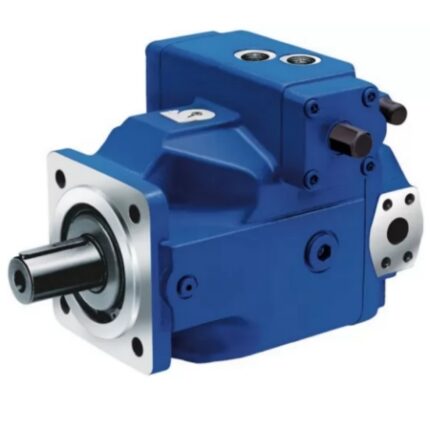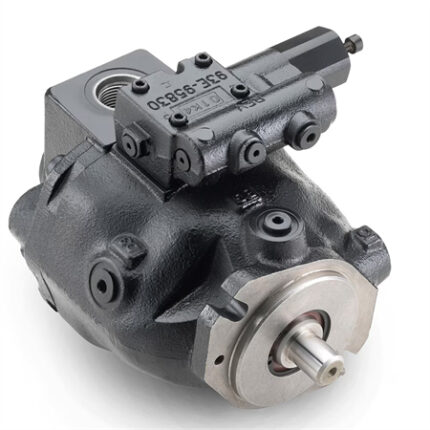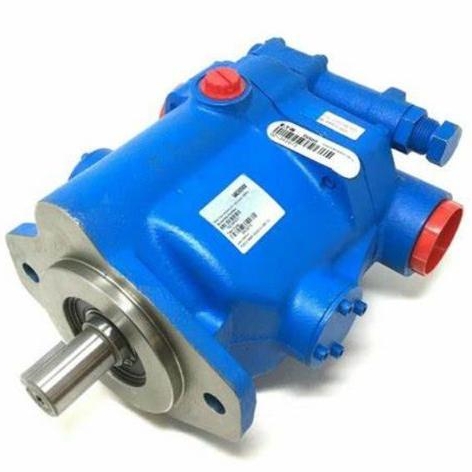

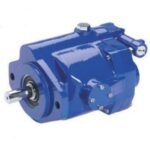


PVQ series vickers piston pump
The specifications of the Vickers PVQ series plunger pumps Common models: PVQ10, PVQ13, PVQ20, PVQ25, PVQ32, PVQ40, PVQ45, etc. Displacement range: 10.5 ml/r (0.643 in³/rev) to 45.1 ml/r (2.750 in³/rev).
The specifications of the Vickers PVQ series plunger pumps are as follows:
I. Models and Displacements
Common models: PVQ10, PVQ13, PVQ20, PVQ25, PVQ32, PVQ40, PVQ45, etc.
Displacement range: 10.5 ml/r (0.643 in³/rev) to 45.1 ml/r (2.750 in³/rev). Specific model displacements are as follows:
PVQ10: 10.5 ml/r
PVQ13: 13.8 ml/r
PVQ20: 21.1 ml/r
PVQ25: 25.2 ml/r
PVQ32: 32.9 ml/r
PVQ40: 41.0 ml/r
PVQ45: 45.1 ml/r
II. Performance Parameters
Speed:
Rated speed: 1800 rpm (select models). Maximum speed: 2500 r/min (some models can reach 3000 r/min).
Recommended speed range: 1200 r/min to 1800 r/min (to ensure optimal performance and life).
Pressure:
Rated pressure: 210 bar (3000 psi) (some models can reach 280 bar, 4060 psi).
Peak pressure: Some models can withstand short-term peak pressures (please refer to the product manual for details).
Power:
Depending on the displacement and pressure, the power range can range from a few kilowatts to hundreds of kilowatts.

III. Control Methods
Manual control: Displacement is changed by manually adjusting the swashplate angle.
Pressure-compensated control: Displacement is automatically adjusted based on system pressure to maintain a constant pressure.
Load-sensing control: Displacement is adjusted based on load demand to improve system efficiency.
Remote control: Displacement is remotely adjusted via an external signal (e.g., electrical or hydraulic). Proportional Control: Enables continuous and precise adjustment of displacement.
IV. Application Areas
Oil and Gas Industry: Drilling, oil production, and oil and gas transportation.
Manufacturing: Hydraulic systems for machine tools, production lines, and assembly lines.
Construction: Applications such as concrete pumping, material lifting, and hydraulic jacks.
Agriculture and Forestry: Hydraulic systems for tractors, harvesters, irrigation equipment, and forestry machinery.
Marine and Offshore Engineering: Hydraulic systems for ship propulsion, steering gear, anchor winches, and subsea equipment.