

Sale
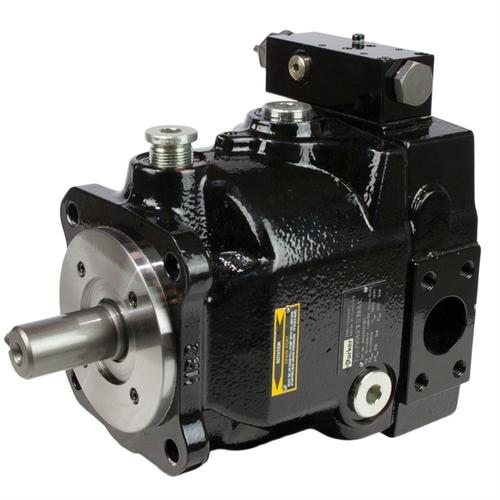
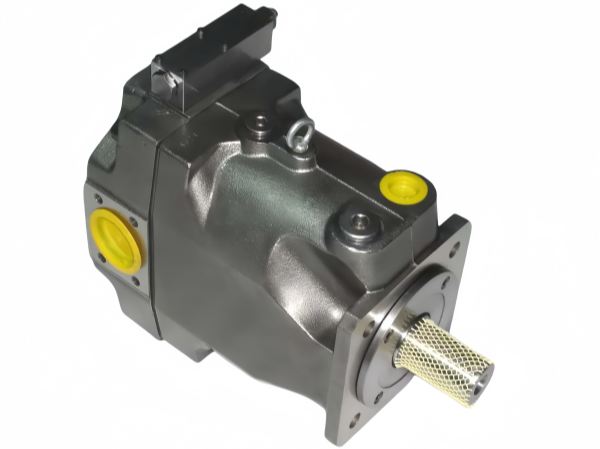


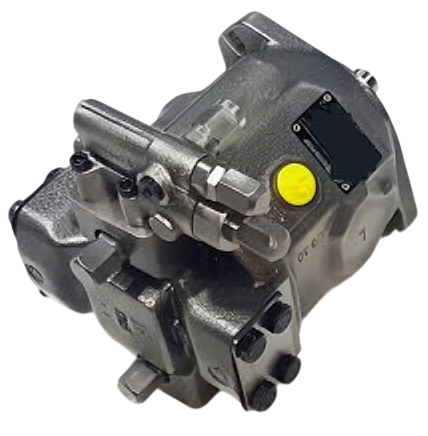
Parker PV series piston pump
Wechat: +86 13728707767
Whats app: +86 13728707767
E-mail: hyd-sales2009@outlook.com
Description
PARKER PV Series Axial Piston Pump
Product Overview
The PARKER PV Series is a range of variable displacement axial piston pumps designed based on the swashplate principle for open-circuit hydraulic systems. As a high-performance core component, this series is optimized for demanding heavy-duty industrial and marine applications, delivering exceptional power density, reliability, and operational flexibility. It is part of Parker’s premium hydraulic pump lineup, including the enhanced PVplus sub-series, which excels in high-pressure scenarios and noise reduction.
Technical Specifications
Key Performance Parameters
-
Displacement Range: 16 – 270 cm³/rev, covering a wide spectrum of flow requirements for diverse applications.
-
Operating Pressure: Continuous working pressure up to 350 bar; intermittent peak pressure up to 420 bar, ensuring high power output in heavy-load conditions.
-
Speed Range: Minimum speed of 300 rpm; maximum speed varies by model, ranging from 1800 rpm (for PV270) to 3000 rpm (for PV016), with excellent self-priming performance at high speeds.
-
Mounting & Connection: Compliant with VDMA-24560 standard. Standard mounting is ISO 3019/2 4-hole metric flange; optional ISO 3019/1 4-hole SAE flange is available. Equipped with thru-shaft capability supporting 100% nominal torque, enabling multi-pump combination installation.
Model-Specific Parameters
|
Model
|
Max Displacement (cm³/rev)
|
Flow Rate (l/min @1500 rpm)
|
Input Power (kW @1500 rpm, 350 bar)
|
Max Speed (rpm)
|
Weight (kg)
|
|---|---|---|---|---|---|
|
PV016
|
16
|
24
|
15.5
|
3000
|
19
|
|
PV023
|
23
|
34.5
|
22.5
|
3000
|
19
|
|
PV046
|
46
|
69
|
45
|
2800
|
30
|
|
PV080
|
80
|
120
|
78
|
2500
|
60
|
|
PV180
|
180
|
270
|
175
|
2200
|
90
|
|
PV270
|
270
|
405
|
263
|
1800
|
172
|

Core Features & Benefits
-
Low Noise & Stable Operation: Adopts a 9-piston design integrated with pre-compression volume technology, significantly reducing flow pulsation and noise emissions. The FEM-optimized robust cast iron housing further lowers noise levels and enhances structural durability.
-
Fast Response & Precise Control: Equipped with large variable control pistons and strong return springs, ensuring rapid response to system demands. Multiple control options are available, including pressure compensation, power regulation, load sensing, and remote pressure control, enabling accurate dynamic adjustment and improved productivity.
-
Wide Adaptability: Compatible with fire-resistant HFC fluids up to 210 bar, suitable for open-circuit systems with fire safety requirements. Excellent suction characteristics and high self-priming speeds ensure stable operation even in harsh conditions.
-
Long Service Life: The active pressure relief function of the compensation system reduces pressure peaks during zero-flow variation, minimizing wear. The heavy-duty design and optimized component matching extend service intervals and overall lifespan.
-
Modular Flexibility: Modular design and uniform mounting flanges allow easy conversion and combination of multiple pumps, reducing inventory costs and adapting to diverse system configurations.
Application Fields
The PV Series is widely used in high-demand industries and equipment, including:
-
Primary metal refining, continuous rolling mills, and scrap shears
-
Rubber & tire processing machinery and machine tools
-
Marine equipment: lifts, hoists, winches, cranes, and diesel systems
-
Construction & material handling: piling equipment, railway maintenance machinery
-
Energy sector: wind turbine pitch control and power generation systems
-
Test rigs and hydraulic power units (HPUs)
Fluid & Installation Requirements
Hydraulic Fluid
Recommended fluid: High-quality mineral-based hydraulic oil complying with DIN 51524 Part 2 (HLP). The Brugger value should be ≥30 N/mm² for general use, and ≥50 N/mm² for heavy-duty dynamic load systems (tested per DIN 51347-2).
Viscosity & Filtration
-
Operating viscosity range: 16 – 100 mm²/s (cSt); maximum starting viscosity: 800 mm²/s (cSt).
-
Fluid cleanliness: Recommended ISO 4406:1999 class 20/18/15 for general systems; class 18/16/13 for extended component lifespan.
Sealing & Temperature
Sealing material: NBR (Nitrile Rubber) with a temperature range of -40°C to 90°C. Note that the temperature at the drain port may be 25°C higher than the tank temperature.

Reviews (0)
About brand

Shipping & Delivery














Reviews
There are no reviews yet.