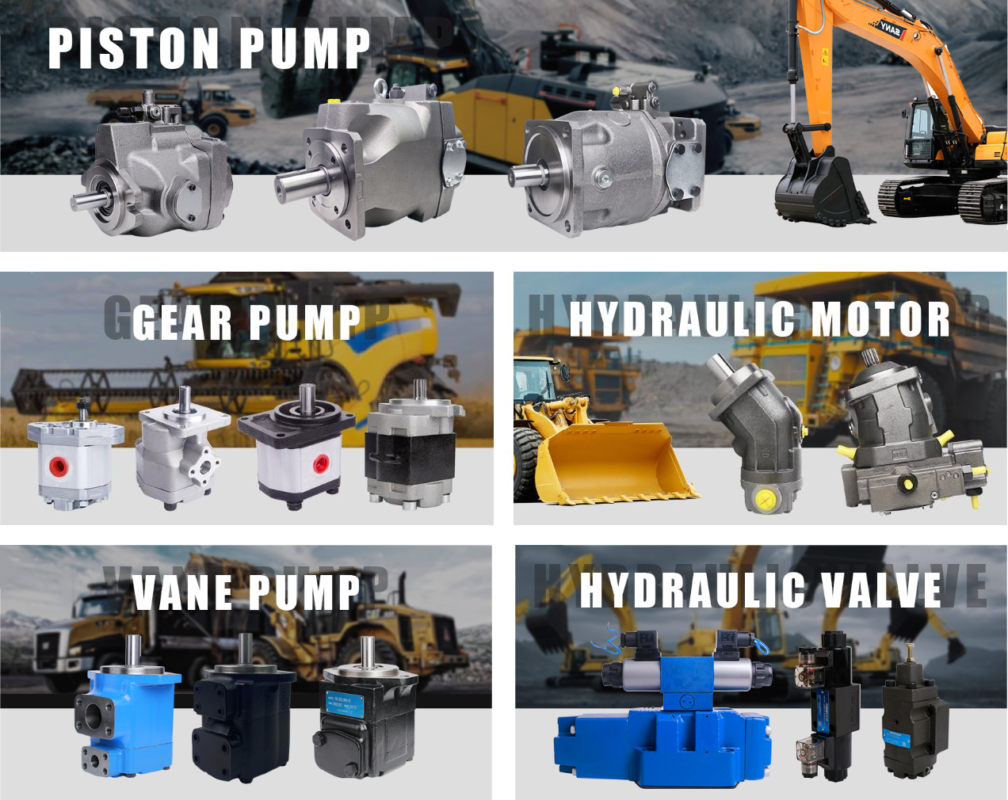
Vickers PVQ series axial piston variable pump

The Vickers PVQ Series is a medium-to-high pressure, precision-controlled axial piston variable displacement pump developed by Vickers (a renowned brand under Eaton Corporation) for precision industrial and mobile hydraulic systems. It is specially designed to provide accurate flow control, stable operation, and reliable performance for medium-pressure, medium-power application scenarios that require high precision, integrating advanced precision machining technology and optimized structural design to meet the strict requirements of precision hydraulic control in various heavy-duty working conditions.
1. Model Overview
The PVQ Series is a precision-oriented axial piston variable displacement pump featuring a swashplate structure, which serves as the core component for stepless and accurate displacement adjustment. It is available in multiple frame sizes (including PVQ10, PVQ20, PVQ32, PVQ45, PVQ63, etc.) with displacement ranges typically from 10 cc/rev to 80 cc/rev, catering to medium-pressure hydraulic systems with small to medium flow demands and high precision control requirements. Its variable displacement design allows the output flow to be accurately adjusted according to real-time system requirements, achieving optimal energy utilization and precise hydraulic control.
2. Structural Features
- Precision Medium-High Pressure Axial Piston Design: The pump is equipped with ultra-high-precision axial pistons evenly arranged around the cylinder block. Driven by the rotation of the swashplate, the pistons perform stable and smooth reciprocating motions along the cylinder block axis to complete the suction and discharge of hydraulic oil. This optimized design ensures high volumetric efficiency (up to 97% under rated conditions) and a compact structure, making it suitable for installation in limited space of various precision equipment. The precision fit between pistons and cylinder bores (realized by advanced machining technology) further improves the pump’s control accuracy and leakage resistance.
- Precision Variable Displacement Mechanism: Displacement adjustment is realized by changing the swashplate angle, which can be controlled manually, hydraulically, or electro-hydraulically (standard configuration for most models). It supports pressure compensation, flow compensation, and precision load-sensing control (optional), enabling the pump to automatically and accurately adjust displacement based on system pressure and flow demands, thereby reducing energy loss, maintaining stable system operation, and ensuring precise flow output.
- Durable and Precision Robust Construction: The cylinder block, pistons, and swashplate are fabricated from high-strength alloy steel, and underwent precision machining, heat treatment, and surface hardening processes, ensuring superior wear resistance, corrosion resistance, and medium-high pressure bearing capacity. The pump housing is made of high-quality cast iron with optimized structural design, providing good rigidity and shock absorption to adapt to common harsh working environments while ensuring the stability of precision components during operation.
- Integrated Precision Valve Group: All models come standard with integrated precision pressure relief valves, check valves, and flow control valves, reducing the need for additional hydraulic components and simplifying system layout. Optional configurations include high-precision electro-proportional control valves, load-sensing valves, and anti-cavitation valves, which can be customized to meet the specific precision control requirements of different application scenarios.
3. Working Principle
When the pump’s drive shaft is connected to a prime mover (such as an electric motor or engine) and starts rotating, the cylinder block rotates synchronously with the drive shaft. Under the combined action of centrifugal force and the spring force of the return plate, the pistons are tightly attached to the surface of the swashplate. Due to the inclined angle of the swashplate, the pistons reciprocate linearly in the cylinder bores during the rotation of the cylinder block, completing the cyclic process of oil suction and discharge. The precision fit of components ensures that the displacement adjustment is accurate and the flow output is stable throughout the working cycle.
During the half-cycle where the piston moves outward (away from the center of the cylinder block), the volume of the cylinder bore increases, forming a negative pressure, and hydraulic oil is sucked into the cylinder bore through the suction port. During the other half-cycle where the piston moves inward (towards the center of the cylinder block), the volume of the cylinder bore decreases, the hydraulic oil is compressed to medium-high pressure (consistent with the rated pressure requirement of the system), and then discharged from the discharge port. By adjusting the angle of the swashplate, the stroke of the pistons can be changed, thereby altering the pump’s displacement and realizing stepless and precise adjustment of output flow. The pressure generated during the compression process follows the basic pressure formula P=F/A, ensuring stable and controllable pressure output.
4. Performance Advantages
- Excellent Medium-High Pressure and Precision Performance: The PVQ Series is designed for medium-high pressure operation, with a rated working pressure of up to 35 MPa and a maximum intermittent pressure of 42 MPa (depending on the model), which is suitable for most conventional medium-pressure hydraulic systems. Its core advantage lies in high precision flow control, with flow adjustment accuracy up to ±1%, meeting the strict requirements of precision hydraulic control scenarios. The rated pressure of the pump is designed in line with the definition of nominal pressure, ensuring long-term stable operation within the rated range without failure.
- High Efficiency and Energy Saving: The optimized hydraulic circuit design, precision-machined components, and advanced variable control mechanism ensure high volumetric efficiency and mechanical efficiency, effectively reducing energy loss and improving the overall energy utilization rate of the hydraulic system. The precise displacement adjustment avoids unnecessary energy waste caused by excessive flow output.
- Stable, Quiet and Low Vibration Operation: The swashplate adopts a hydraulic balance design, and the precision dynamic balance treatment of the rotating components minimizes vibration and noise during operation, ensuring smooth and reliable performance even under normal high-speed and medium-high pressure working conditions. This stability is crucial for protecting precision hydraulic components and ensuring the accuracy of the entire hydraulic system.
- Long Service Life and Strong Reliability: The adoption of high-quality materials, advanced manufacturing processes, and effective lubrication and cooling systems significantly extends the service life of the pump. The modular design of key components also enhances the pump’s reliability and reduces the risk of failure, lowering maintenance costs. The precision heat treatment of components further improves their wear resistance and service life.
- Easy Maintenance and Wide Adaptability: The pump adopts a modular structure, which is convenient for disassembly, inspection, and maintenance. Wear parts (such as pistons, seals, and bearings) are standardized and easy to replace, reducing downtime. It also has strong anti-pollution capacity and can adapt to common harsh working environments such as high temperature and high humidity, while maintaining stable precision performance.
5. Application Fields
The Vickers PVQ Series axial piston variable displacement pump is widely used in medium-pressure, medium-power, and high-precision hydraulic systems in various industries, including but not limited to:
- Industrial machinery: Precision injection molding machines, precision extruders, medium-duty precision presses, precision machine tools, and high-precision hydraulic stations that require accurate flow control.
- Mobile equipment: Medium-sized precision construction machinery (small precision excavators, precision loaders), agricultural precision machinery, and light precision mining machinery.
- Other fields: Precision marine hydraulic systems, ordinary engineering equipment that requires precision control, metallurgical auxiliary precision equipment, and light oilfield precision machinery.
6. Installation and Maintenance Notes
- The pump should be installed on a solid, flat, and vibration-damping base to avoid vibration interference, which may affect the precision performance of the pump. The drive shaft must be accurately aligned with the prime mover’s shaft to prevent misalignment, which may cause bearing damage and oil leakage.
- Use clean hydraulic oil that meets the specified grade (recommended ISO VG 46 or VG 68), and ensure the hydraulic system is equipped with a high-precision filter (filtration accuracy ≤ 10 μm) to prevent impurities from entering the pump and damaging precision components, which may affect the control accuracy and service life of the pump.
- During operation, regularly check the oil level, oil temperature (normal working temperature: 40℃ – 80℃), and operating noise. If abnormal phenomena such as oil leakage, excessive noise, overheating, or pressure fluctuation occur, stop the machine immediately for inspection and troubleshooting to avoid damage to precision components. Special attention should be paid to the stability of pressure and flow to ensure the precision control effect of the hydraulic system.
- Perform regular maintenance in accordance with the operating manual, including replacing hydraulic oil (every 2000 – 4000 working hours), cleaning the filter, inspecting the wear of key precision components (pistons, swashplate, seals, etc.), and tightening loose fasteners. When replacing wear parts, use genuine accessories to ensure the precision fit and performance of the pump.
With its excellent medium-high pressure performance, high precision control, high efficiency, reliability, and wide adaptability, the Vickers PVQ Series axial piston variable displacement pump has become the preferred choice for hydraulic system designers and users in medium-pressure, precision-controlled conventional heavy-duty application fields.