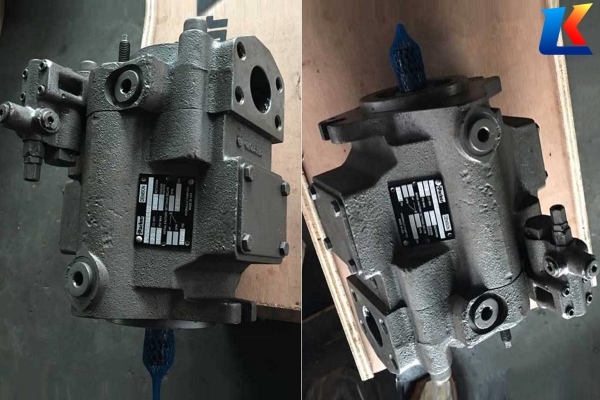
Parker DENISON Goldcup pump Road Roller Hydraulic pump
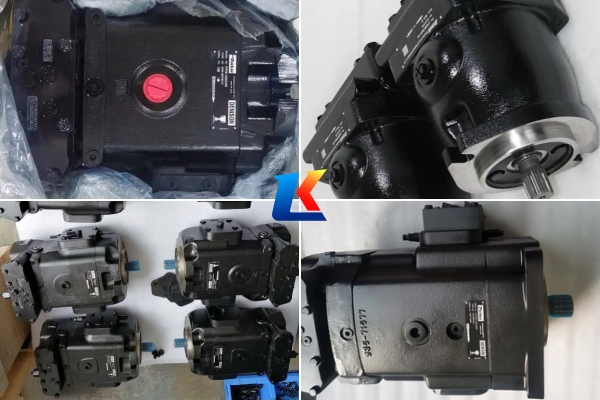
Parameters of Parker DENISON Goldcup Pump for Road Roller Hydraulic Applications
1. Model Interpretation
Parker DENISON Goldcup (GOLD CUP) series pumps are heavy-duty variable displacement axial piston pumps specifically designed for high-pressure, high-efficiency hydraulic systems in road roller applications. These pumps feature a robust swash plate design, integrated control functions, and high power density, making them ideal for providing reliable hydraulic power to road roller vibration systems, steering mechanisms, and travel drives. The Goldcup designation represents Parker’s premium closed-circuit pump technology, originally developed by Denison, offering exceptional durability and performance in demanding construction environments.
1.1 Model Coding Rules (Goldcup Series for Road Rollers)
-
P: Series code, indicating Parker DENISON Goldcup axial piston pump/motor series.
-
6/7/8/11/14/24/30: Size code, representing the nominal displacement range (98.3-501.4 cm³/rev):
-
P6: 98.3 cm³/rev
-
P7: 118.8 cm³/rev
-
P8: 131.1 cm³/rev
-
P11: 180.3 cm³/rev
-
P14: 229.5 cm³/rev
-
P24: 403.1 cm³/rev
-
P30: 501.4 cm³/rev
-
-
S/P/F: Circuit type code:
-
S: Open circuit (for road roller travel drives and auxiliary systems)
-
P: Closed circuit (for road roller vibration systems requiring bidirectional operation)
-
F: Fixed displacement (for specific constant flow applications)
-
-
Control Code: Indicating the specific control mechanism optimized for road roller applications:
-
7: Load sensing control (adjusts flow based on system demand, improving energy efficiency)
-
9: Pressure compensator control (maintains constant pressure for vibration systems)
-
E: Electro-hydraulic proportional control (for precise electronic control of road roller functions)
-
-
Additional Codes: Complete model typically includes rotation direction (R/L), mounting type, and design variations.
Note: Goldcup pumps for road rollers are primarily available in open circuit (S-type) for travel drives and closed circuit (P-type) for vibration systems, with load sensing or pressure compensator control options to optimize performance and energy efficiency in construction applications.
2. Technical Parameters (Road Roller Specific)
|
Parameter Item
|
Typical P14S7R (Open Circuit)
|
Typical P14P9R (Closed Circuit)
|
Unit
|
|---|---|---|---|
|
Nominal Displacement
|
229.5
|
229.5
|
cm³/rev
|
|
Pump Type
|
Variable Displacement Axial Piston Pump (Swash Plate Design)
|
–
|
|
|
Circuit Type
|
Open Circuit
|
Closed Circuit
|
–
|
|
Control Type
|
Load Sensing Control (7-type)
|
Pressure Compensator Control (9-type)
|
–
|
|
Continuous Operating Pressure
|
350 (5000 psi)
|
350 (5000 psi)
|
bar
|
|
Peak Operating Pressure
|
420 (6000 psi)
|
420 (6000 psi)
|
bar
|
|
Rated Speed (Full Stroke)
|
2400
|
2400
|
rpm
|
|
Maximum Speed (Reduced Stroke)
|
3000
|
3000
|
rpm
|
|
Minimum Speed
|
600
|
600
|
rpm
|
|
Maximum Flow Rate (at Rated Speed)
|
550.8
|
550.8
|
L/min
|
|
Displacement Adjustment Range
|
0-100% of nominal displacement
|
0-100% of nominal displacement
|
–
|
|
Operating Temperature Range
|
-20 ~ 95
|
-20 ~ 95
|
°C
|
|
Applicable Fluids
|
Petroleum-based hydraulic oil, anti-wear hydraulic oil (ISO VG 32-68), biodegradable oils (optional)
|
–
|
|
|
Oil Cleanliness Requirement
|
NAS 6 or higher (≥5 μm filtration)
|
–
|
|
|
Weight (Typical)
|
45
|
48
|
kg
|
3. Product Features for Road Roller Applications
3.1 Core Features
-
Robust Design: Heavy-duty construction with reinforced cylinder block bearings and hydraulic control rocker cam design, ensuring durability in harsh road construction environments.
-
High Power Density: Compact size with high output power, ideal for installation in space-limited road roller engine compartments.
-
Advanced Control Options: Load sensing and pressure compensator controls optimize energy efficiency and performance for road roller vibration and travel systems.
-
Low Noise Operation: Special design reduces operating noise, improving operator comfort during long working hours.
-
High Controllability: Precise flow and pressure adjustment for smooth operation of road roller functions, including vibration frequency control and travel speed regulation.
-
High Reliability: Proven design with long service life (≥12,000 hours) under continuous heavy load conditions, reducing maintenance costs for road construction companies.
-
Versatile Mounting Options: Available in flange and foot mounting configurations to suit different road roller designs.
3.2 Road Roller Specific Advantages
-
Vibration System Optimization: Closed circuit (P-type) models provide bidirectional operation and precise control of vibration frequency and amplitude, essential for effective compaction of different soil types.
-
Travel Drive Efficiency: Open circuit (S-type) models with load sensing control adjust flow based on traction demand, reducing fuel consumption during road roller operation.
-
Shock and Vibration Resistance: Reinforced internal components withstand the high shock loads generated by road roller compaction operations.
-
Dust and Moisture Protection: Sealed design with IP65 protection rating, suitable for outdoor construction environments.
-
Easy Maintenance: Modular design allows for quick replacement of wear parts, minimizing downtime for road roller fleets.
4. Application Fields in Road Rollers
Parker DENISON Goldcup pumps are widely used in various types of road rollers, providing hydraulic power for critical functions:
-
Single Drum Vibratory Rollers: Closed circuit (P-type) models for vibration systems, open circuit (S-type) models for travel drives and steering mechanisms.
-
Double Drum Vibratory Rollers: Dual pump configurations for independent control of front and rear drum vibration systems.
-
Combination Rollers: Multi-functional pumps for vibration, travel, and compaction control in mixed soil and asphalt applications.
-
Static Rollers: Open circuit models for travel drives and hydraulic steering systems.
-
Landfill Compactors: Heavy-duty P30 models for high torque requirements in waste compaction applications.
5. Typical Road Roller Model Variations
|
Model
|
Nominal Displacement
|
Circuit Type
|
Control Type
|
Max. Flow (at Rated Speed)
|
Road Roller Application
|
|---|---|---|---|---|---|
|
P14S7R1B9A2B002B0
|
229.5 cm³/rev
|
Open Circuit
|
Load Sensing
|
550.8 L/min
|
Single drum roller travel drive
|
|
P14P9R1E9A2B002B0
|
229.5 cm³/rev
|
Closed Circuit
|
Pressure Compensator
|
550.8 L/min
|
Double drum roller vibration system
|
|
P30S7R1B9A2B002B0
|
501.4 cm³/rev
|
Open Circuit
|
Load Sensing
|
1203.4 L/min
|
Landfill compactor travel drive
|
|
P11P7R1E9A2B002B0
|
180.3 cm³/rev
|
Closed Circuit
|
Load Sensing
|
432.7 L/min
|
Small to medium-sized roller vibration system
|
6. Installation and Operation Notes for Road Rollers
-
Before installation, verify the pump model, circuit type, control mechanism, and rotation direction match road roller hydraulic system requirements.
-
Mount the pump on a rigid base using high-strength bolts and proper torque specifications (refer to Parker technical documentation) to withstand road roller vibration.
-
Ensure accurate alignment between pump shaft and prime mover (engine) shaft (concentricity ≤ 0.1 mm) to prevent shaft damage from road roller operation.
-
Use a heavy-duty flexible coupling designed for high vibration applications to connect the pump and prime mover.
-
Connect hydraulic lines correctly: pressure port (P) to system pressure line, tank port (T) to oil tank line, and control ports (LS/PC) to respective control system lines; reverse connection will cause pump failure.
-
Fill the pump with hydraulic oil compatible with road roller operating conditions before starting to ensure proper lubrication.
-
Prime the pump by rotating the shaft manually (5-10 revolutions) to remove air from the pump and hydraulic lines before initial start-up.
-
Start the pump at low speed (≤1000 rpm) and no load, gradually increasing speed and load to rated values to avoid sudden pressure changes.
-
Maintain hydraulic oil cleanliness at NAS 6 level or higher, and install a high-precision filter (≥5 μm) in the system to prevent damage from construction site contaminants.
-
Control hydraulic oil temperature within -20°C to 95°C; install an oil cooler if operating in high-temperature environments.
-
Regularly inspect the pump for oil leakage, abnormal noise, and pressure fluctuations during road roller operation; stop immediately if abnormalities are detected.
-
When adjusting flow or pressure for road roller functions, follow Parker technical manual and ensure the system is in a safe state.
-
Use only genuine Parker replacement parts to maintain performance and reliability; non-genuine parts may cause reduced efficiency and premature failure.
-
Do not disassemble the pump without authorization; consult Parker technical manual or professional maintenance personnel for service.
-
Store the pump in a dry, clean, and well-ventilated environment when not in use, protecting it from dust and moisture common in construction sites.