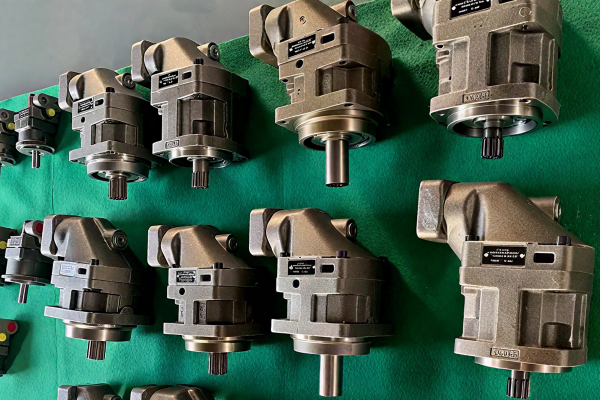
Parker hydraulic motor F12-060-RF-IV-K-000-000, F12-080-MF-IV-D-000-000
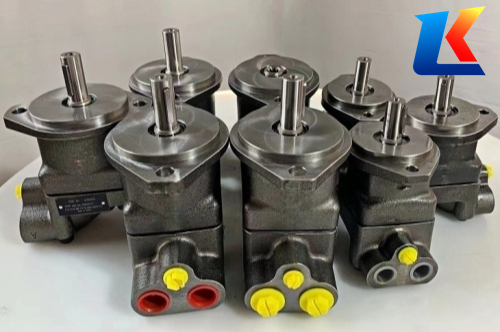
Performance comparison and analysis of Parker hydraulic motor F12-060-RF-IV-K-000-000 and F12-080-MF-IV-D-000-000
- Comparison of core performance parameters
Parameters F12-060-RF-IV-K-000-000 F12-080-MF-IV-D-000-000
Displacement is about 59.8 cc/rev, about 80.4 cc/rev
Maximum intermittent pressure 480 bar (7000 psi) 480 bar (7000 psi)
Continuous working pressure 420 bar 420 bar
Maximum speed 5800 rpm (intermittent) 5300 rpm (intermittent)
Volumetric efficiency up to 98% up to 98%
Weight about 18.6 kg about 25.7 kg
Torque (at 100 bar) about 94.9 Nm about 127.6 Nm - Structure and design advantages
Compact and lightweight
Both are designed with a 40° shaft-cylinder angle, which is 30% smaller in size and 20%-30% lighter in weight than traditional motors, making it easy to install in construction machinery (such as excavators, loaders) or agricultural equipment with limited space.
Vibration and impact resistance
Equipped with heavy-duty cylindrical roller bearings, it can withstand shock loads and torsional vibration of up to 15G, and is suitable for high vibration conditions such as mine slagging machines and shield machines.
Low leakage and high performance
The laminated piston ring design reduces internal leakage, and the volumetric efficiency is ≥95%, which is more than 18% energy-saving than ordinary motors; the spherical plunger structure ensures dynamic sealing during high-speed operation at 7300 rpm. - Adaptability of application scenarios
F12-060-RF-IV-K-000-000
Advantages: The displacement is small (59.8 cc/rev), suitable for small and medium-sized equipment (such as small agricultural machinery, light conveyor belt drive), and it performs well in low-speed and high-torque demand scenarios (such as hill climbing, heavy-duty start-up).
Typical applications: tractor hydraulic system, small road machinery.
F12-080-MF-IV-D-000-000
Advantages: The displacement is larger (80.4 cc/rev) and the torque output is increased by 34.5% (127.6Nm vs 94.9Nm), which is suitable for medium and large-scale equipment (such as mine slagging machines, industrial production line transmission devices).
Typical applications: mining equipment walking system, injection molding machinery mold closing drive.
Fourth, environmental adaptability
Temperature tolerance
Both support the oil temperature range of -40℃ to 115℃, and are suitable for extremely cold mining areas (such as Siberia) or high-temperature die-casting environments (such as auto parts production).
Pollution tolerance
Adaptive gap control technology allows stable operation at NAS level 9 (ISO 4406 20/18/15) pollution level, reducing failures caused by insufficient oil cleanliness.
V. Maintenance and life
Key maintenance nodes
2000 hours: replace the fluorine rubber parts of the shaft seal and clean the piston ring card slot.
5000 hours: calibrate the preload of the distribution disc and detect the bearing clearance (>0.1mm is replaced).
Design life
Under the conditions of oil cleanliness ≤9, installation coaxiality ≤0.05mm, and precise temperature chain control (main oil circuit ≤80℃, oil drain ≤115℃), the design life can reach 20,000 hours.
- Selection suggestions
Choose F12-060-RF-IV-K-000-000: If the equipment space is limited, lightweight design is required, or the application scenario is low-speed and high-torque (such as agricultural harvesters, small construction machinery).
Choose F12-080-MF-IV-D-000-000: If you need a higher torque output (such as mining equipment, industrial production lines), or if the equipment is under heavy load and requires long-term high-load operation.