Hydraulic pumps for machine tools
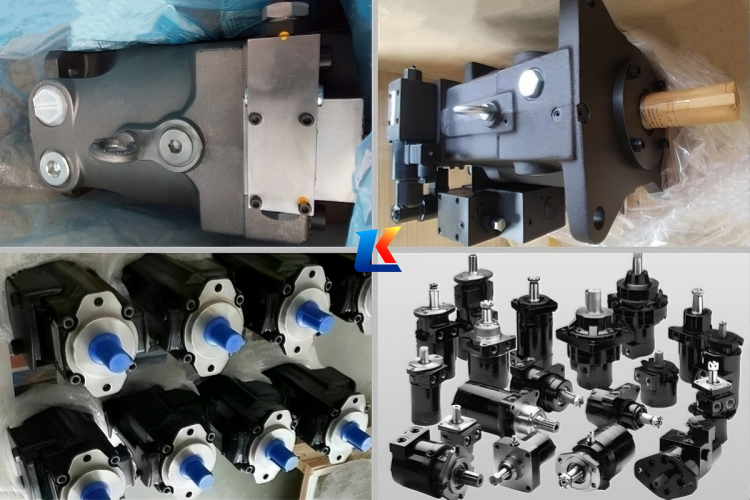
Series and Specifications/Models of Hydraulic Pumps for Machine Tool Equipment
Hydraulic pumps are the core power components of machine tool hydraulic systems, responsible for converting mechanical energy into hydraulic energy to drive the normal operation of machine tools. According to the working principle, structure and application scenarios! the hydraulic pumps commonly used in machine tool equipment are mainly divided into three major series: gear pump series, vane pump series and piston pump series. Each series has corresponding specifications and models, which are distinguished by parameters such as displacement, pressure rating, installation type and connection mode.
1. Gear Pump Series (Gear Pumps)
Gear pumps are widely used in medium and low-pressure machine tool hydraulic systems due to their simple structure, small size, low cost and reliable operation. They are mainly divided into external gear pumps and internal gear pumps, with the external gear pump being the most common type in machine tools.
1.1 Common Series and Specifications
- External Gear Pump Series: CB series, CBN series, CBG series, etc. These series are the standard configuration for general machine tools (such as lathes, milling machines, drilling machines). The specifications are mainly distinguished by displacement (unit: mL/r) and pressure rating (unit: MPa).
- Examples of models: CB-B10, CB-B16, CB-B25, CBN-E310, CBG2080. Among them, “CB” represents the external gear pump, “B” represents the basic structure type, “10” indicates a displacement of 10 mL/r; “CBN” is the high-pressure external gear pump, “E” represents the installation type, and “310” indicates a displacement of 10 mL/r; “CBG” is the high-pressure gear pump for heavy-duty machine tools, “2080” indicates a displacement of 80 mL/r.
- Internal Gear Pump Series: IGP series, GPY series, etc. They have the advantages of low noise and smooth operation, and are suitable for precision machine tools (such as grinding machines, precision lathes). Common models: IGP-16, GPY-25, with displacements ranging from 5 mL/r to 100 mL/r and pressure ratings of 10-20 MPa.
2. Vane Pump Series (Vane Pumps)
Vane pumps have the characteristics of uniform flow, low noise, high volumetric efficiency and stable operation, and are widely used in medium-pressure, high-precision machine tool hydraulic systems (such as machining centers, CNC lathes, and planers). They are divided into single-acting vane pumps and double-acting vane pumps, with double-acting vane pumps being the main type used in machine tools.
2.1 Common Series and Specifications
- Double-Acting Vane Pump Series: PV2R series, V series, YB series, etc. These series are suitable for hydraulic systems that require stable flow and low noise. The specifications are mainly determined by displacement, pressure rating and installation dimension.
- Examples of models: PV2R1-17, PV2R2-41, V10-1P, YB1-25. “PV2R” is a common double-acting vane pump series, “1” and “2” represent the frame size, “17” and “41” indicate displacements of 17 mL/r and 41 mL/r respectively; “V” series is a high-efficiency vane pump, “10” indicates the frame size, “1P” represents the installation mode; “YB1” is a standard double-acting vane pump, “25” indicates a displacement of 25 mL/r.
- Single-Acting Vane Pump Series: PV1R series, etc. They are mainly used in hydraulic systems that require variable flow, such as machine tool feed mechanisms. Common models: PV1R1-8, PV1R2-19, with displacements of 8-50 mL/r and pressure ratings of 16-25 MPa.
3. Piston Pump Series (Piston Pumps)
Piston pumps have the advantages of high pressure rating, high volumetric efficiency, large power range and adjustable flow, and are suitable for high-pressure, high-power machine tool hydraulic systems (such as heavy-duty CNC machine tools, forging machines, and machining centers with high load requirements). They are divided into axial piston pumps and radial piston pumps, with axial piston pumps being the most widely used in machine tools.
3.1 Common Series and Specifications
- Axial Piston Pump Series: A4VSO series, PVH series, 10SCY series, etc. These series are high-pressure pumps with strong adaptability and are widely used in heavy-duty and precision machine tools. The specifications are distinguished by displacement, pressure rating, control mode (such as manual control, electric control, hydraulic control) and installation type.
- Examples of models: A4VSO125DR/30R-PPB13N00, PVH074R01AA10A250000002001AB010A, 10SCY14-1B. “A4VSO” is a variable axial piston pump, “125” indicates a displacement of 125 mL/r, “DR” represents the control mode; “PVH” is a high-pressure axial piston pump, “074” indicates the frame size; “10SCY14-1B” is a quantitative axial piston pump, “10” indicates the pressure rating (10 MPa), “14” indicates the displacement code, “1B” represents the installation type.
- Radial Piston Pump Series: CR series, etc. They have the characteristics of high pressure and large torque, and are suitable for special machine tools with high load requirements. Common models: CR10-1, CR20-2, with pressure ratings up to 31.5 MPa and displacements of 10-50 mL/r.
4. Key Notes on Specifications and Models
The specification and model of hydraulic pumps for machine tools usually include the following core information: series code (indicating the type and structure of the pump), displacement (determining the flow rate of the pump), pressure rating (determining the working pressure of the pump), installation type (flange installation, foot installation, etc.), control mode (for variable pumps), and connection size (inlet and outlet ports). When selecting a hydraulic pump, it is necessary to match the parameters such as the working pressure, flow rate and installation space of the machine tool hydraulic system to ensure the stable and efficient operation of the system.