NACHI forging press PZS series variable piston pump
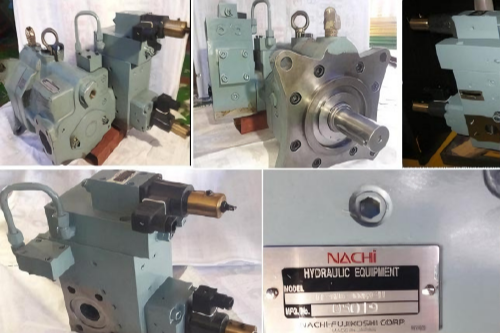
NACHI Forging Press PZS Series Variable Displacement Piston Pump
1. Overview
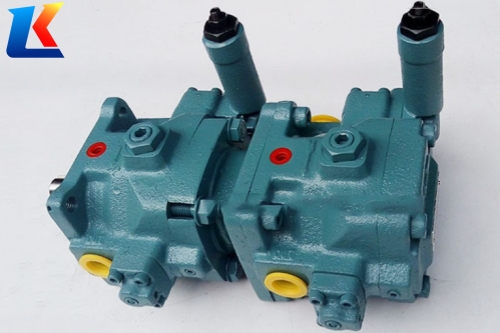
The NACHI PZS Series Variable Displacement Piston Pump is a high-performance hydraulic component specifically designed for forging presses and other general industrial machinery. With advanced engineering and precision manufacturing, this series of pumps integrates high pressure resistance, high reliability, and energy efficiency, providing stable and efficient hydraulic power support for the heavy-duty operation of forging presses. It adopts an 11-piston and semi-cylindrical swash plate design, which effectively reduces noise and vibration during operation, while the spherical valve plate structure ensures high efficiency and strong contamination resistance. The PZS series can be used as a standalone pump or combined with NACHI’s internal gear pump IPH series to form a twin pump through an adapter kit, meeting diverse application requirements in hydraulic systems.
2. Core Features
- High Pressure and High Reliability: The pump offers excellent high-pressure performance, with a maximum operating pressure of up to 28 MPa (4085 psi) for models PZS-3B and PZS-4B, and 25 MPa (3642 psi) for models PZS-5B and PZS-6B. The variable displacement capability ensures that the discharge flow can be maintained at the desired level, effectively improving the energy efficiency of hydraulic systems.
- Low Noise and Low Vibration: The semi-cylindrical swash plate design provides high support rigidity, allowing for an increased number of pistons (from 9 to 11) and the configuration of optimal valve plates. These design features significantly reduce noise and vibration during operation, enhancing workplace comfort.
- Long Service Life and High Reliability: O-ring seals are used on the mating surfaces to completely eliminate oil leakage. The spherical valve plate maintains an optimal hydraulic pressure balance over a wide operating range, ensuring stable operation and excellent contamination resistance, thus extending the service life of the pump.
- Diverse Control Options: A variety of control methods are available to meet different system requirements, including pressure compensation control, two-pressure two-flow control, solenoid cut-off control, two-pressure control, etc. This flexibility enables the pump to adapt to various working conditions and achieve energy-saving operation of the hydraulic circuit.
- Versatile Application: In addition to being used independently, it can be combined with other IP series pumps through an adapter kit, expanding the scope of application. It is particularly suitable for forging presses, forming machines, and other heavy-duty industrial machinery.
3. Technical Specifications
| Model | Displacement (cm³/rev) | Maximum Operating Pressure (MPa) | Speed Range (min⁻¹) | Weight (kg) |
|---|---|---|---|---|
| PZS-3B | 70 | 28 | 500 – 1800 | 37 |
| PZS-4B | 100 | 28 | 500 – 1800 | 58 |
| PZS-5B | 130 | 25 | 500 – 1800 | 86 |
| PZS-6B | 180 | 25 | 500 – 1800 | 123 |
| PZS-6B | 220 | 25 | 500 – 1500 | 126 |
4. Control Methods
| Control Type | Symbol | Features |
|---|---|---|
| Pressure Compensation Control (Manual Control) | N | When the output pressure reaches the pressure set by the compensator, the output flow automatically decreases to maintain the set pressure. Remote control can be performed using the attached pilot valve. |
| Two-Pressure Two-Flow Control | NQ | The output flow can be changed in two stages through the sequence valve mounted on the pump. The previous high and low pressure control can be completed by one pump, achieving energy saving of the circuit. |
| Solenoid Cut-Off Control | RS | To minimize energy consumption when hydraulic pressure is not required, an unloading solenoid valve is assembled on the pressure compensation type pump. |
| Two-Pressure Control | WS | Two types of pressure compensation can be obtained through the ON/OFF of the solenoid valve mounted on the pump. Two types of pressure control can be achieved while keeping the actuator at a constant speed. |
| Two-Pressure Two-Flow Control with Solenoid Cut-Off | RQS | Unloading function is added to the two-pressure two-flow control type. Unloading can be performed through the solenoid valve mounted on the pump when hydraulic pressure is not required (special parts are available for adaptation). |
| Two-Cut-Off Control | CS | Two types of pressure-flow characteristics can be obtained through the solenoid valve mounted on the pump and the output flow control mechanism (special parts are available for adaptation). |
In addition, constant power control type and load sensing control type are also available as options.
5. Installation and Operation Notes
- Use a flexible coupling to connect the pump shaft to the drive shaft to prevent radial or thrust loads from being applied to the pump shaft. The eccentricity between the drive shaft and the pump shaft should not exceed 0.05 mm, and the eccentric angle error should be 1 inch or less.
- The fitting length of the coupling and the pump shaft should be at least 2/3 of the width of the coupling.
- Use a sufficiently rigid pump mounting base to ensure stable operation of the pump.
- Set the pump suction side pressure to -0.03 MPa (-4.35 lbs/in²) or higher, and the flow velocity at the suction port should be less than 2 m/sec.
- Elevate part of the drain pipe above the top of the pump body, and insert the return part of the drain pipe into the hydraulic oil. At the same time, refer to the values in Table 1 to limit the drain back pressure to 0.1 MPa (14.5 lbs/in²).
- Install the pump shaft horizontally to ensure proper lubrication and operation.
- It is recommended to use rubber hoses to minimize noise and vibration.
- A check valve is installed on the discharge side of the pump to prevent reverse rotation and damage to the pump when it is shut down.
- Do not use the solenoid valve to release pressure in the hydraulic circuit.