OMT/OMP/OMS/OMR/OMH series Danfoss hydraulic motor
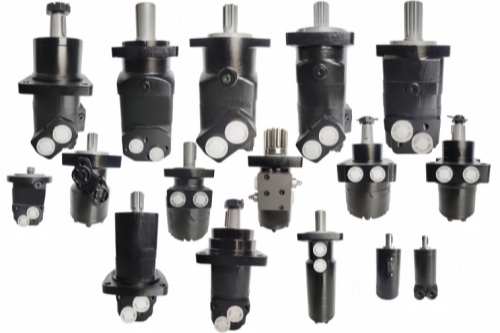
OMT/OMP/OMS/OMR/OMH Series Hydraulic Motor & Danfoss Hydraulic Pump
1. Overview
This document provides a detailed introduction to the OMT/OMP/OMS/OMR/OMH series hydraulic motors and Danfoss hydraulic pumps, including their core parameters, performance characteristics, structural features, application scenarios and selection guidelines. These products are widely used in industrial, agricultural, construction and marine fields, with high reliability, efficiency and adaptability, and are core components of hydraulic transmission systems.
Hydraulic motors (OMT/OMP/OMS/OMR/OMH series) are executive components that convert hydraulic energy into mechanical energy, providing stable rotational power for equipment. Danfoss hydraulic pumps, as the “energy source” of hydraulic systems, convert external mechanical energy into hydraulic energy, providing continuous and stable pressure and flow for the entire system, forming an efficient and reliable hydraulic transmission combination with the above hydraulic motors.
2. OMT/OMP/OMS/OMR/OMH Series Hydraulic Motor
2.1 General Introduction
OMT/OMP/OMS/OMR/OMH series hydraulic motors belong to orbital hydraulic motors, which are designed with advanced Geroler stator-rotor pair structure, featuring compact size, high starting torque, smooth operation and strong environmental adaptability. The series covers a variety of displacement specifications, with displacement ranging from 8 cm³/r to 800 cm³/r, speed up to 2500 rpm (for small models) and 600 rpm (for large models), and peak output torque up to 250 Danm, which can meet the power needs of different equipment under various working conditions. All models support both open and closed loop hydraulic systems, and are compatible with a variety of hydraulic oils, with strong versatility.
2.2 Core Parameters of Each Series
|
Series
|
Displacement Range (cm³/r)
|
Speed Range (rpm)
|
Maximum Operating Pressure (bar/MPa)
|
Peak Output Torque (Danm)
|
Maximum Output Power (kW)
|
|---|---|---|---|---|---|
|
OMT
|
160-800
|
30-780
|
240/24
|
137
|
40
|
|
OMP
|
36-500
|
30-1650
|
225/22.5
|
–
|
13
|
|
OMS
|
80-475
|
30-1000
|
225/22.5
|
63
|
21
|
|
OMR
|
36-375
|
30-1220
|
200/20
|
–
|
17
|
|
OMH
|
200-500
|
30-430
|
225/22.5
|
–
|
18.5
|
Note: The above parameters are typical values, and specific parameters can be adjusted according to actual application requirements. For detailed technical data, please refer to the product sample and user guide.
2.3 Performance Characteristics
-
Smooth Operation: The optimized Geroler stator-rotor pair design ensures smooth operation over the entire speed range, with small torque fluctuation and low noise, which can effectively reduce equipment vibration and extend the service life of related components.
-
High Starting Torque: It has excellent starting performance, can start smoothly under low pressure, and the starting torque is close to the rated torque, which is suitable for low-speed and high-torque working conditions such as heavy load startup.
-
High Efficiency & Energy Saving: The optimized oil distribution system reduces internal energy loss, improves volumetric efficiency and mechanical efficiency, and reduces energy consumption of the entire hydraulic system under the premise of ensuring output power.
-
Strong Environmental Adaptability: The robust and compact structural design, with high radial and axial bearing capacity, can work stably under extreme conditions such as high dust, high humidity and heavy load, and has long service life.
-
Diversified Configurations: A variety of optional configurations are available, including corrosion-resistant parts, integrated drum brake, speed sensor, needle bearing (for OMP/OMR motors), etc., to meet the needs of different specific applications.
-
Easy Installation: It supports multiple installation methods such as square flange and rhombus flange, and the shaft type can be selected as straight shaft, spline shaft or tapered shaft, which is convenient for integration with various equipment.
2.4 Application Scenarios
OMT/OMP/OMS/OMR/OMH series hydraulic motors are widely used in various fields due to their excellent performance, mainly including:
-
Construction Machinery: Excavators, bulldozers, loaders, cranes, road rollers, etc., used to drive tracks, turntables, buckets and other components.
-
Agricultural Machinery: Combine harvesters, seeders, sprayers, round balers, etc., providing power for headers, conveyor belts, compaction mechanisms, etc..
-
Industrial Equipment: Conveyors, drills, winches, crushers, presses, robotic arms, etc., suitable for low-speed and high-torque transmission scenarios.
-
Marine & Offshore Equipment: Ship propellers, offshore operation equipment, etc., adapting to the harsh marine environment with high reliability.
3. Danfoss Hydraulic Pump
3.1 General Introduction
Danfoss hydraulic pumps are world-renowned hydraulic power components, with a complete product series, covering vane pumps, piston pumps and other types, which are widely used in mobile and industrial hydraulic systems. As the core power source of the hydraulic system, Danfoss hydraulic pumps can convert the mechanical energy of the prime mover (such as motor, engine) into hydraulic energy, output stable pressure and flow, and perfectly match the OMT/OMP/OMS/OMR/OMH series hydraulic motors to form a high-efficiency and reliable hydraulic transmission system. The products have the characteristics of high pressure resistance, low noise, long service life and strong controllability, and are widely recognized in the global market.
3.2 Main Product Series & Core Parameters
3.2.1 Square Vane Pumps (V10/V20/V20H Series)
This series is a pressure-balanced modular 12-vane design, suitable for low to medium pressure mobile and industrial applications, and is often used as a pilot pump and auxiliary pump for complex systems.
-
Displacement Range: 3-42 cm³/r (0.2-2.6 cu in)
-
Continuous Pressure Rating: V10/V20 up to 172 bar (2500 psi), V20H up to 205 bar (3000 psi)
-
Configurations: Single pump and double pump options are available, with optional integrated flow control valves to simplify system design and installation.
-
Application Scenarios: Heavy-duty trucks, interstate buses, small industrial and mobile equipment, complex industrial auxiliary systems, etc..
3.2.2 Medium-Duty Open-Circuit Piston Pumps (PVM Series)
This series is an axial piston variable displacement pump, leading the industry in noise reduction, compact size and pressure rating, suitable for a variety of industrial applications, with enhanced controllability and efficiency.
-
Displacement Range: 18-141 cm³/r (1.1-8.6 cu in)
-
Continuous Pressure Rating: Up to 315 bar (4600 psi)
-
Features: The new PVM Code B model has optimized components, standardized housing, high-pressure shaft seal as standard, and optional power control to improve energy efficiency and reduce lead time.
-
Application Scenarios: Industrial hydraulic equipment, high-pressure hydraulic stations, mobile equipment hydraulic systems, etc..
3.2.3 Closed-Circuit Variable Piston Pumps (90 Series)
This series is a cradle swash plate design variable displacement pump, suitable for closed-circuit applications, with high pressure resistance and strong adaptability, and is the core model of Danfoss hydraulic pumps for heavy machinery.
-
Displacement Range: 30-250 cm³/r
-
Maximum Pressure: Up to 480 bar (6960 psi)
-
Control Methods: Manual, hydraulic, electric proportional control (KP/KA), etc., and the flow direction can be reversed by adjusting the swash plate angle.
-
Application Scenarios: Horizontal directional drilling rigs, road rollers, heavy construction machinery, etc..
3.3 Performance Characteristics
-
High Reliability: Adopting high-quality materials and precision manufacturing technology, the internal components have strong wear resistance and corrosion resistance, and can work stably for a long time under high pressure and harsh working conditions, with low failure rate.
-
Low Noise & Low Vibration: Optimized structural design (such as 12-vane pressure balance design, tapered envelope design) reduces flow pulsation and vibration, and the noise level is at the leading level in the industry, which improves the working environment.
-
Strong Controllability: A variety of control methods are available, such as electric proportional control, load-sensitive control, pressure compensation control, etc., which can accurately adjust the flow and pressure according to the working load, realizing energy-saving operation and precise control of the system.
-
Compact Design: Small size and light weight, which is convenient for installation in equipment with limited space, and the modular design is convenient for maintenance and replacement of components.
-
Good Compatibility: It is perfectly compatible with OMT/OMP/OMS/OMR/OMH series hydraulic motors and various hydraulic oils, and can be flexibly matched according to the system requirements to form a customized hydraulic solution.
3.4 Application Scenarios
Danfoss hydraulic pumps are widely used in various fields, covering almost all hydraulic transmission scenarios that require stable power output, mainly including:
-
Mobile Hydraulic Systems: Construction machinery, agricultural machinery, heavy-duty trucks, engineering vehicles, etc. (matching OMT/OMP/OMS/OMR/OMH series hydraulic motors to provide power for equipment operation).
-
Industrial Hydraulic Systems: Hydraulic stations, machine tools, presses, automated production lines, mining equipment, etc., providing stable hydraulic power for industrial production and processing.
-
Special Equipment: Marine equipment, offshore operation equipment, aerospace equipment, medical equipment, etc., adapting to special working environments and meeting high-precision and high-reliability requirements.
4. Matching Guidelines for Hydraulic Motors and Pumps
To ensure the efficient and stable operation of the hydraulic system, the OMT/OMP/OMS/OMR/OMH series hydraulic motors and Danfoss hydraulic pumps need to be reasonably matched according to the following principles:
-
Flow Matching: The output flow of the hydraulic pump should be compatible with the required flow of the hydraulic motor. The flow of the motor is related to its displacement and speed, and the pump flow should be slightly higher than the motor demand to avoid insufficient flow affecting the motor operation, while avoiding excessive flow causing energy waste and system heating.
-
Pressure Matching: The rated pressure of the hydraulic pump should be greater than or equal to the rated pressure of the hydraulic motor, ensuring that the pump can provide sufficient pressure to drive the motor to work, and leaving a certain pressure margin to adapt to load fluctuations.
-
Power Matching: The output power of the hydraulic pump should match the input power of the hydraulic motor, and the power of the pump should be slightly higher than the motor demand to ensure that the system has sufficient power reserve and avoid overload operation of the pump and motor.
-
System Compatibility: According to the type of hydraulic system (open loop/closed loop), select the corresponding pump and motor models. For example, the 90 series closed-circuit piston pump of Danfoss is suitable for matching with OMT/OMP/OMS/OMR/OMH series motors in closed-circuit systems, while the V10/V20 series vane pumps are more suitable for open-circuit auxiliary systems.
5. Maintenance and Attention
5.1 Maintenance of Hydraulic Motors (OMT/OMP/OMS/OMR/OMH Series)
-
Regularly check the oil level, oil temperature and oil quality of the hydraulic system, and replace the hydraulic oil and filter element according to the operating conditions to avoid oil pollution causing wear of internal components.
-
Check the sealing performance of the motor regularly, and replace the seal ring in time if there is oil leakage to prevent pressure loss and system failure.
-
Avoid long-term overload operation of the motor, and ensure that the working pressure and speed are within the rated range to extend the service life of the motor.
-
When the motor is not used for a long time, drain the internal hydraulic oil to avoid corrosion of internal components, and store it in a dry and ventilated environment.
5.2 Maintenance of Danfoss Hydraulic Pumps
-
Strictly follow the requirements of the product manual to select the appropriate hydraulic oil, and ensure that the oil is clean and free of impurities to avoid wear of the pump core components.
-
Regularly check the operating status of the pump, including noise, vibration, temperature, etc. If there is any abnormality, stop the machine for inspection in time to avoid further damage.
-
Regularly maintain the pump’s filter element, oil seal, bearing and other vulnerable parts, and replace them in time when they are worn or aged to ensure the normal operation of the pump.
-
When installing and disassembling the pump, operate in accordance with the specifications to avoid damage to the pump body and internal components due to improper operation.
5.3 General Notes
-
The installation and commissioning of the hydraulic system should be carried out by professional technicians to ensure the correctness of the pipeline connection and the rationality of the control system.
-
During the operation of the system, pay attention to monitoring the pressure, flow, temperature and other parameters, and timely adjust if there is any deviation to avoid system failure.
-
When replacing components, use original accessories to ensure the compatibility and reliability of the system, and avoid using inferior accessories causing system damage.
-
The product warranty period is one year (subject to the actual product manual), and if there is any quality problem within the warranty period, contact the after-sales service department in time for processing.
6. Conclusion
OMT/OMP/OMS/OMR/OMH series hydraulic motors and Danfoss hydraulic pumps are high-performance, high-reliability hydraulic components, which complement each other in function and can form an efficient, stable and energy-saving hydraulic transmission system. With their excellent performance and diversified configurations, they are widely used in construction, agriculture, industry, marine and other fields, providing strong power support for the operation of various equipment.
When selecting and using the products, it is necessary to strictly follow the matching guidelines and maintenance requirements to give full play to the performance advantages of the products, extend the service life of the system, and reduce the operation and maintenance costs. For more detailed technical parameters and application solutions, please refer to the official product manual or contact the professional technical team.