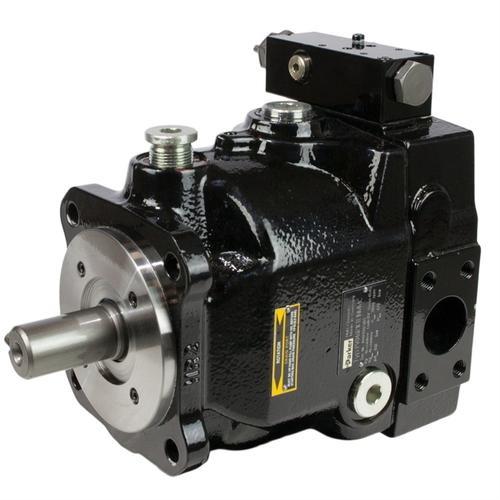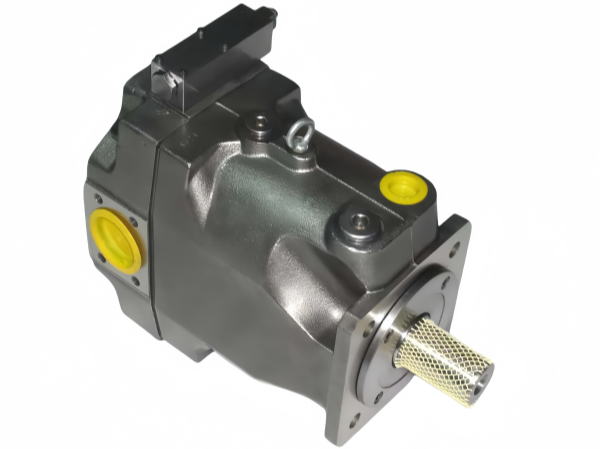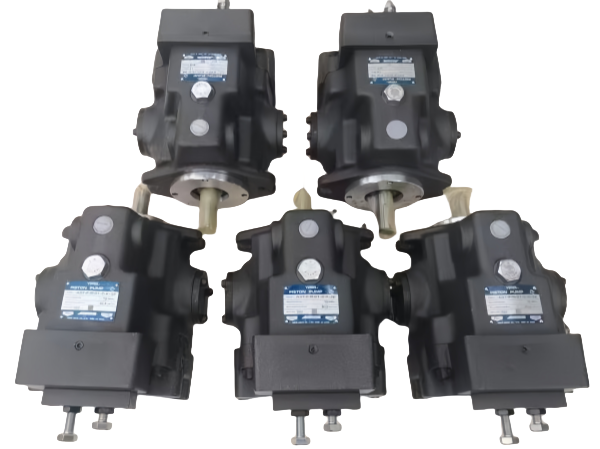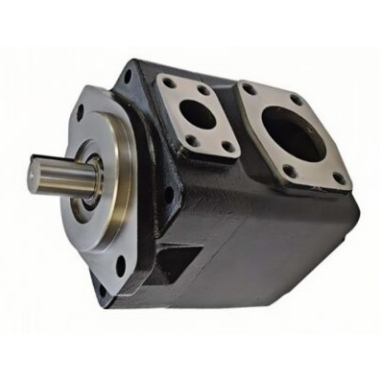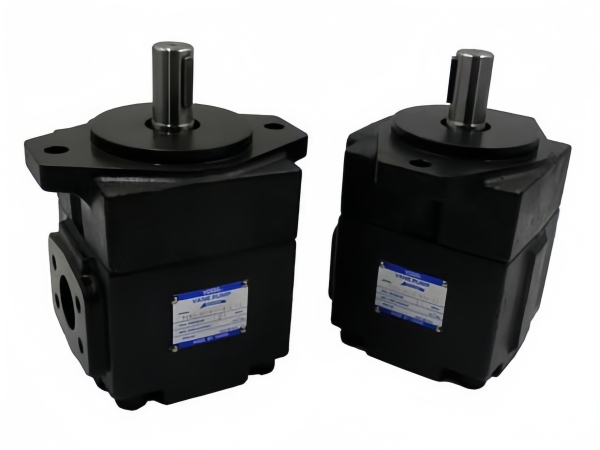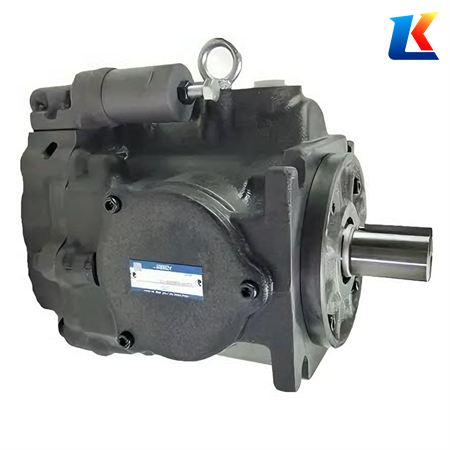
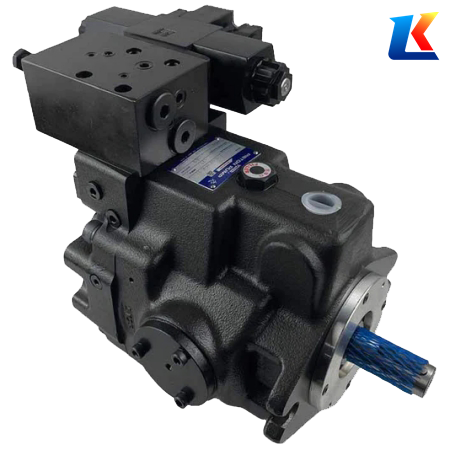
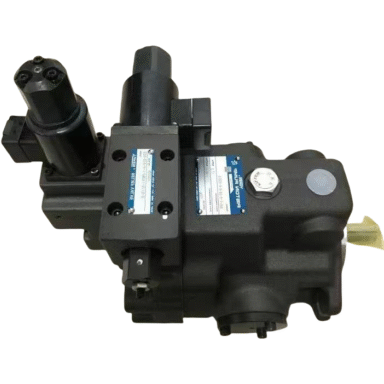
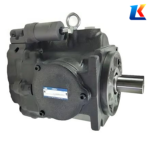
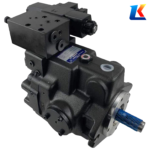

YUKEN A3HG37 High‑Pressure Variable Displacement Piston Pump
Model Numbers:
A3HG16、A3HG37、A3HG56、A3HG71、A3HG100、A3HG145、A3HG180
Whats app: +86 13728707767
E-mail: hyd-sales2009@outlook.com
1. General Description
The A3HG37 is a swashplate‑type axial piston pump in YUKEN A3HG series, improved version based on the A3H series. It complies with ISO 3019‑1 / ISO 3019‑2 international mounting standards.
Standard through‑drive shaft allows tandem installation of a second pump on the rear side for multi‑pump combined circuits.
– Geometric displacement: 37.1 cm³/rev
– Minimum adjustable displacement: 16.0 cm³/rev
– Rated continuous pressure: 31.5 MPa
– Intermittent peak pressure: 35 MPa (only for short‑term shock load, not for continuous operation)
2. Main Features
1. Standard ISO mounting dimensions, convenient direct replacement of imported pumps.
2. Through‑drive shaft as standard for tandem pump configurations.
3. Four optional control modes to match different hydraulic system requirements.
4. High volumetric efficiency, low noise and stable performance under continuous heavy load.
5. Keyed shaft or splined shaft available; metric ISO and SAE port flange options.
6. Standard FKM fluorocarbon seals for mineral anti‑wear hydraulic oil; special seal kits for fire‑resistant fluids available upon request.
3. Applications
Injection moulding machines, hydraulic presses, die‑casting machines, machine tools, hydraulic power units, packaging machinery, lifting equipment and other industrial hydraulic systems requiring stable pressure holding or energy‑saving load‑sensing control.
4. Model Code Explanation
`A3HG37‑[F/L][R/L][01/07/09/14][K][E1/E2/U1/U2]‑10`
– A3HG = Series code
– 37 = Size code (37.1 cm³/rev)
– F = Flange mounting; L = Foot mounting
– R = Clockwise rotation (viewed from shaft end); L = Counter‑clockwise rotation
– 01 = Pressure compensator
– 07 = External pilot pressure compensator
– 09 = External pilot constant power control
– 14 = Load sensing (LS) control
– K = Shaft style (keyed / splined)
– E1/E2/U1/U2 = Port flange specification (ISO / SAE)
– 10 = Design revision
5. Technical Specifications (A3HG37)
| Item | Specification |
|---|---|
| Geometric displacement | 37.1 cm³/rev |
| Min. adjustable displacement | 16.0 cm³/rev |
| Rated pressure | 31.5 MPa |
| Intermittent peak pressure | 35 MPa |
| Speed range | 600 ~ 2700 r/min |
| Recommended hydraulic fluid | Anti‑wear mineral hydraulic oil ISO VG32 / VG46 |
| Operating viscosity range | 20 ~ 200 mm²/s |
| Fluid temperature range | -10 ~ +80 ℃ |
| Recommended fluid cleanliness | ISO 4406 18/15 or better |
| Suction pressure | -16.7 ~ +50 kPa (600–1800 rpm); 0 ~ +50 kPa (>1800 rpm, vacuum not permitted) |
| Case drain allowable pressure | Normal ≤0.1 MPa; transient peak ≤0.5 MPa |
| Approx. weight (flange mount) | 26.5 kg |
| Approx. weight (foot mount) | 34 kg |
6. Control Types
1. 01 Pressure compensator
The most widely used control. Maintains preset system pressure. When the set pressure is reached, the pump automatically reduces displacement to cut flow and save energy. Suitable for presses and injection moulding machines.
2. 07 External pilot pressure compensator
Remote pressure adjustment by an external pilot valve, suitable for multi‑step pressure control.
3. 09 External pilot constant power control
Limits input power of the drive motor. When system pressure rises, pump displacement decreases automatically to prevent motor overload. The power curve can be remotely adjusted. Ideal for presses and die‑casting machines.
4. 14 Load Sensing (LS)
The pump outputs only the flow required by actuators. It minimises power loss and heat generation, suited for systems with multiple actuators and widely variable flow demand.
7. Fluid Requirements
– Standard FKM seals are compatible only with petroleum‑based mineral hydraulic oil.
– For water‑glycol, phosphate ester and other fire‑resistant fluids, a dedicated special seal kit must be ordered separately.
– Install filters on suction and pressure lines to keep fluid cleanliness within the required class.
8. Mounting Instructions
1. Mount the pump horizontally with the oil filling port upward. Use a flexible coupling. Total indicator runout ≤0.1 mm; angular misalignment ≤0.2°.
2. Keep the suction piping short, large‑bore and free of air pockets. Air ingestion causes cavitation and permanent damage.
3. The case drain line must be submerged below the oil surface; pipe length should be less than 1 m.
4. Fill the pump housing fully with hydraulic oil before the first start‑up for initial lubrication of internal friction pairs.
5. For tandem mounting through the through‑drive shaft, the displacement of the secondary pump cannot exceed the allowable load limit of the through shaft.
9. Start‑up & Adjustment
1. Perform initial start‑up under no‑load condition. Check for abnormal noise, vibration and external leakage.
2. Turn the adjustment screw clockwise to increase pressure or power setting. Tighten the lock nut after finishing adjustment.
3. Increase pressure and load gradually, continuously monitor oil temperature, suction pressure and noise.
4. For LS control (code 14), the LS signal feedback line must be correctly routed; the pump cannot work normally without LS feedback.
10. Maintenance
– Regularly check oil level, colour and contamination condition.
– Replace hydraulic oil and filters following the scheduled maintenance cycle.
– Inspect seals for leakage; replace the seal kit when external leakage becomes excessive.
– Avoid continuous cavitation, air suction and operation with heavily contaminated oil.
11. Safety Precautions
– All adjustment, disassembly and maintenance work must be carried out after full pressure relief of the hydraulic system and power cut‑off.
– Do not exceed the 35 MPa peak pressure limit.
– Never start the pump without hydraulic oil; dry running will rapidly destroy internal components.
– Pump housing and pipelines can reach high temperature during operation; avoid direct skin contact.
12. Troubleshooting
| Symptom | Possible Cause |
|---|---|
| Loud noise, knocking, cavitation | Low oil level, clogged suction filter, excessive viscosity, air entering suction line |
| Failure to build pressure | Incorrect regulator setting, internal wear, damaged seals |
| Excessive oil overheating | Overload, insufficient cooling, contaminated oil, high case drain pressure |
| External leakage | Worn or damaged seal rings, defects on mating surfaces |
13. Example Model
Flange mount, clockwise rotation, pressure compensator 01, keyed shaft, E2 port flange, revision 10
`A3HG37‑FR01K‑E2‑10`