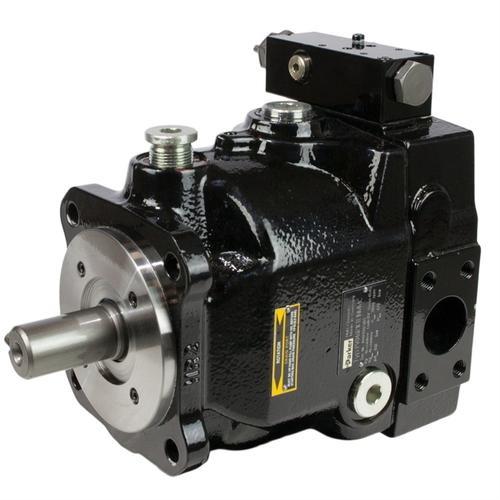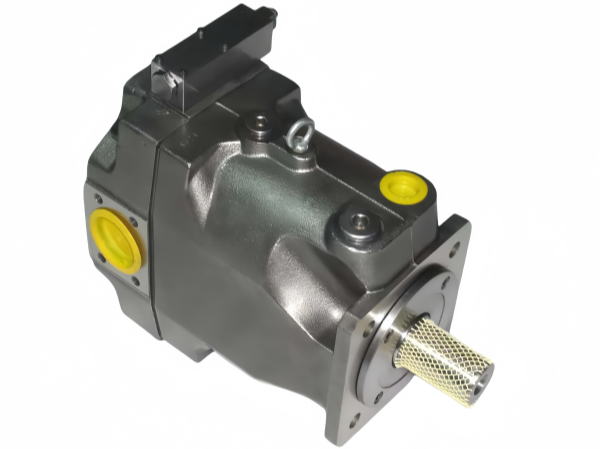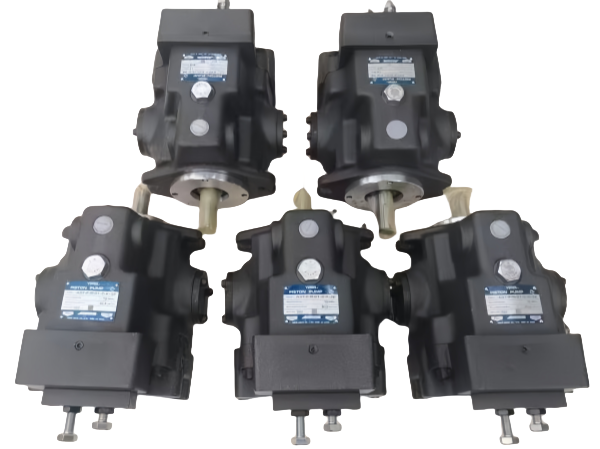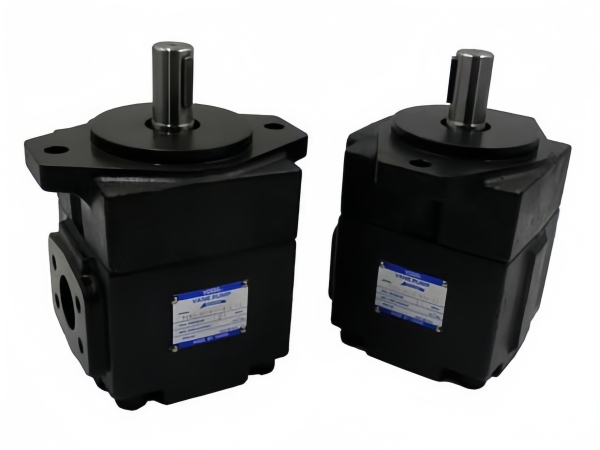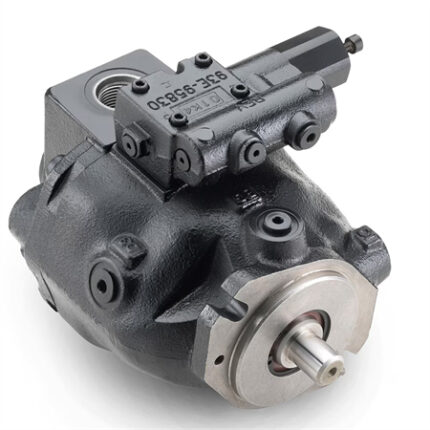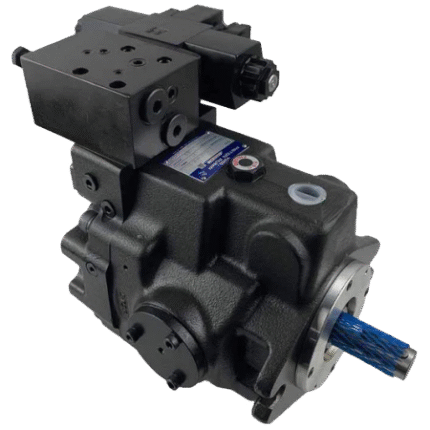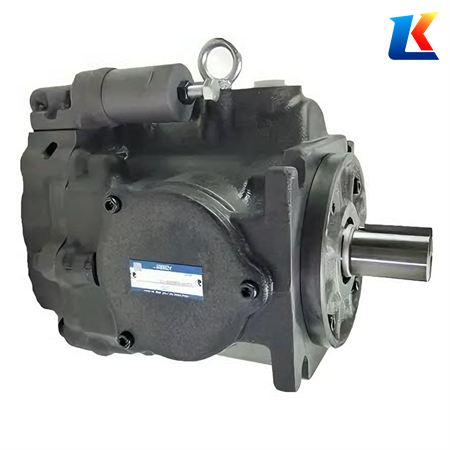
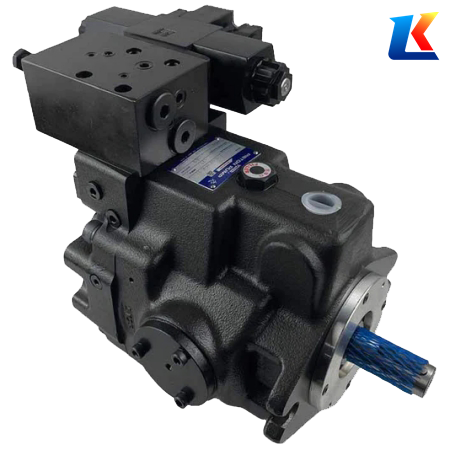
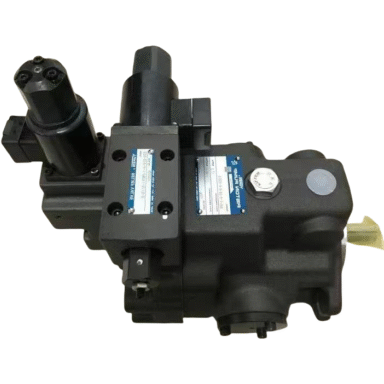
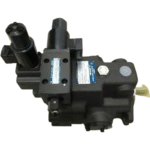

A3HG56 High‑Pressure Variable Displacement Piston Pump
Model Numbers:
A3HG16、A3HG37、A3HG56、A3HG71、A3HG100、A3HG145、A3HG180
Whats app: +86 13728707767
E-mail: hyd-sales2009@outlook.com
1. General Description
The A3HG56 is a swashplate‑type axial piston pump belonging to YUKEN A3HG series, upgraded from the A3H series and conforming to ISO 3019‑1 / ISO 3019‑2 mounting standards. It is equipped with a standard through‑drive shaft , which enables tandem mounting of a second pump for combined multi‑pump hydraulic circuits.
– Geometric displacement: 56.3 cm³/rev
– Minimum adjustable displacement: 35.0 cm³/rev
– Rated continuous pressure: 31.5 MPa
– Intermittent peak pressure: 35 MPa (only for short‑term shock loads, not for continuous operation)
2. Main Features
1. Standard ISO mounting dimensions, interchangeable with international equivalent piston pumps for easy replacement.
2. Through‑drive shaft as standard, allowing tandem assembly of a secondary pump with the same maximum displacement.
3. Four optional control versions to satisfy different hydraulic circuit requirements.
4. High volumetric efficiency, low noise and stable performance under continuous heavy‑duty conditions.
5. Keyed shaft or splined shaft available; ISO and SAE port flange options.
6. Standard FKM fluorocarbon seals for petroleum‑based anti‑wear hydraulic oil; special seal kits for fire‑resistant fluids available on request.
3. Applications
Injection moulding machines, hydraulic presses, die‑casting machines, heavy‑duty machine tools, hydraulic power units, lifting equipment, metallurgical auxiliary machinery and other industrial hydraulic systems requiring pressure holding or energy‑saving load‑sensing control.
4. Model Code Explanation
`A3HG56‑[F/L][R/L][01/07/09/14][K][E1/E2/U1/U2]‑10`
– A3HG = Series code
– 56 = Size code (56.3 cm³/rev)
– F = Flange mounting; L = Foot mounting
– R = Clockwise rotation (viewed from shaft end); L = Counter‑clockwise rotation
– 01 = Pressure compensator
– 07 = External pilot pressure compensator
– 09 = External pilot constant power control
– 14 = Load sensing (LS) control
– K = Shaft type (keyed / splined)
– E1/E2/U1/U2 = Port flange specification (ISO / SAE)
– 10 = Design revision
5. Technical Specifications (A3HG56)
| Item | Specification |
|---|---|
| Geometric displacement | 56.3 cm³/rev |
| Minimum adjustable displacement | 35.0 cm³/rev |
| Rated pressure | 31.5 MPa |
| Intermittent peak pressure | 35 MPa |
| Speed range | 600 ~ 2500 r/min |
| Recommended hydraulic fluid | Anti‑wear mineral hydraulic oil ISO VG32 / VG46 |
| Operating viscosity range | 20 ~ 400 mm²/s |
| Fluid temperature range | 0 ~ 60 ℃ |
| Recommended fluid cleanliness | ISO 4406 18/15 or better (NAS 9) |
| Suction pressure | -16.7 ~ +50 kPa (600–1800 rpm); 0 ~ +50 kPa (>1800 rpm, vacuum prohibited) |
| Case drain allowable pressure | Normal ≤0.1 MPa; transient peak ≤0.5 MPa |
| Pre‑fill oil volume | 1050 cm³ |
| Approx. weight (flange mount, 01 control) | 32.5 kg |
6. Control Types
1. 01 Pressure compensator
Most widely used control. Maintains preset system pressure. The pump automatically reduces displacement once the target pressure is reached to cut flow and save power. Suitable for hydraulic presses and injection moulding machines.
2. 07 External pilot pressure compensator
Enables remote pressure adjustment via an external pilot valve, ideal for multi‑step pressure control circuits.
3. 09 External pilot constant power control
Limits the input power of the drive motor. Pump displacement decreases automatically with rising pressure to avoid motor overload. The power limit curve can be adjusted remotely, suitable for presses and die‑casting machines.
4. 14 Load Sensing (LS)
The pump delivers only the flow demanded by actuators. It minimises power loss and heat generation, for systems with multiple actuators and highly variable flow demand.
7. Fluid Requirements
– Standard FKM seals are only compatible with petroleum‑based mineral hydraulic oil.
– For water‑glycol, phosphate ester and other fire‑resistant fluids, a dedicated special seal kit must be ordered separately.
– Install a suction filter ≥100 μm and a return filter ≤10 μm to maintain oil cleanliness.
8. Mounting Instructions
1. Install the pump horizontally with the oil fill port upward. Use a flexible coupling. Total indicator runout ≤0.1 mm, angular misalignment ≤0.2°.
2. Keep suction piping short, large‑bore and free of air pockets. Air ingestion causes cavitation and permanent damage.
3. The case drain line must be submerged below the oil surface; pipe length less than 1 m.
4. Fill the pump housing with clean hydraulic oil before initial start‑up for pre‑lubrication of internal friction pairs.
5. For tandem mounting through the through‑drive shaft, the secondary pump displacement shall not exceed the allowable load capacity of the through shaft.
9. Start‑up & Adjustment
1. Perform initial start‑up under no‑load condition. Check abnormal noise, vibration and external leakage.
2. Turn the adjustment screw clockwise to increase pressure or power setting. Tighten the lock nut after setting.
3. Increase pressure and load gradually, monitor oil temperature, suction pressure and noise continuously.
4. For LS control (code 14), the LS feedback signal line must be correctly routed; the pump cannot work normally without LS feedback.
10. Maintenance
– Inspect oil level, colour and contamination periodically.
– Replace hydraulic oil and filters according to the maintenance schedule.
– Check seals for external leakage; replace the seal kit if leakage is excessive.
– Avoid continuous cavitation, air ingestion and operation with contaminated oil.
11. Safety Precautions
– All adjustment, disassembly and maintenance must be performed after full system pressure relief and power disconnection.
– Do not exceed the 35 MPa peak pressure rating.
– Never start the pump without hydraulic oil; dry running will rapidly damage internal components.
– Install a safety relief valve on the delivery line to protect piping and components from pressure surge.
– Pump housing and pipelines can reach high temperature during operation; avoid direct skin contact.
12. Troubleshooting
| Symptom | Possible Cause |
|---|---|
| Loud noise, knocking, cavitation | Low oil level, clogged suction filter, excessive viscosity, air entering suction line |
| Failure to build pressure | Incorrect regulator setting, internal wear, damaged seals |
| Excessive oil overheating | Overload, insufficient cooling, contaminated oil, high case drain pressure |
| External leakage | Worn or damaged seal rings, defective mating surfaces |