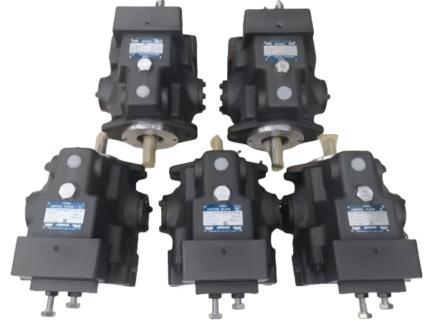
Sale


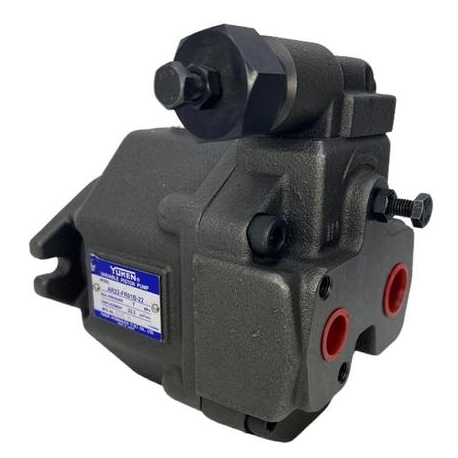

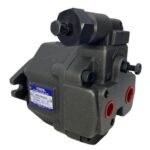
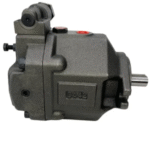

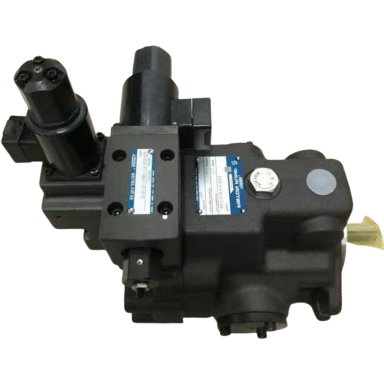
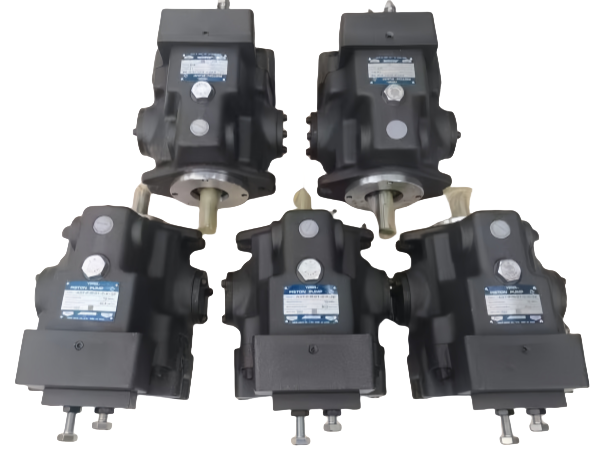
“AR” Series Variable displacement piston pump
Wechat: +86 13728707767
Whats app: +86 13728707767
E-mail: hyd-sales2009@outlook.com
Description
YUKEN AR Series Variable Displacement Piston Pumps Specifications
1. Product Overview
The YUKEN AR Series is a range of high-performance variable displacement piston pumps with pressure compensator control. Characterized by compact design, light weight, low noise, and long service life, these pumps are widely applicable to NC lathes, machining centers, bending machines, small punch presses, and other high-efficiency specialized equipment. They are engineered to operate under constant pressure conditions with intermittent maximum pressure loads, delivering reliable hydraulic power for industrial applications.
2. Model Nomenclature
The model code of AR Series pumps contains key configuration information, as illustrated below (taking AR16-FR01C-S-10 as an example):
|
Code Segment
|
Meaning
|
Available Options
|
|---|---|---|
|
AR
|
Series Identifier (Variable Displacement Piston Pump)
|
AR Series
|
|
16
|
Nominal Displacement
|
8 (8.0 cm³/rev), 10 (10.0 cm³/rev), 12 (12.0 cm³/rev), 16 (15.8 cm³/rev), 22 (22.2 cm³/rev)
|
|
F
|
Mounting Type
|
F (Flange Mounting), FL (Foot Mounting)
|
|
R
|
Rotation Direction (Viewed from Shaft End)
|
R (Clockwise, Standard), L (Counter Clockwise)
|
|
01
|
Control Device
|
01 (Standard Pressure Regulator), G (Remote Pressure Regulator), C (2-Stage Pressure & Flow Control)
|
|
C
|
Pressure Adjustment Type
|
C (Standard), Others for Special Configurations
|
|
S
|
Port Position
|
S (Suction Port to Right, Standard), A (Suction Port Downward)
|
|
10
|
Thread Code
|
10 (JIS Standard), 2080 (BSP Thread), 20950 (SAE Thread)
|
3. Key Technical Parameters
|
Model
|
Theoretical Displacement
|
Flow Rate (1500 rpm)
|
Flow Rate (1800 rpm)
|
Pressure Adjustment Range
|
Maximum Pressure
|
Speed Range (rpm)
|
Weight (kg)
|
|---|---|---|---|---|---|---|---|
|
AR8
|
8.0 cm³/rev (0.48 in³/rev)
|
12.0 LPM (3.17 US GPM)
|
14.4 LPM (3.8 US GPM)
|
2-70 bar (0.2-7 MPa) / 12-210 bar (1.2-21 MPa)
|
210 bar (21 MPa) (6s Single Operation)
|
500-1800
|
9 (19.84 lb)
|
|
AR10
|
10.0 cm³/rev (0.61 in³/rev)
|
15.0 LPM (3.90 US GPM)
|
18.0 LPM (4.76 US GPM)
|
2-70 bar (0.2-7 MPa) / 12-210 bar (1.2-21 MPa)
|
210 bar (21 MPa) (6s Single Operation)
|
500-1800
|
9.5 (20.94 lb)
|
|
AR12
|
12.0 cm³/rev (0.73 in³/rev)
|
18.0 LPM (4.76 US GPM)
|
21.6 LPM (5.71 US GPM)
|
2-70 bar (0.2-7 MPa) / 12-210 bar (1.2-21 MPa)
|
210 bar (21 MPa) (6s Single Operation)
|
500-1800
|
10.2 (22.49 lb)
|
|
AR16
|
15.8 cm³/rev (0.96 in³/rev)
|
23.7 LPM (6.26 US GPM)
|
28.44 LPM (7.51 US GPM)
|
2-70 bar (0.2-7 MPa) / 12-210 bar (1.2-21 MPa)
|
210 bar (21 MPa) (6s Single Operation)
|
500-1800
|
12.5 (27.56 lb)
|
|
AR22
|
22.2 cm³/rev (1.35 in³/rev)
|
33.3 LPM (8.80 US GPM)
|
39.96 LPM (10.56 US GPM)
|
2-70 bar (0.2-7 MPa) / 12-210 bar (1.2-21 MPa)
|
210 bar (21 MPa) (6s Single Operation)
|
500-1800
|
15.8 (34.83 lb)
|
Note: Nominal operating pressure is 165 bar (16.5 MPa). The maximum pressure of 210 bar (21 MPa) is only allowed for single operations not exceeding 6 seconds per cycle.
4. Port Specifications & Dimensions
4.1 Thread Specifications
|
Model Suffix
|
Suction Port (S)
|
Discharge Port (C)
|
Drain Port (D)
|
Pressure Gauge Port (F/E)
|
|---|---|---|---|---|
|
-20
|
RC 3/4
|
RC 3/8
|
RC 1/4
|
M10
|
|
-2080
|
3/4 BSP F
|
3/8 BSP F
|
1/4 BSP TR
|
M10
|
|
-20950
|
SAE #12
|
SAE #8
|
SAE #4
|
3/8-16 UNC
|
4.2 Installation Dimensions
Dimensions are provided in millimeters (inches) for axial port type (AR16/AR22-FR01*-20/2080/20950) and side port type (AR16/AR22-FR01*S-20/2080/20950):
-
Axial Port Type: Fully extended length 195.5 mm (7.70 in), lock nut size 13 mm (0.51 in) hex, suction port diameter 19 mm (0.75 in), mounting hole distance 96 mm (3.78 in) / 114 mm (4.49 in).
-
Side Port Type: Overall length 158 mm (6.22 in), drain port thread same as axial type, other dimensions refer to axial port type.
Mounting Note: Install the pump with the filling port facing upward. The tightening torque for port fittings is 40-50 Nm for AR16/AR22 models.
5. Hydraulic Fluid Requirements
-
Recommended Fluid: Petroleum-based anti-wear hydraulic oil equivalent to ISO VG 32 or 46.
-
Viscosity Range: 20-400 mm²/s (100-1800 SSU) during operation.
-
Operating Temperature Range: 0°C to 60°C (32°F to 140°F).
-
Contamination Control: Maintain fluid cleanliness at NAS Grade 10. Equip suction port with a 100 μm (150 mesh) reservoir filter and return line with a ≤10 μm line filter.
6. Installation & Operation Precautions
-
Drain piping must maintain housing pressure below 0.1 MPa (1 bar) normal and 0.5 MPa (5 bar) surge. Piping length should not exceed 1 m, with the pipe end submerged in oil.
-
Use a flexible coupling to avoid bending or thrust stress. Maximum permissible misalignment is ≤0.1 mm TIR and misangularity ≤0.2°.
-
Permissible suction pressure range: -16.7 kPa to +50 kPa. The pump suction port height should be within 1 m from the reservoir oil level.
-
Bleed air from the pump case and outlet line before initial start-up. An air bleed valve (Model ST1004-*-10*) is recommended.
-
Avoid excessive piping load on suction/discharge ports; use rubber hoses if necessary to reduce noise.
7. Noise Characteristics
At 1500 rpm, 7 MPa pressure, and 1 m measurement distance, the noise level is ≤65 dB(A) for full flow condition and ≤55 dB(A) for full cut-off condition (typical for AR16 model).

About brand

Shipping & Delivery