Sale
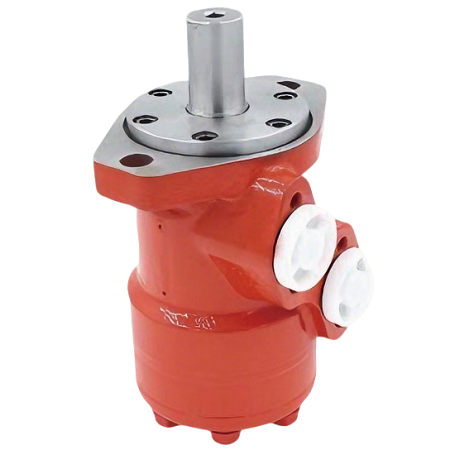
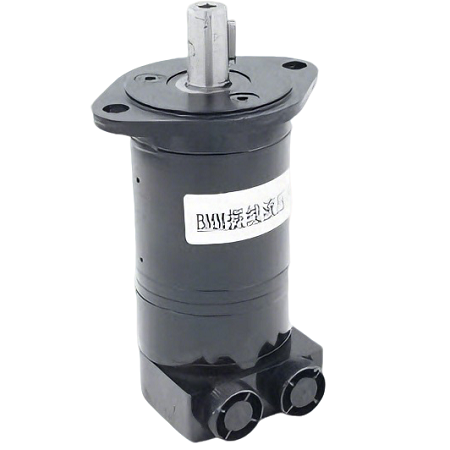
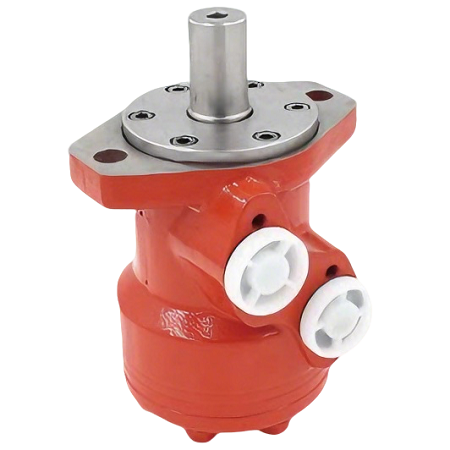
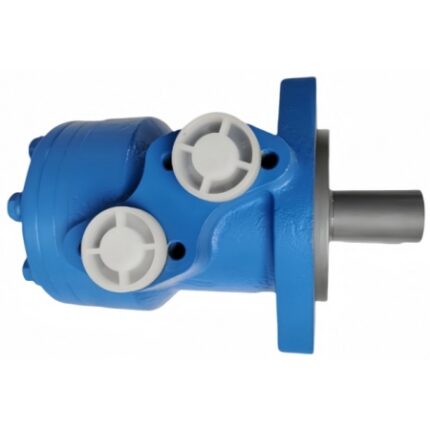
BMR Hydraulic motor
Whats app: +86 13728707767
E-mail: hyd-sales2009@outlook.com
We are a professional manufacturer of hydraulic pumps, offering a complete range of products. Inquiries are welcome! (#^.^#)
Description
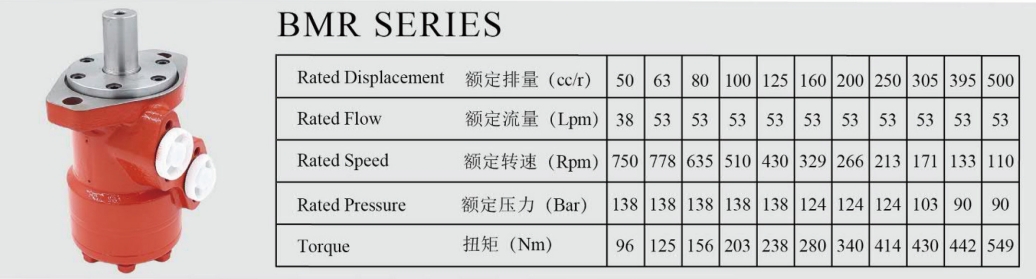
BMR Series Hydraulic Motor Core Technical Specifications
|
Model
|
Geometric Displacement (cm³/rev)
|
Rated Pressure (MPa)
|
Maximum Pressure (MPa)
|
Continuous Torque (N·m)
|
Intermittent Torque (N·m)
|
Maximum Speed (rpm)
|
Weight (kg)
|
|---|---|---|---|---|---|---|---|
|
BMR-50
|
50.0
|
18.0
|
22.0
|
100.2
|
125.0
|
1200
|
18.5
|
|
BMR-80
|
80.0
|
18.0
|
22.0
|
160.3
|
200.0
|
1000
|
25.8
|
|
BMR-100
|
100.0
|
18.0
|
22.0
|
200.4
|
250.0
|
900
|
32.6
|
|
BMR-125
|
125.0
|
18.0
|
22.0
|
250.5
|
312.5
|
800
|
40.2
|
|
BMR-160
|
160.0
|
18.0
|
22.0
|
320.6
|
400.0
|
700
|
51.8
|
Key Specification Notes & Supplementary Parameters
-
Pressure Conversion: The rated pressure of 18.0 MPa is equivalent to 180 kgf/cm² (2610 psi), and the maximum pressure of 22.0 MPa is equivalent to 220 kgf/cm² (3190 psi)[superscript:1]. Compared with the BMP series, it has higher pressure resistance, ensuring stable operation under heavy-load and high-pressure working conditions.
-
Structural Features: The BMR series adopts an enhanced orbital (cycloid) structure[superscript:1], with a reinforced high-strength alloy rotor, wear-resistant needle bearing, and integrated seal design. Its volumetric efficiency and mechanical efficiency can reach 80%~90%[superscript:1], effectively reducing energy loss and extending service life. It has excellent anti-pollution performance, adapting to the harsh working environment of mines, construction sites, and outdoor fields.
-
Torque & Speed Performance: The BMR series features obvious low-speed, high-torque characteristics—the torque is positively correlated with displacement, and the maximum intermittent torque can reach 400 N·m, which is 4 times that of the BMP series[superscript:1]. The maximum speed decreases with the increase of displacement, which is perfectly suitable for heavy-duty transmission scenarios such as mine conveyors, large winches, and engineering machinery traction.
-
Hydraulic Oil Requirements: Clean petroleum-based anti-wear hydraulic oil equivalent to ISO VG 46 or 68 is recommended, which is more suitable for heavy-load operation[superscript:2]. The viscosity range should be 20 to 400 mm²/s, and the normal operating oil temperature should be 0°C to 65°C. The oil should comply with relevant hydraulic oil quality standards to avoid component wear caused by oil pollution[superscript:1].
-
Permissible Back Pressure: The maximum permissible back pressure of the motor’s return oil port is 1.0 MPa (10 kgf/cm²), which is higher than that of the BMP series, adapting to the higher back pressure environment of heavy-duty hydraulic systems. If the system back pressure exceeds this value, an overflow valve should be installed to protect the motor seal and internal components[superscript:1].
-
Pollution Control: To ensure stable operation and extend service life, the oil pollution degree should be kept within NAS 9 level, which is stricter than the BMP series[superscript:2]. A pipeline filter smaller than 8 μm is recommended in the hydraulic system to prevent impurities from entering the motor and causing internal wear[superscript:1].
-
Model Composition: The model code includes series number and geometric displacement. For example, “BMR-100” indicates BMR series with a geometric displacement of 100 cm³/rev. Optional configurations include flange mounting, foot mounting, different shaft extension types (keyed/splined), and reinforced seal design, which can be customized according to the needs of heavy-duty working scenarios[superscript:4].
Installation & Operation Specifications
-
Mounting Requirements: The motor supports flange and foot mounting; during installation, ensure the mounting surface is flat and clean, and the fasteners are tightened evenly with torque wrench to avoid vibration during heavy-load operation. The motor can be installed in any direction, but the oil filling port should be facing upward to avoid air accumulation and ensure sufficient lubrication[superscript:5].
-
Shaft Connection: A high-strength flexible coupling is recommended to connect the motor shaft with the load shaft, reducing coaxiality error. The maximum allowable coaxiality error (TIR) is less than 0.08 mm, and the maximum allowable angle error is less than 0.15°, which is stricter than the BMP series, to avoid shaft damage under heavy load[superscript:5].
-
Oil Piping Requirements: The recommended inner diameter of the inlet and return oil pipes should be 1.2 times the motor’s interface size to ensure smooth oil flow and reduce pressure loss. The drain pipe should be installed independently, with a length less than 1.2m, to avoid pressure buildup in the motor casing and protect the seal[superscript:4].
-
Start-Up & Operation: Before the first start-up, inject clean hydraulic oil into the motor through the oil filling port to ensure all internal components are fully lubricated. Run the motor under no-load for 3-5 minutes to exhaust air and check for oil leakage, abnormal noise, or overheating. During heavy-load operation, regularly check the oil temperature and pressure to avoid overloading[superscript:1].
-
Seal Material: The standard seal material is high-temperature and high-pressure resistant FKM (fluoro rubber), and optional Viton seal is available for harsh working environments[superscript:5]. It has excellent high-temperature and oil resistance, adapting to the high-pressure and heavy-load operating environment of the BMR series and complying with relevant seal material standards[superscript:1].
The BMR series hydraulic motor integrates high pressure, high torque, and high durability, covering a large displacement range to meet the heavy-duty, low-speed transmission needs of mining, construction, forestry, and marine fields. All specifications are based on industry standards and practical application data[superscript:1][superscript:2], ensuring accuracy and reliability for engineering design, equipment maintenance, and procurement reference. For more detailed dimensional drawings, performance curves, or custom heavy-duty configurations, please consult professional hydraulic component suppliers.
Shipping & Delivery