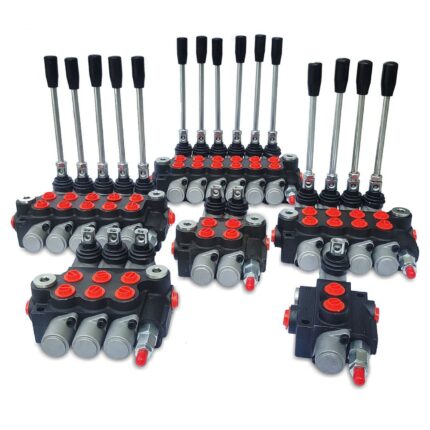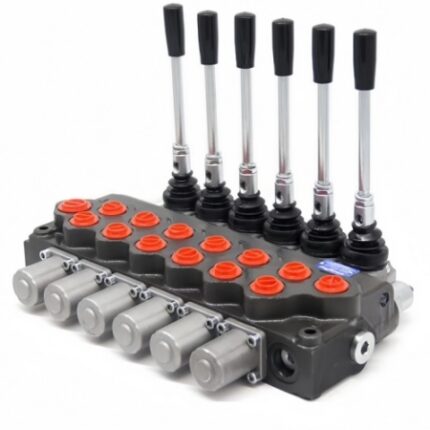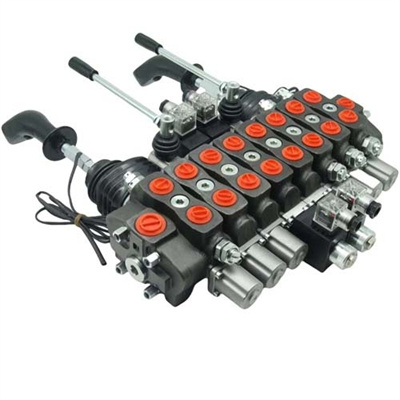

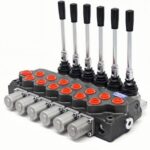

DCV60 directional control valve
DCV directional control valve:DCV20、DCV40、DCV56、DCV58、DCV60、DCV100、DCV140、DCV200
E-mail: hyd-sales2009@outlook.com

Introduction to DCV60 series multi-way reversing valve
DCV60 series is a fragmented multi-way directional control valve specially designed for medium and high pressure hydraulic systems. It is widely used in construction machinery, sanitation machinery and drilling equipment to centrally control multiple hydraulic actuators (such as oil cylinders and motors).Its core advantages include high working pressure, compact structure, excellent opening and closing characteristics, and flexible coupling ability.
Core parameters and characteristics
Rated flow rate: 60-100 liters/min (L/min), which supports efficient oil delivery and ensures the working speed of the actuator.
Working pressure: The rated pressure is 315 bar, up to 350 bar, which is suitable for high-pressure working conditions.
Structure: Fragmented combination design, the number of links can be flexibly configured between 1 and 12 links, which is easy to expand and customize.
Control mode: Supports manual, pneumatic, hydraulic, electro-hydraulic and other control methods, and is compatible with different equipment control systems.
Main features:
The valve core is nickel-plated with high-performance materials to ensure sensitivity and durability.
Low-noise operation, suitable for noise-sensitive environments.
It is highly versatile and can integrate auxiliary functions such as safety valves and overload valves.
Applicable scenarios: Medium and high pressure hydraulic systems such as crawler walking machinery (such as excavators), garbage compactors, drilling equipment, etc.
Procurement advice
If you need to select or purchase, it is recommended to clarify the following requirements in order to accurately match:
Requirements for the number of links: determined according to the number of actuators (for example, 2 links are used for crawler walking equipment).
Control method: choose manual, pneumatic control or electro-hydraulic control to ensure compatibility with the control of the whole machine.
Additional functions: whether overload valve, oil replenishment valve, etc. are required (refer to common configurations).
Oil port specifications: typical threaded connections such as M27×2, M33×2, etc. (Please confirm the supplier for details).