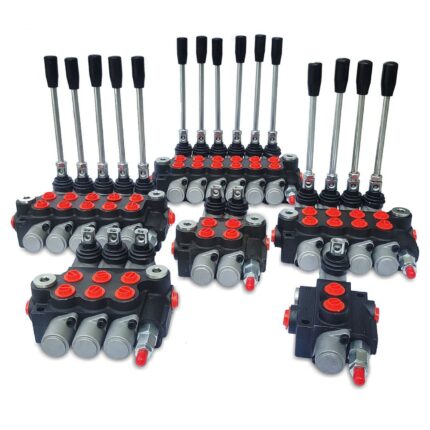
Sale


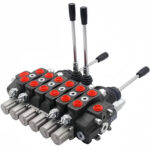

HSSD18 Directional control valves
HSSD series: HSSD4、HSSD5、HSSD6、HSSD8、HSSD11、HSSD14、HSSD15、HSSD18、HSSD25、HSSD8-1、HSSD8-2
E-mail: hyd-sales2009@outlook.com
Description
Parameter Specification of HSSD18 Directional Control Valves
1. Model Interpretation
The HSSD18 is a medium-sized high-speed solenoid directional control valve, specially designed for medium-load hydraulic systems. It balances fast response, high flow capacity and compact structure, and is widely applicable to industrial production equipment and mobile machinery that require stable directional control. Each segment of the model has a clear definition, reflecting the core performance and structural characteristics of the valve:
-
HSSD: Series identifier, representing High-Speed Solenoid Directional valve, featuring rapid commutation, anti-pollution design and flexible configuration, which is suitable for medium-sized hydraulic application scenarios;
-
18: Specification code, indicating the nominal flow grade and main structural dimensions of the valve, which determines the maximum flow capacity, port size and installation benchmarks, and is the core parameter for matching medium-sized hydraulic systems.
2. Core Technical Parameters
|
Parameter Name
|
Specification
|
Unit
|
|
Valve Type
|
4/3 Way Solenoid Directional Valve (Spring Centered + Manual Emergency Override)
|
–
|
|
Rated Operating Pressure
|
21
|
MPa (3050 psi)
|
|
Maximum Pressure
|
31.5
|
MPa (4570 psi)
|
|
Rated Flow
|
60
|
L/min
|
|
Maximum Flow
|
80
|
L/min
|
|
Control Mode
|
Solenoid Electric Control + Manual Override (Dual Control for Safety)
|
–
|
|
Solenoid Voltage
|
DC 24V / AC 220V (Standard); DC 12V / AC 110V (Optional)
|
V
|
|
Port Size
|
P/T: G 1; A/B: G 3/4
|
–
|
|
Neutral Function
|
O-Type (All Ports Closed, Standard); Optional Y-Type / H-Type / P-Type
|
|
|
Main Materials
|
Valve Body: Ductile Iron; Spool: Hardened & Ground Alloy Steel; Seal: NBR (Standard); FKM (Optional for High-Temperature Environments)
|
–
|
3. Performance Parameters
-
Response Time: ≤ 0.022 s (solenoid actuation), ensuring fast and accurate direction switching for medium-excursion actuators (e.g., cylinders, motors);
-
Leakage Rate: ≤ 0.06 mL/min (under maximum pressure), minimal internal leakage to reduce energy loss and maintain system pressure stability;
-
Pressure Loss: ≤ 0.22 MPa (at rated flow), low flow resistance to minimize power consumption of the matching hydraulic pump;
-
Service Life: ≥ 180,000 commutation cycles, stable performance under long-term medium-high load operation;
-
Flow Coefficient (Cv): 12, ensuring stable flow control across the full flow range with minimal flow fluctuation;
-
Noise Level: ≤ 70 dB(A) (at 1800 r/min, no-load), low-noise operation suitable for workshops and precision equipment environments;
-
Volumetric Efficiency: ≥ 98% (under rated conditions), guaranteeing high flow stability and control accuracy;
-
Load Capacity: Adaptable to actuators with thrust ≤ 50 kN, meeting the demand of most medium-duty hydraulic systems.
4. Installation & Working Conditions
-
Mounting Type: Plate Mounting (ISO 4401 Standard) / Threaded Cartridge Mounting, compatible with standard medium-sized hydraulic manifolds, easy for assembly and maintenance;
-
Mounting Direction: Horizontal/Vertical Installation (preferred), no special orientation required, but ensure the spool moves freely without jamming;
-
Working Medium: Hydraulic Oil (ISO VG 32/46/68 at 40℃), with oil cleanliness grade NAS 8 or higher to prevent spool wear and seal degradation;
-
Working Temperature: -20℃ ~ 85℃ (ambient temperature), recommended oil temperature control range: 25℃ ~ 65℃ for long-term stable operation;
-
Vibration Resistance: Withstands vibration ≤ 9 g (5~2000 Hz), suitable for mobile machinery (e.g., small excavators, loaders) and industrial equipment with moderate vibration;
-
Installation Notes: The flow direction arrow on the valve body must align with the actual hydraulic oil flow; use high-pressure hydraulic hoses (≥ 35 MPa) or seamless steel pipes to avoid vibration-induced damage; ensure the solenoid coil wiring is waterproof and shockproof, with a separate power supply to prevent interference from other high-power components;
-
Application Scope: Ideal for medium construction machinery (mini excavators, skid-steer loaders), precision machine tools, medium hydraulic stations, injection molding machines, and agricultural machinery (e.g., small harvesters) requiring precise directional control of hydraulic actuators.
5. Other Specifications
-
Solenoid Coil Power: ≤ 12 W (DC 24V), low power consumption to reduce system load and energy waste;
-
Weight: Approximately 12 kg (varies slightly by port type and configuration);
-
Design Standard: Complies with ISO 4401, GB/T 17485 and CE certification, with high interchangeability of spare parts;
-
Maintenance: Routine inspection every 2500 working hours (check solenoid coil resistance, seal condition, and spool movement); replace seals every 10,000 working hours (replace aged seals to prevent leakage); clean the spool every 12,000 working hours (remove impurities to avoid jamming and ensure smooth operation).

Shipping & Delivery