Sale


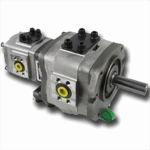

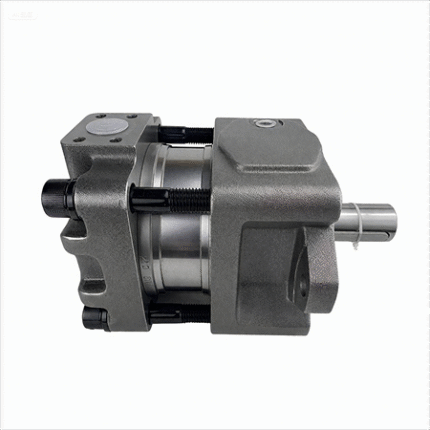
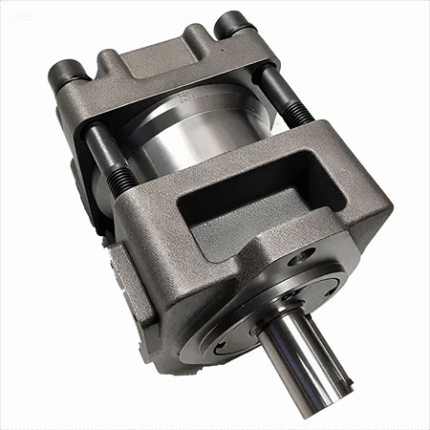
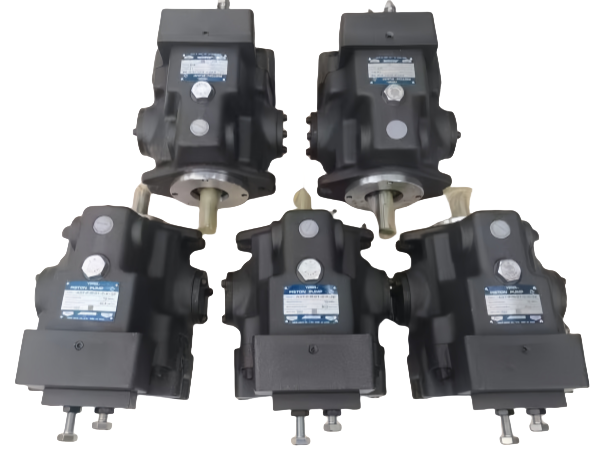
IPH-6A(B)-125-21 Gear pump
IPH SERIES IP PUMP: IPH-2A(B)、IPH-3A(B)、IPH-4A(B)
IPH-5A(B)、IPH-6A(B)
E-mail: hyd-sales2009@outlook.com
Description
Parameter Description of NACHI Gear Pump IPH-6A(B)-125-21
1. Model Interpretation
The model IPH-6A(B)-125-21 follows NACHI’s standard naming convention for IP series gear pumps, with each segment representing specific product characteristics:
-
IPH: Series identifier, indicating the IP series internal gear pump, featuring high efficiency and high pressure resistance based on patented axial and radial pressure loading technology.
-
6: Size grade, specifying the pump’s overall structural size and installation dimension standard.
-
A(B): Mounting type. “A” stands for foot mount type, and “B” stands for flange mount type, providing two installation options to adapt to different equipment layout requirements.
-
125: Displacement specification, representing a theoretical displacement of 125 cm³ per revolution (cm³/rev).
-
21: Design code, indicating an optimized design configuration for the 6A/6B size grade, with improved structural stability and interchangeability compared to the standard 11 design code.
2. Core Technical Parameters
|
Parameter Name
|
Specification
|
Unit
|
|
Series
|
IPH
|
–
|
|
Displacement
|
125
|
cm³/rev
|
|
Rated Pressure
|
25
|
MPa (255 bar)
|
|
Maximum Working Pressure
|
30
|
MPa (306 bar)
|
|
Speed Range
|
300 – 1800
|
rpm
|
|
Mounting Type
|
A: Foot Mount; B: Flange Mount
|
–
|
|
Discharge Port Diameter
|
40
|
mm
|
|
Overall Dimension (LA)
|
256.5
|
mm
|
|
Overall Dimension (LB)
|
118.5
|
mm
|
|
Weight (Approx.)
|
42
|
kg
|
|
Rotation Direction
|
Counterclockwise (Viewed from Shaft End)
|
–
|
3. Performance Characteristics
-
High Efficiency & Durability: Adopts patented axial and radial pressure loading system, enabling stable operation under high pressure and ensuring excellent durability and long service life, which is more outstanding in the 21 design code configuration.
-
Low Noise & Low Pulsation: Equipped with modified involute short-tooth gears for internal meshing, which significantly reduces pulsation and noise during operation, achieving extremely quiet performance even with the increased displacement of 125 cm³/rev.
-
Simple Structure & Easy Maintenance: The compact and simple structural design simplifies daily inspection and maintenance work, reducing maintenance costs and downtime, consistent with the overall design concept of the IPH series.
-
Stable Operation: The optimized gear design and precise manufacturing process, combined with the 21 design code optimization, ensure stable discharge flow and pressure, with strong adaptability to high-load working conditions.
4. Operating Requirements
-
Hydraulic Fluid: Recommended to use R&O type and wear-resistant hydraulic oil with ISO VG 32 to 68 (viscosity index ≥ 90). The kinematic viscosity during operation should be 20 to 150 mm²/s, which is suitable for the 125 displacement configuration.
-
Operating Temperature: The ambient temperature range is 0 to 60℃ (32 to 140℉), and the hydraulic oil temperature range is -40 to 65℃ (40 to 149℉). Preheat at low pressure when the startup oil temperature is below -40℃ until it reaches the normal operating temperature.
-
Suction Conditions: The suction pressure should be 0.02 to 0.3 MPa (2.9 to 44 psi), and the flow rate at the suction port should be greater than 1.83 m/s (6 ft/sec). A suction strainer with 100 µm (150 mesh) filtering grade is recommended, and a 25 µm line filter should be installed in the return line to protect the pump components.
-
Contamination Control: The hydraulic fluid contamination level should be maintained at NAS 10 or lower, avoiding contamination by water and other impurities. Check the fluid color regularly to prevent air or dirt contamination, which is crucial for the 21 design code’s optimized structure.
-
Installation Notes: Install the pump with the shaft horizontally, avoiding radial or thrust loads on the shaft end from pulleys or gears. Bleed air from the pump and pipelines through inching operation (start-stop) during startup to ensure smooth operation.
5. Application Scope
The IPH-6A(B)-125-21 gear pump is widely used in various high-load hydraulic systems, including heavy-duty construction machinery, large-scale industrial equipment, precision machine tools, and high-pressure hydraulic power units, especially suitable for scenarios requiring high pressure, large flow, stable operation and low noise.
 Nachi IPH series gear pump:
| IPH-2A-3.5-11 | IPH-2A-5-11 | IPH-2A-6.5-11 | IPH-2A-8-11 | IPH-2B-3.5-11 | IPH-2B-5-11 | IPH-2B-6.5-11 | IPH-2B-8-11 | IPH-3A-10-20 |
| IPH-3A-13-20 | IPH-3A-16-20 | IPH-3B-10-20 | IPH-3B-13-20 | IPH-3B-16-20 | IPH-4B-20-20 | IPH-4B-25-20 | IPH-4B-32-20 | IPH-4A-20-20 |
| IPH-4A-25-20 | IPH-4A-32-20 | IPH-5A-40-21 | IPH-5A-50-21 | IPH-5A-64-21 | IPH-5A-40-11 | IPH-5A-50-11 | IPH-5A-64-11 | IPH-5B-40-21 |
| IPH-5B-50-21 | IPH-5B-64-21 | IPH-5B-40-11 | IPH-5B-50-11 | IPH-5B-64-11 | IPH-6A-80-21 | IPH-6A-100-21 | IPH-6A-125-21 | IPH-6A-80-11 |
| IPH-6A-100-11 | IPH-6A-125-11 | IPH-6B-80-21 | IPH-6B-100-21 | IPH-6B-125-21 | IPH-6B-80-11 | IPH-6B-100-11 | IPH-6B-125-11 |
About brand

Shipping & Delivery