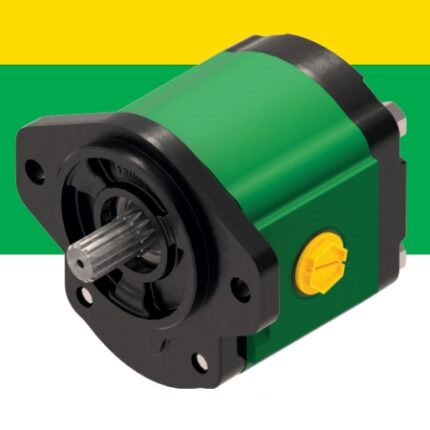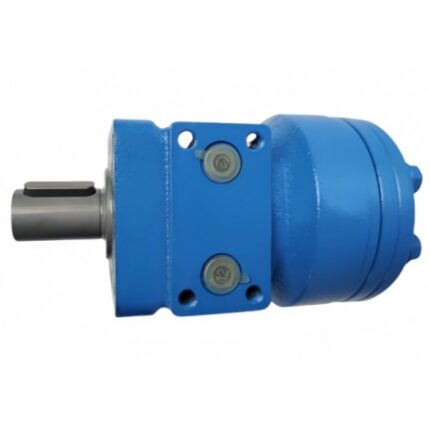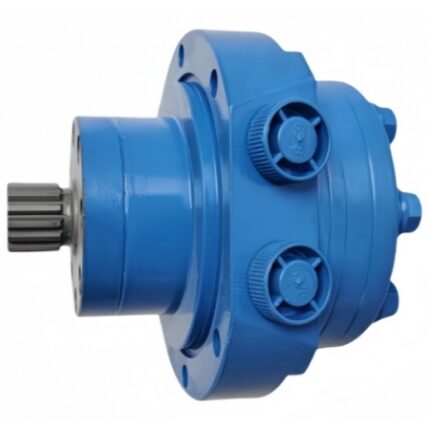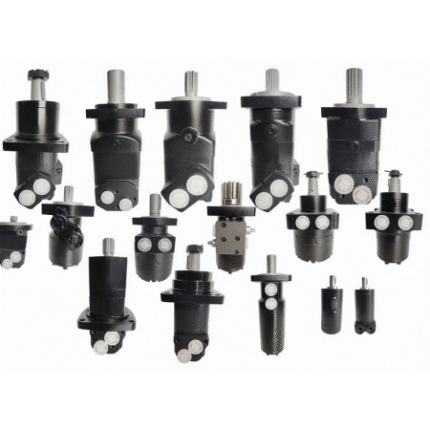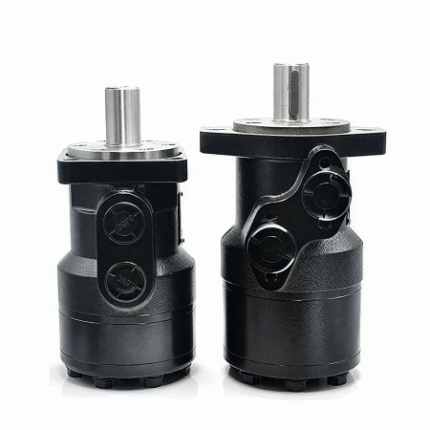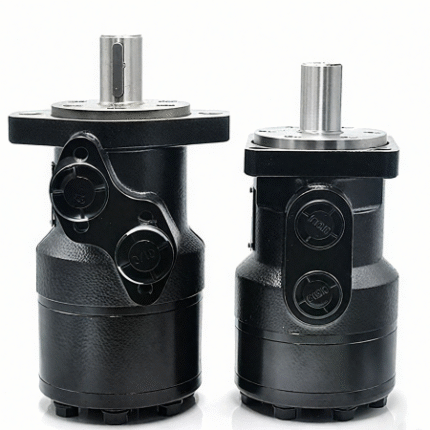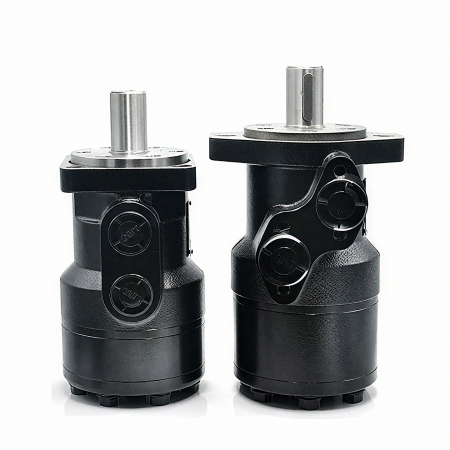
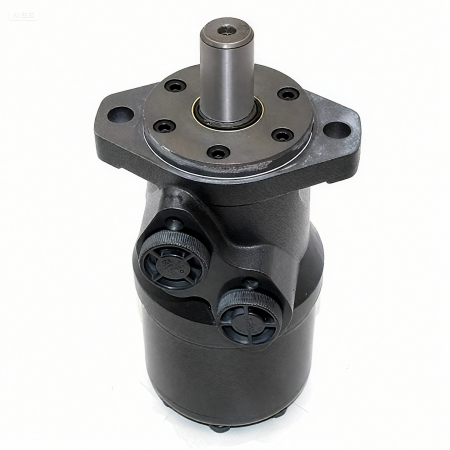
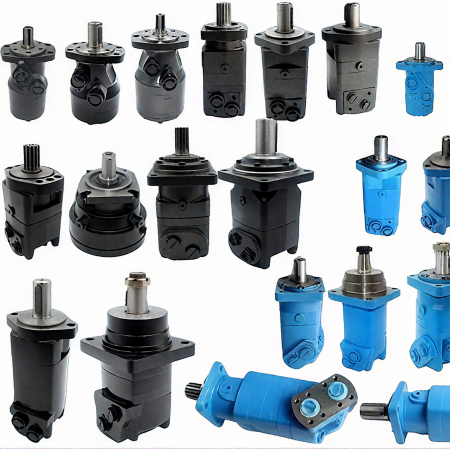
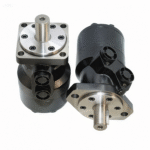
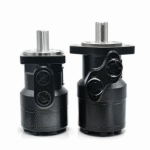
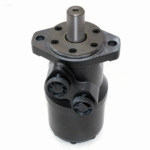
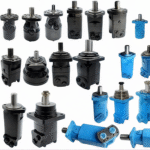
OMH series Cycloid motor
OMP series displacement range: 50-125
OMT series displacement range: 195-801.8
OMS series displacement range: 80-801.8
OMR series displacement range: 50-395
OMH series displacement range: 203.2–489.2
The main specifications and parameters of OMT, OMS, OMR, and OMH series cycloid motors are sorted out:
OMT series
Displacement range: 200-800 cm3/rev (such as OMT-200 displacement 200 cm3/rev, OMT-800 displacement 801.8 cm3/rev)
Speed: continuous speed up to 875 RPM (OMT-200), intermittent speed up to 980 RPM
Torque: continuous torque 175 N·m, intermittent torque 275 N·m
Typical applications: mixing rotary tillage harvester, sanitation equipment, etc.
OMT/HMT series cycloid hydraulic motor OMT-245 shaft 40 flat key hydraulic oil motor.
OMS series
Displacement coverage: 80-800 cm3/rev (such as OMS-395 displacement 395 cm3/rev, OMS-800 displacement 801.8 cm3/rev)
Speed characteristics: low-speed and high-torque design, suitable for injection molding machines, snowplows and other scenarios
Flange standard: Support SAE flange installation, shaft diameter is adapted to 40mm flat key.
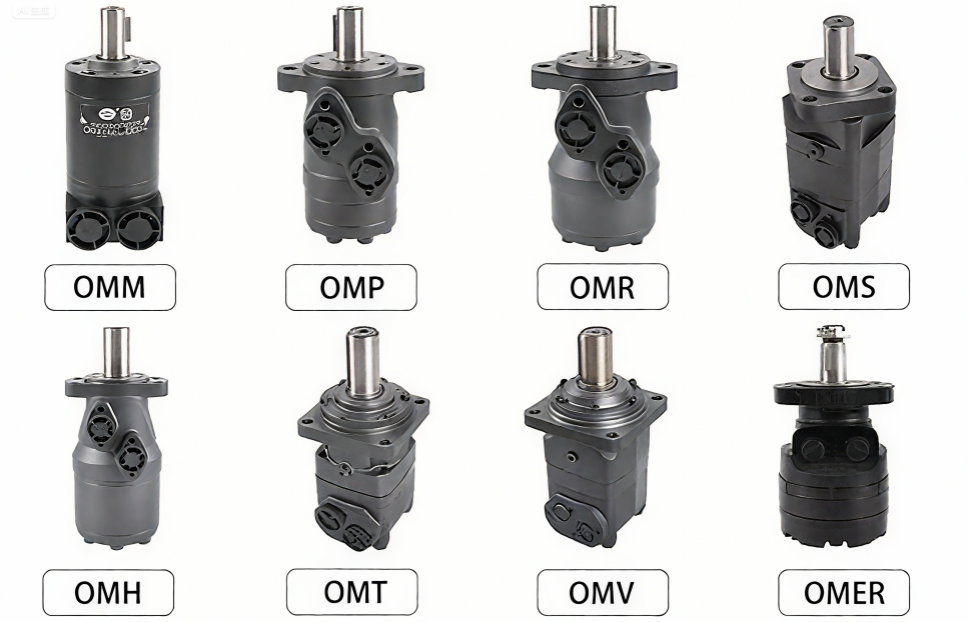
OMR series
Displacement range: 50-400 cm3/rev (such as OMR-50 displacement 50 cm3/rev, OMR-315 displacement 315 cm3/rev)
Working pressure: maximum intermittent pressure drop of 200 bar (2900 psi)
Output power: maximum intermittent power 18.5kW (24.8 hp)
Adaptation scenarios: fertilizer spreader, fishing boat, walking drive, etc.
OMH series
Displacement range: 200-500 cm3/rev (such as OMH-200 displacement 203.2 cm3/rev, OMH-500 displacement 489.2 cm3/rev)
Speed performance: the maximum speed is 366 RPM (OMH-200), and the maximum flow rate is 75 L/min
Torque output: rated torque 340 N·m, maximum power 11.2 kW
Typical applications: agricultural machinery, concrete mixer trucks, pump trucks, etc.
Note: Some models (such as OMH-400/151H1005, OMS-400/151F0610) are original Danfoss designs, and the parameters need to refer to the brand technical manual.