Sale


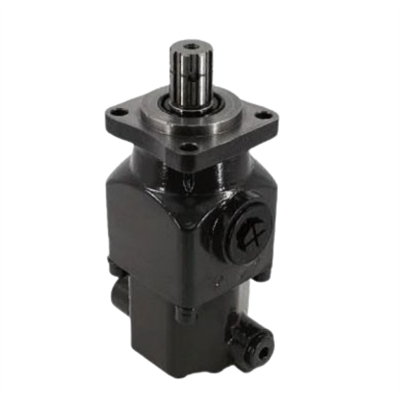
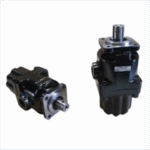

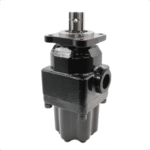

P9-80 series piston pump
Our products are used in a wide range of applications including agricultural machinery, construction machinery, drilling machinery,petroleum machinery and specialized vehicles.
E-mail: hyd-sales2009@outlook.com
Description
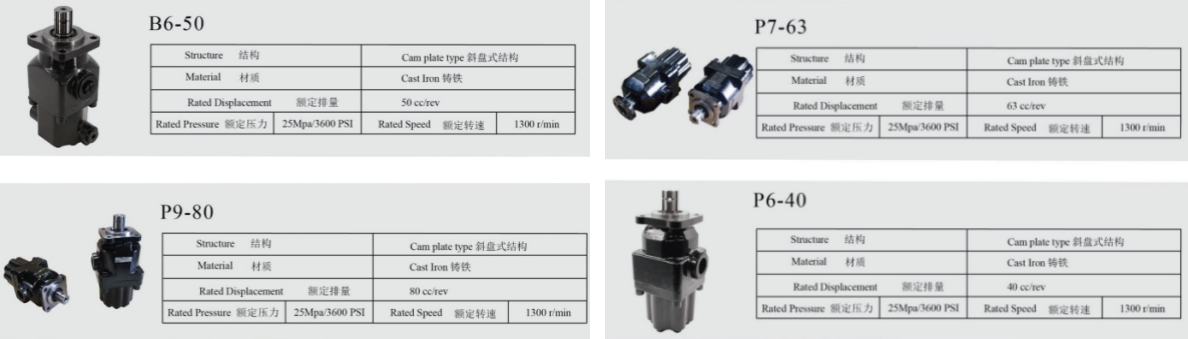
Hydraulic Pump P9-80 Series: Model Explanation & Technical Parameters
1. Model Explanation
The P9-80 series hydraulic pump is a high-pressure fixed displacement vane pump, widely used in industrial manufacturing, engineering machinery and hydraulic systems requiring stable high-pressure output. It features compact structure, reliable performance and strong adaptability to harsh working conditions. Each segment of the model number has a specific meaning, which is detailed as follows:
-
P9: Series Identifier, representing the high-pressure vane pump series. This series is designed for heavy-duty working conditions, adopting high-strength materials and optimized structural design to ensure stable operation under high-pressure loads, with excellent durability and anti-contamination performance[1][3].
-
80: Displacement Specification, indicating the theoretical displacement of the pump is 80 cc/rev (cubic centimeters per revolution). This parameter determines the basic flow output capacity of the pump, and the actual flow rate varies with the operating speed[1][2].
-
Supplementary Note: For the extended models of the P9-80 series (such as P9-80A/P9-80B), the suffix letters usually represent the mounting method: “A” stands for foot type mounting, and “B” stands for flange type mounting, which can be selected according to the actual layout of the hydraulic system. In addition, the pump is equipped with a built-in safety relief valve to protect the system from overpressure damage[10][14].
2. Technical Parameters
|
Parameter Category
|
Parameter Description
|
Value
|
|
Basic Parameters
|
Pump Type
|
High-Pressure Fixed Displacement Vane Pump
|
|
Series
|
P9-80
|
|
|
Performance Parameters
|
Theoretical Displacement
|
80 cc/rev
|
|
Rated Working Pressure
|
210 bar (3045 psi) [Rated]; 280 bar (4061 psi) [Peak][1][3]
|
|
|
Rotation Speed Range
|
600 – 2000 min⁻¹ (Rated Speed: 1500 min⁻¹)
|
|
|
No-Load Flow Rate (1500 min⁻¹)
|
120 L/min (31.7 gpm)
|
|
|
Installation & Physical Parameters
|
Mounting Method
|
Foot Type (Optional) / Flange Type (Optional)
|
|
Weight
|
18 kg (39.7 lb) [Foot Type]; 20 kg (44.1 lb) [Flange Type]
|
|
|
Overall Dimensions (L×W×H)
|
320×280×210 mm
|
|
|
Operational Parameters
|
Rotation Direction
|
Clockwise (when viewed from the shaft side; reversible on request)
|
|
Max Back Pressure of Drain Piping
|
≤ 4.3 psi (≤ 0.03 MPa)
|
|
|
Recommended Hydraulic Oil
|
L-HM32 or L-HM46 anti-wear hydraulic oil; 11~60 mm²/s at 40℃[4][7]
|
3. Key Features
-
High-Pressure Stability: Optimized structural design and high-strength materials ensure stable operation under rated pressure of 210 bar (3045 psi) and peak pressure of 280 bar (4061 psi), adapting to heavy-duty working conditions[1][3].
-
Efficient Operation: The vane structure is designed with self-adjusting function, which ensures the vane fits closely to the stator inner curve, reducing internal leakage and improving volumetric efficiency[14].
-
Strong Anti-Contamination & Durability: Adopting high-quality materials and precise machining, it has excellent anti-contamination performance and wear resistance, extending the service life of the pump[1][3].
-
Convenient Installation & Maintenance: Optional foot or flange mounting methods adapt to different hydraulic system layouts; the pump structure is simple, and the vane can be replaced quickly, reducing maintenance time[14].
-
Reliable Safety Protection: Equipped with a built-in safety relief valve, which can automatically overflow when the system pressure exceeds the set value, effectively protecting the pump and hydraulic system from damage[10].
-
Wide Adaptability: Suitable for a variety of hydraulic oil specifications, and can work stably in a wide speed range of 600-2000 min⁻¹, widely used in industrial manufacturing and engineering machinery[4][7].
Shipping & Delivery