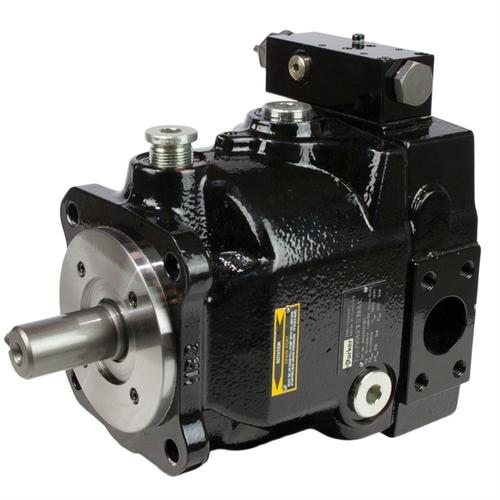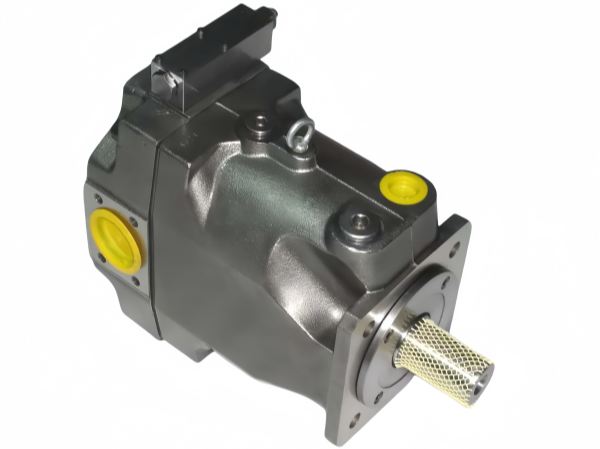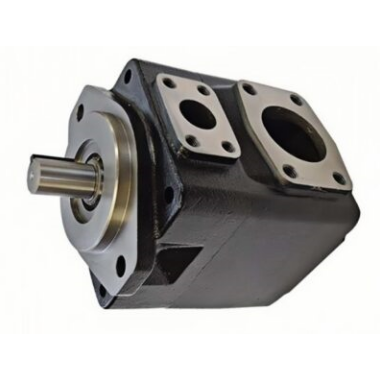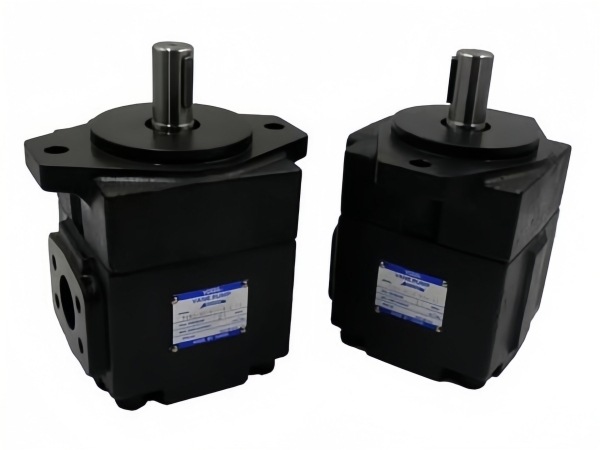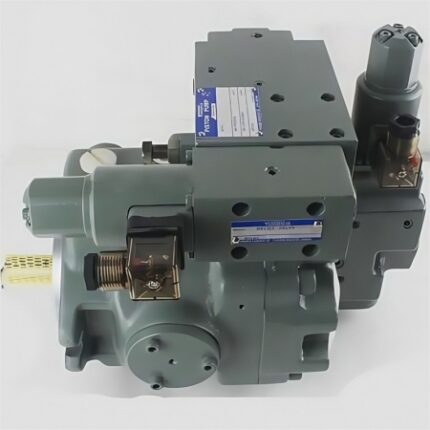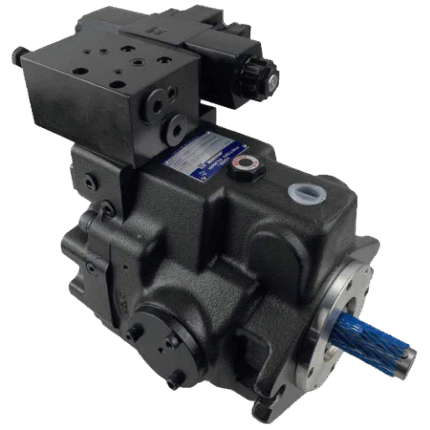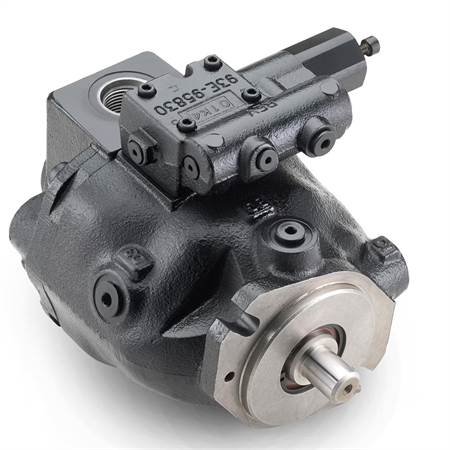
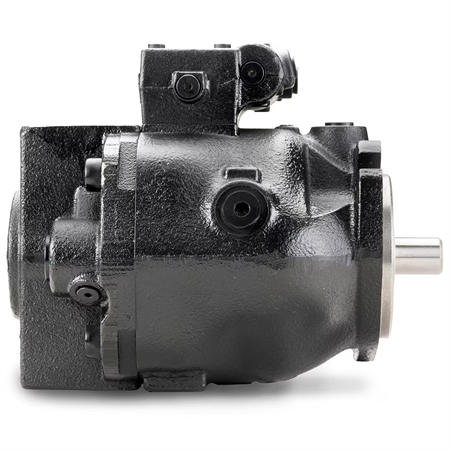
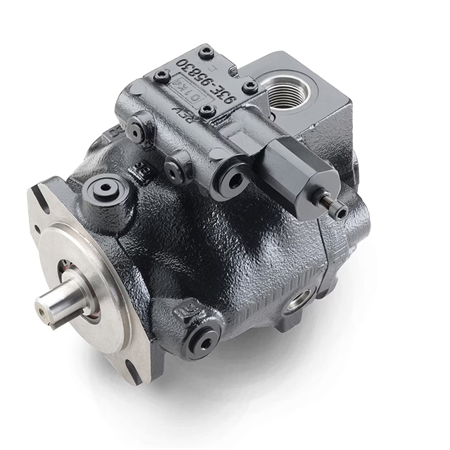
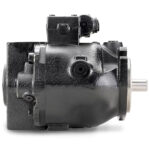
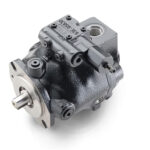

PD series Medium Pressure Industrial Pumps
The Parker PD Series pump offers variable displacement axial piston pumps for open-circuit applications. Featuring a compact footprint and continuous operating pressure of up to 4,060 psi, PD piston pumps provide quiet operation and efficient control.
The specifications of the Parker PD Series medium-pressure industrial pumps are as follows:
I. Displacement and Models
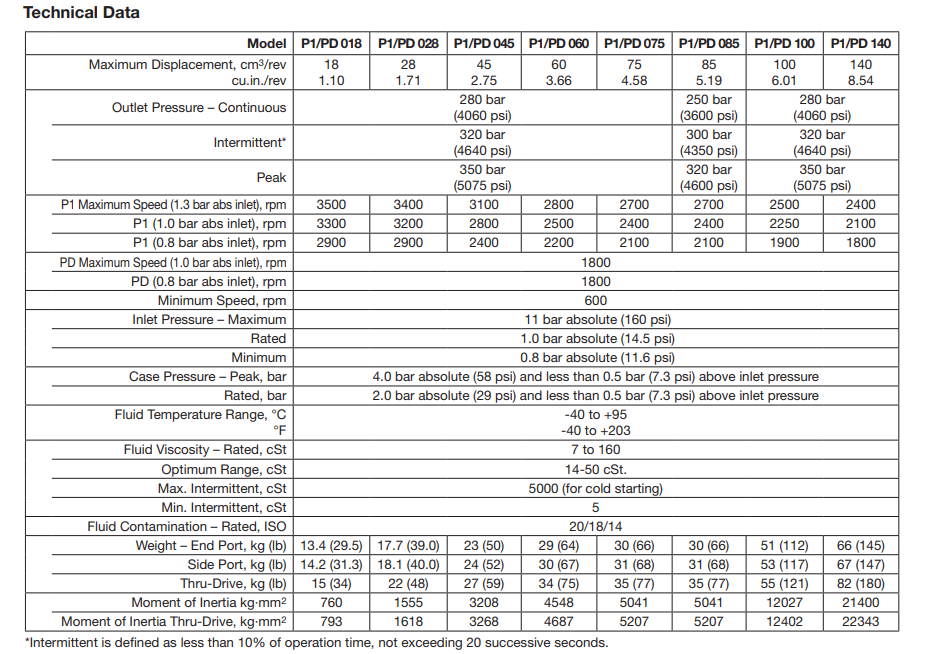
Displacement range: 18 cc/rev to 140 cc/rev. Specific models include:
PD018 (18 cc/rev)
PD028 (28 cc/rev)
PD045 (45 cc/rev)
PD060 (60 cc/rev)
PD075 (75 cc/rev)
PD100 (100 cc/rev)
PD140 (140 cc/rev)
Modular design: Flexible combinations are available to meet different flow requirements.
II. Pressure Specifications
Continuous operating pressure: 280 bar (4060 psi), suitable for long-term stable operation.
Peak pressure: Some models can reach higher pressures under short-term overload or special operating conditions (depending on the model).
III. Speed and Performance
Speed range: 600-1800 rpm, with some models supporting higher speeds. Efficiency:
Volumetric efficiency: As high as 93%-95% due to the continuous sealing line (surface) of the piston pump’s working volume.
Mechanical efficiency: Due to the excellent lubrication conditions between the moving parts, mechanical efficiency is also high.
Overall efficiency: Near the rated operating point, the overall efficiency can reach 91%-93%.
IV. Typical Application Scenarios
Industrial Automation: Suitable for robots, clamping devices, etc., to achieve high-precision control.
Machine Tools: Provide stable power output and improve machining accuracy.
Metallurgical Equipment: Used in presses, conveyors, etc., to enhance production efficiency.
Shipbuilding Industry: Suitable for hydraulic systems such as steering gear and anchor winches, ensuring navigation safety.
Energy: Provides reliable power support in power plants and other applications.