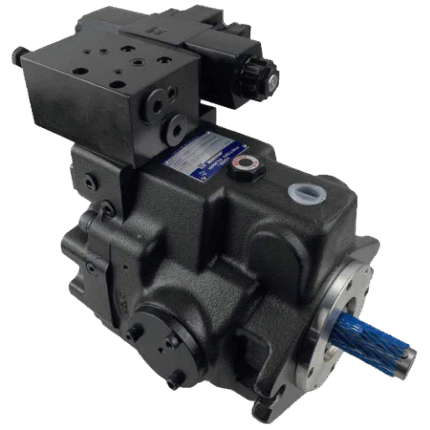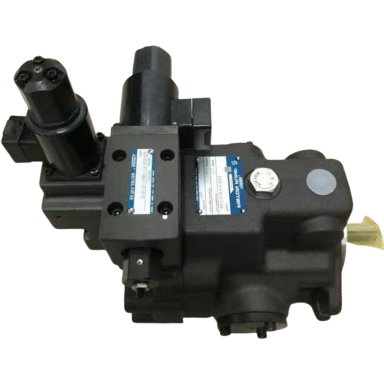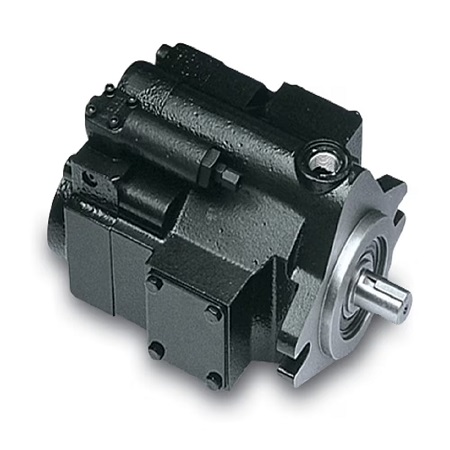

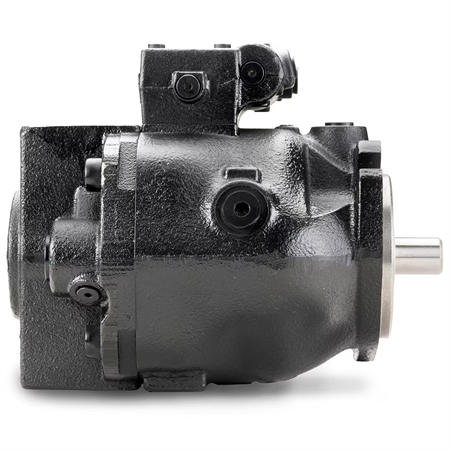


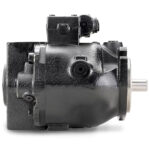
PVP series Hydraulic Piston Pump
The Parker PVP Series provides durable variable volume hydraulic piston pumps for medium pressure applications. With a pressure rating of 3,600 psi and a wide range of controls, PVP pumps are efficient and reliable.
The specifications of the Parker PVP series hydraulic piston pumps are as follows:
I. Displacement and Models
Displacement range: 16 to 140 ml/rev. Specific models include PVP016, PVP023, PVP033, PVP041, PVP048, PVP060, PVP076, PVP100, and PVP140.
II. Pressure Parameters
Rated operating pressure: 250 bar (some models can reach a peak pressure of 350 bar, but specific model numbers must be confirmed).
Inlet pressure: Minimum 0.8 bar, maximum 0.7 bar (please consult when using high-pressure water-based media).
Controlled leak pressure: 7 bar (100 PSI).

III. Speed and Performance
Minimum speed: 500 rpm (some models can reach 300 rpm).
Maximum speed: Some models can reach 3000 rpm.
Efficiency:
Volumetric efficiency: Because the piston pump has a continuous sealing line within its working volume, it achieves high volumetric efficiency. Mechanical Efficiency: Excellent lubrication between all moving parts results in high mechanical efficiency.
Overall Efficiency: High overall efficiency is achieved near the rated operating point.
IV. Control Methods
Pressure Compensation: Automatically adjusts output pressure to prevent overload.
Remote Pressure Compensation: Supports remote signal pressure control.
Load Sensing: Adjusts flow rate based on load demand to improve energy efficiency.
Power (Torque) Limiting: Limits maximum system power to protect equipment.
Electro-hydraulic Proportional/Servo Control: Enables high-precision flow and pressure regulation.
Low-Pressure Standby: Reduces no-load energy consumption.
V. Typical Application Scenarios
Industrial Hydraulic Systems: Suitable for high-pressure applications such as mining equipment and special machinery.
Engineering Machinery: Suitable for applications requiring efficient power transmission, such as construction machinery and agricultural equipment.
High Dynamic Control: Modular compensators enable fast response and adaptability to load changes.