Sale
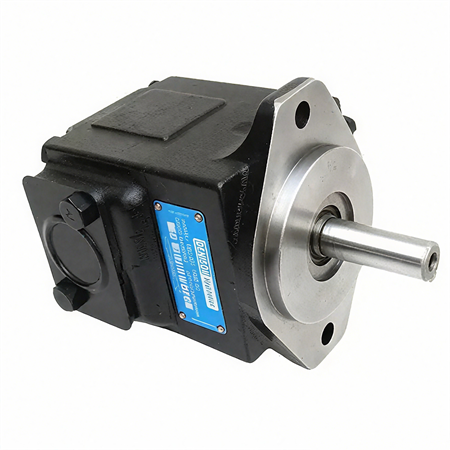


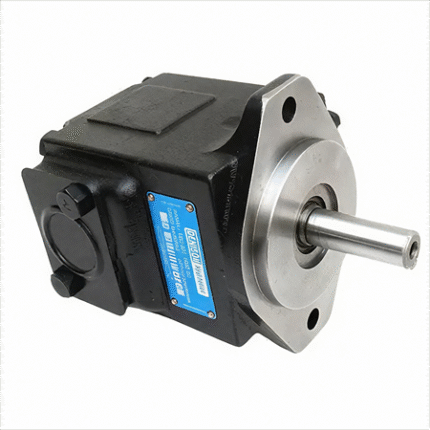
T67EDB/T67EDBS series Triple vane pump
T6 series vane pump models: T6C, T6D, T6E,T6CC, T6DC, T6EC,T67DBB, T67DCB, T6DCC, T67DDBS, T6DDCS, T67EDB(S), T6EDC(S), etc.
T7 series vane pump models: T7B, T7BS, T7D, T7E,T7DB, T7DC, T7DBB, T7DCB, T7DCC, T7DDB, T7EDB, etc.
Description
Specifications of Parker Denison T67EDB/T67EDBS Series Triple Vane Pumps
1. Basic Information
|
Item
|
Description
|
|---|---|
|
Product Series
|
Parker Denison T67EDB / T67EDBS
|
|
Pump Type
|
Triple Fixed Displacement Vane Pump (three independent cartridges sharing one drive shaft)
|
|
Core Technology
|
Denison Vane Technology, double-lip vane design, hydraulic balance structure
|
|
Mounting Difference
|
T67EDB: ISO 4-bolt mounting flange (per ISO 3019-2 standard); T67EDBS: SAE E 4-bolt J744 mounting flange (large-size mounting interface)
|
|
Weight Range
|
Approx. 45kg – 75kg, varies by displacement combination and configuration
|
|
Port Configurations
|
128 port position combinations to adapt to various system layouts
|
2. Key Technical Parameters
2.1 Pressure & Speed
|
Parameter
|
Value
|
Remarks
|
|---|---|---|
|
Maximum Intermittent Pressure
|
P1 (Front Section): Up to 300 bar; P2 (Middle Section): Up to 240 bar; P3 (Rear Section): Up to 320 bar
|
Each cartridge bears pressure independently, pressure can be set according to circuit requirements
|
|
Maximum Continuous Pressure
|
P1 (Front Section): Up to 250 bar; P2 (Middle Section): Up to 210 bar; P3 (Rear Section): Up to 290 bar
|
It is recommended not to exceed the continuous pressure for long-term operation
|
|
Speed Range
|
600 – 2200 rpm (industrial type); 400 – 2000 rpm (heavy-duty working conditions)
|
The larger the displacement, the lower the maximum speed; P1 displacement determines the overall speed upper limit
|
|
Minimum Stable Speed
|
Approx. 400 rpm
|
Ensures sufficient lubrication of vanes and stable output
|
|
Volumetric Efficiency
|
Typically 0.92 – 0.94
|
High volumetric efficiency reduces energy loss and system heat generation
|
|
Noise Level
|
3 – 5 dB(A) lower than ordinary pumps
|
Optimized vane and cam ring design, low pressure pulsation (±2 bar)
|
2.2 Displacement Specifications
|
Cartridge Position
|
Displacement Code
|
Displacement (ml/rev)
|
Series Type
|
|---|---|---|---|
|
P1 (Front, Shaft End)
|
B14
|
43.2
|
D Series
|
|
B17
|
54.0
|
D Series
|
|
|
B20
|
64.8
|
D Series
|
|
|
B22
|
70.3
|
D Series
|
|
|
B24
|
79.6
|
D Series
|
|
|
B28
|
88.4
|
D Series
|
|
|
B35
|
111.4
|
D Series
|
|
|
B42
|
135.3
|
D Series
|
|
|
045
|
145.7
|
E Series
|
|
|
P2 (Middle) & P3 (Rear, Cover End)
|
003
|
10.8
|
C Series
|
|
005
|
17.2
|
C Series
|
|
|
006
|
21.3
|
C Series
|
|
|
008
|
26.4
|
C Series
|
|
|
010
|
34.1
|
C Series
|
|
|
012
|
37.1
|
C Series
|
|
|
014
|
46.0
|
C Series
|
|
|
017
|
58.3
|
C Series
|
|
|
020
|
63.8
|
C Series
|
|
|
028
|
88.8
|
C Series
|
|
|
031
|
100.0
|
C Series
|
2.3 Other Key Parameters
-
Contamination Resistance: Double-lip vane design reduces sensitivity to hydraulic oil cleanliness (NAS 7 grade or higher is recommended)
-
Temperature Range: -20°C ~ +80°C (adjust according to hydraulic oil type)
-
Shaft Type: Keyed shaft (SAE E) or splined shaft (SAE CC/SAE D/E) optional
-
Rotation Direction: Standard clockwise (R), counterclockwise (L) optional; all three cartridges rotate synchronously
-
Seal Type: Standard Nitrile Rubber (NBR); other seal materials optional based on working conditions
-
Flow Rate: Up to 537 L/min @ 2000 rpm (varies by displacement combination)
3. Applicable Medium & Environment
-
Applicable Medium: Mineral oil, biodegradable oil, water-based hydraulic fluid, etc.; recommended viscosity 10 ~ 100 cSt
-
Applicable Fluids: Fire-resistant fluids and biodegradable fluids (including phosphate esters, organic esters, chlorinated hydrocarbons, water glycols, rapeseed oil) are acceptable, ensuring longer service life at higher pressures
-
Application Fields: Industrial machinery, heavy-duty equipment, complex hydraulic systems requiring three different pressure/flow combinations
4. Core Features
-
Independent Three-circuit Output: Three cartridges work independently, providing three different pressure/flow combinations simultaneously to meet the needs of complex multi-circuit systems
-
High Efficiency & Energy Saving: Full pressure balance design with high volumetric efficiency reduces energy loss and operating costs
-
Easy Maintenance: Cartridge design allows quick and independent replacement of any cartridge, reducing downtime and maintenance costs by approximately 60%
-
Flexible Installation: 128 port position combinations adapt to various system layouts, reducing installation costs
-
Low Pulsation Output: Optimized vane structure design with low pressure pulsation, reducing pipeline noise and protecting the system
 T6 series vane pump models: T6C-003 to T6C-031, T6D-014 to T6D-050, T6E-042 to T6E-085, etc.
T7 series vane pump models: T7B, T7BS, T7D, T7E, etc.
T6 series double pump model: T6CC, T6DC, T6EC, etc.
T7 series double pump model: T7DB, T7DC, etc.
T6 series triple pump models: T67DBB, T67DCB, T6DCC, T67DDBS, T6DDCS, T67EDB(S), T6EDC(S), etc.
T7 series triple pump models: T7DBB, T7DCB, T7DCC, T7DDB, T7EDB, etc.
Shipping & Delivery