Sale
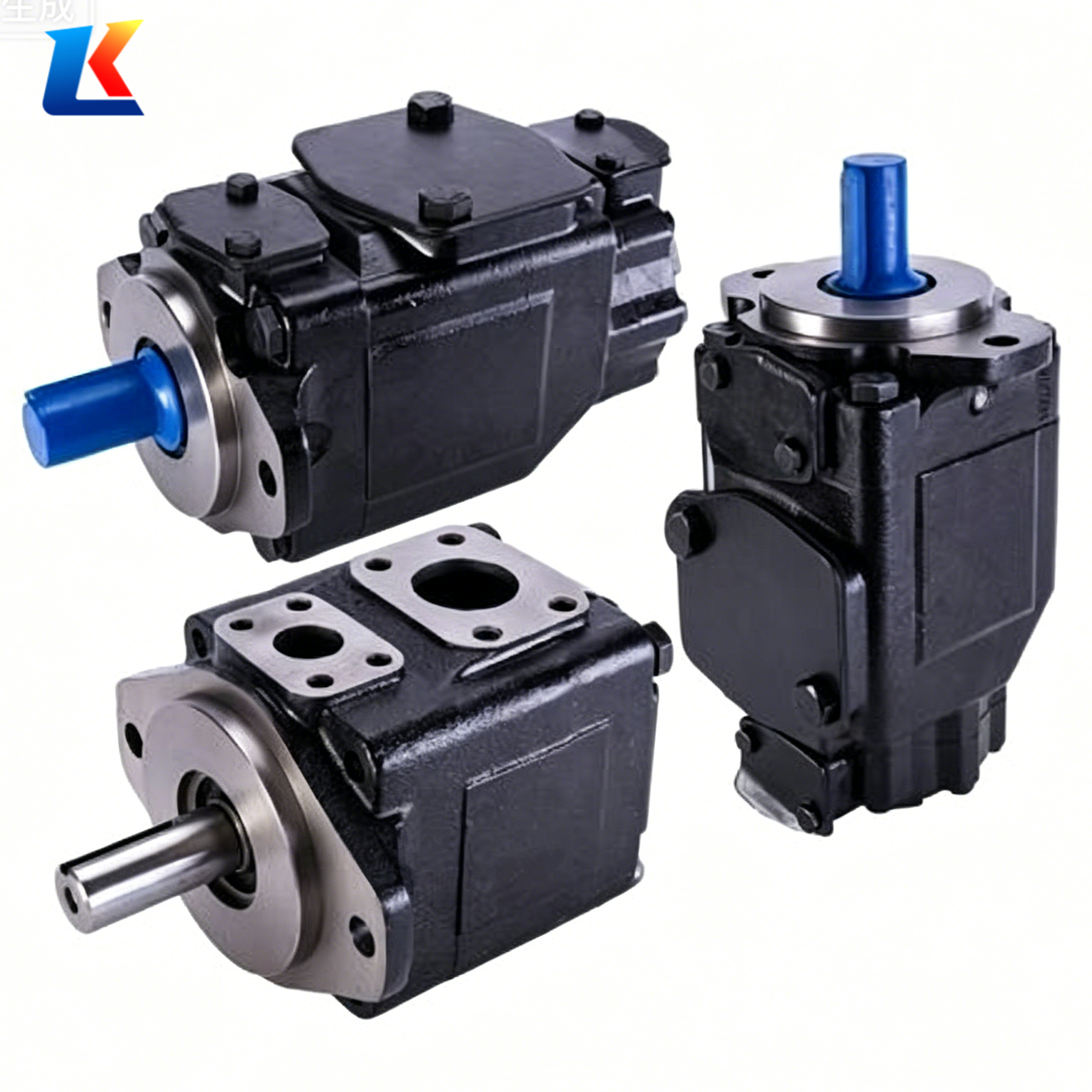
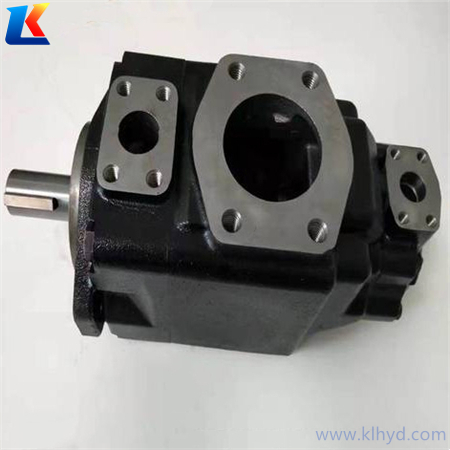
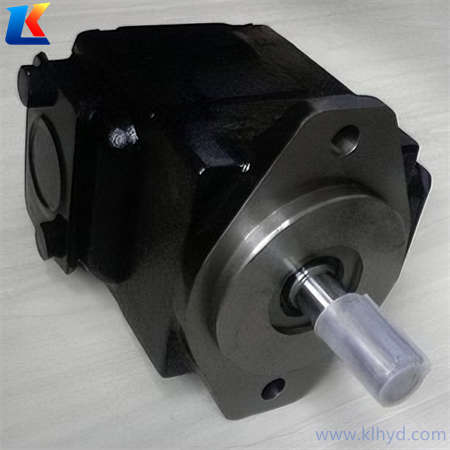
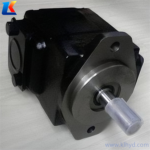


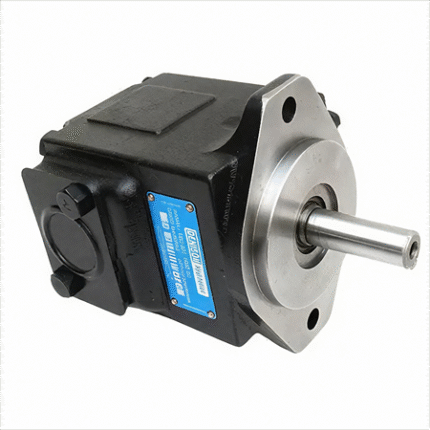
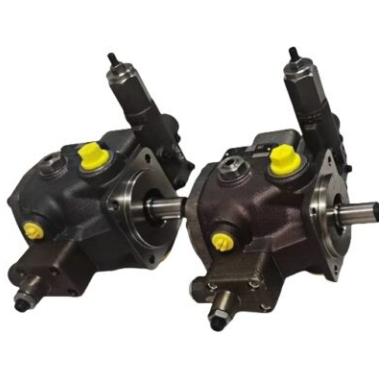
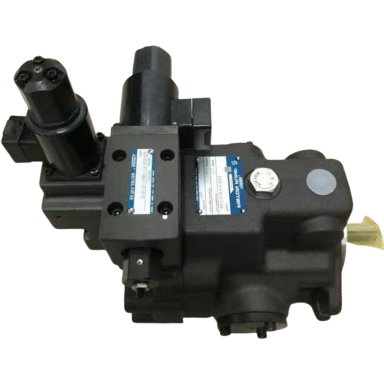
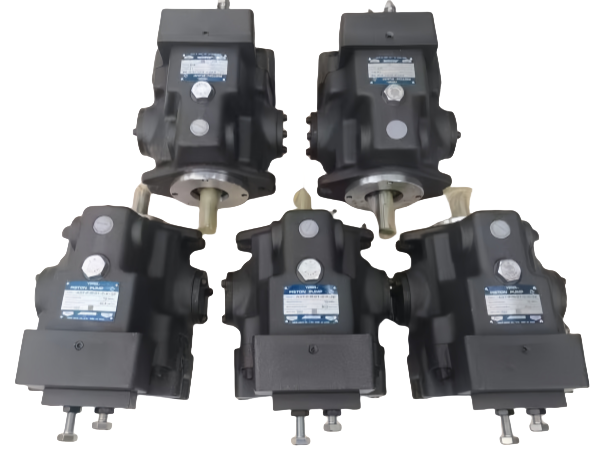
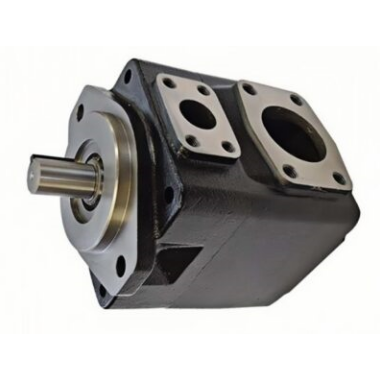
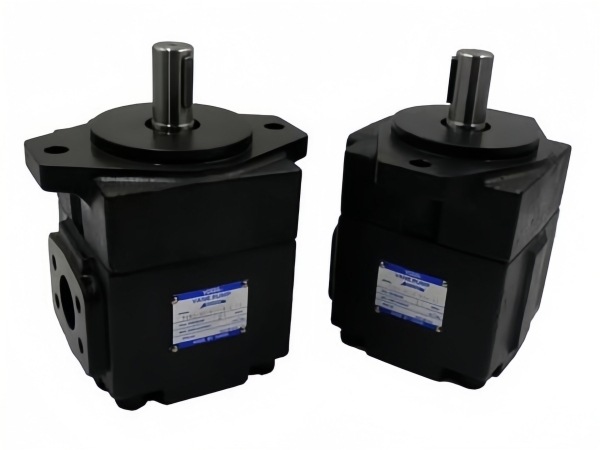
T6C series Parker Denison Vane Pump
Single pump:T6C、T6D、T6E、T6CM、T6CP、T7B、T7BS、T7D、T7DS、T7E、T7ES
Double pump:T6CC、T6DC、T6EC、T6ED、T6EE、T7BB、T7BBS、T7DB、T7DBS、T7EB、T7EBS、T67CB、T67DB、T67EB、T67DBS
Triple pump:T6DCC、T6EDC、T6ECC、T6EDCC、T7DBB、T7DBSB、T7EBB、T7EBSB、T67EDB、T67EDBS、T67DCB、T67DDBS
| Contact us |
| Whats app: +86 13728707767 |
| E-mail: hyd-sales2009@outlook.com |
Description
T6C Series Parker Denison Single Vane Pump Specifications and Model Description
The T6C series is a classic high-pressure fixed-displacement single vane pump from Parker Denison. As a core model in the T6 general industrial vane pump family, it features medium and small flow rates, high pressure, low pulsation, and low noise. Adopting a dual-lip vane structure with high volumetric efficiency and excellent contamination resistance, it is widely applied in construction machinery, metallurgical equipment, light industrial machinery, hydraulic power stations, and other industrial hydraulic systems, serving as a mainstream pump type for medium and low-load hydraulic systems.
1. Core Product Features
-
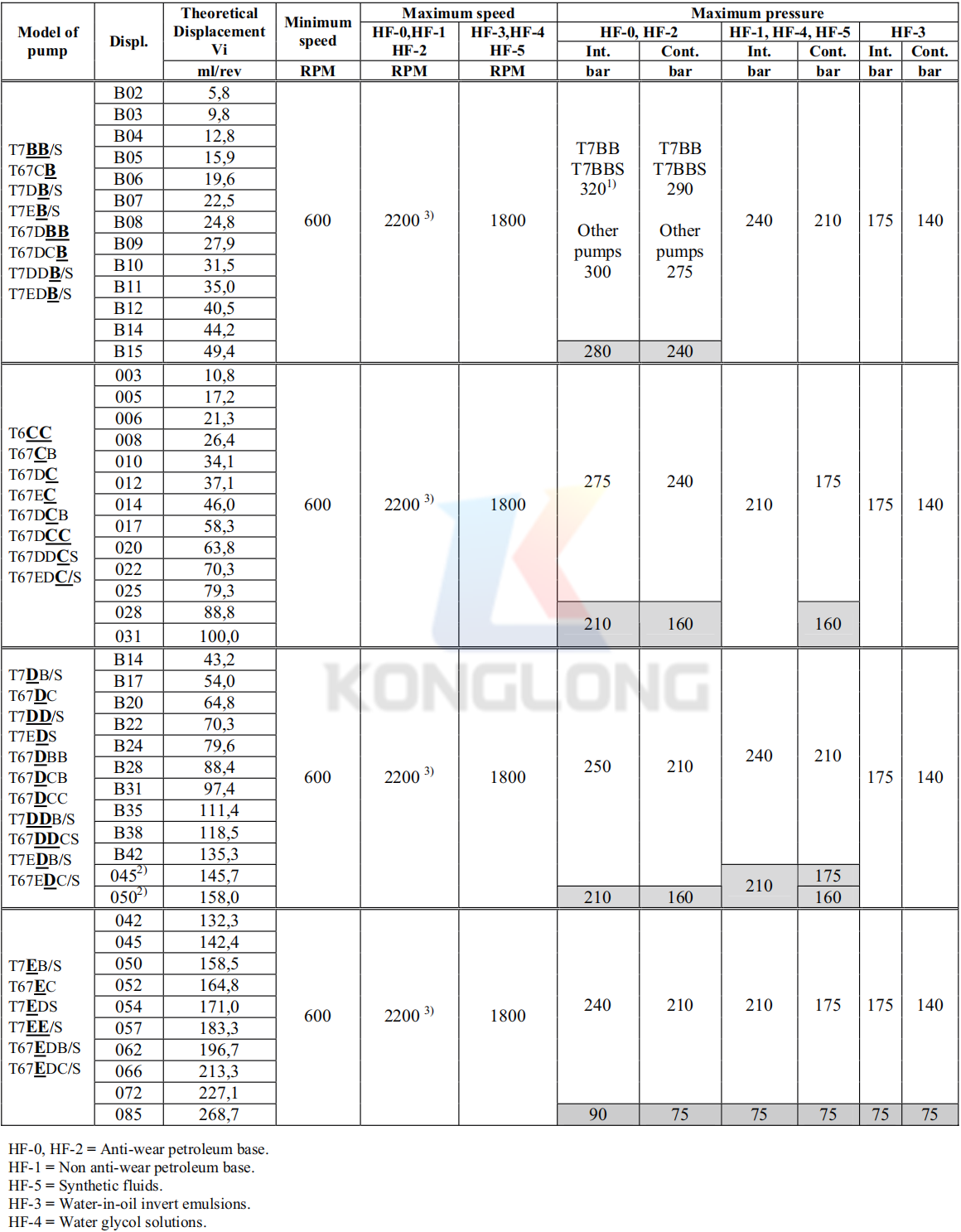
High Pressure & High Efficiency: Maximum intermittent pressure reaches 275 bar with a continuous working pressure of 240 bar. It delivers high volumetric and mechanical efficiency, low heat generation, and low energy consumption. Service life can be significantly extended under long-term low-pressure operating conditions.
-
Stable Operation: Features low pressure pulsation and low overall noise with a wide applicable speed range, supporting high and low-speed switching operation requirements.
-
Strong Adaptability: The exclusive dual-lip vane structure provides outstanding resistance to hydraulic oil contamination, a wide applicable medium viscosity range, and reliable low-temperature start-up and high-temperature steady-state operation performance.
-
Compact Structure: Equipped with SAE standard mounting dimensions with high universality. It is easy to disassemble and maintain, suitable for the layout of various standardized hydraulic equipment.
2. Core Technical Specifications
The following are the official standard parameters of the T6C single vane pump (tested under normal temperature, standard hydraulic oil, and atmospheric suction conditions)
|
Parameter Item
|
Standard Value
|
Remarks
|
|
Displacement Range
|
10.8~100ml/rev
|
Covers small and medium flow conditions; flow rate 3~31gpm at 1200rpm
|
|
Continuous Working Pressure
|
240bar
|
Rated pressure for long-term stable operation
|
|
Maximum Intermittent Pressure
|
275bar
|
Short-term peak pressure; continuous long-term use is prohibited
|
|
Rated Speed Range
|
600~2800rpm
|
Compatible with most industrial hydraulic power systems
|
|
Mounting Type
|
SAE B-type 2-bolt mounting (4-inch register)
|
Industry-standard universal mounting dimensions
|
|
Standard Shaft Type
|
7/8 inch flat key shaft
|
Splined shafts and other special shaft types are optional
|
|
Overall Weight
|
15.7kg
|
Weight of standard basic model
|
|
Applicable Media
|
Conventional hydraulic oil, anti-wear hydraulic oil
|
Suitable for low-temperature and high-temperature working conditions
|
3. Complete Model Coding Explanation
General Model Format: T6C-XXX-X X XX-X X. Taking the classic model T6C-022-1R00-C1 as an example, the detailed coding definition is as follows:
|
Code Segment
|
Code Content
|
Detailed Definition
|
|
1st Segment
|
T6C
|
Product Series: T6 series C-frame single vane pump, dedicated for medium and small flow & high-pressure specifications
|
|
2nd Segment (3 digits)
|
003/005/006/008/010/012/014/017/020/022/025/028/031
|
Cartridge displacement code, corresponding to different displacement specifications; the larger the value, the higher the displacement, serving as the core parameter for model selection
|
|
3rd Segment (1 digit)
|
1/2/3
|
Shaft extension code: 1 = standard flat key shaft; 2 & 3 = extended or customized special shaft extensions
|
|
4th Segment (1 letter)
|
R/L
|
Pump rotation direction: R = Clockwise (standard); L = Counterclockwise (custom)
|
|
5th Segment (2 digits)
|
00/01/02/03
|
Port mounting direction: 00 = inlet port downward; 01 = outlet port right; 02 = inlet & outlet ports on the same side; 03 = inlet port left
|
|
6th Segment (1 letter)
|
C/A/B, etc.
|
Product design version code, representing structural iteration and process upgrade versions
|
|
7th Segment (1 digit)
|
1/2
|
Seal grade code: 1 = standard seal (general working conditions); 2 = reinforced seal (high-temperature & high-pressure working conditions)
|
4. Common Standard Model List
Mainstream market standard models (covering full displacement specifications for conventional industrial working conditions):
T6C-003-1R00-B1, T6C-003-1R01-B1, T6C-003-1R02-B1, T6C-003-1R03-B1, T6C-003-2R00-C1, T6C-005-1R00-B1, T6C-005-1R01-B1, T6C-005-2R00-C1, T6C-006-1R00-B1, T6C-006-1R02-B1, T6C-006-2R00-C1, T6C-008-1R00-B1, T6C-008-1R03-B1, T6C-008-2R00-C1, T6C-010-1R00-B1, T6C-010-1R01-B1, T6C-010-2R00-C1, T6C-012-1R00-B1, T6C-012-1R02-B1, T6C-012-2R00-C1, T6C-014-1R00-B1, T6C-014-1R01-B1, T6C-014-1R03-B1, T6C-014-2R00-C1, T6C-017-1R00-B1, T6C-017-1R02-B1, T6C-017-2R00-C1, T6C-020-1R00-B1, T6C-020-1R01-B1, T6C-020-1R03-B1, T6C-022-1R00-B1, T6C-022-1R02-B1, T6C-022-2R00-C1, T6C-025-1R00-B1, T6C-025-1R01-B1, T6C-025-2R00-C1, T6C-028-1R00-B1, T6C-028-1R02-B1, T6C-028-2R00-C1, T6C-031-1R00-B1, T6C-031-1R01-B1, T6C-031-1R03-B1, T6C-003-1L00-B1, T6C-008-1L00-B1, T6C-012-1L01-B1, T6C-017-1L02-B1, T6C-022-1L00-B1, T6C-025-1L03-B1, T6C-028-1L00-B1, T6C-031-1L01-B1
5. Derivative Model Description
-
T6CR Series: T6C single pump with rear drive, capable of series connection with other hydraulic components. Maximum pressure up to 280 bar, suitable for multi-pump combined hydraulic systems.
-
T6CL Series: Lightweight customized T6C pump with optimized structural design, applicable to working conditions with limited installation space.
-
Custom Special Models: Includes counterclockwise (L) rotation, special port directions, reinforced seals, extended shaft extensions and other customized versions for non-standard hydraulic equipment.
6. Model Selection Precautions
-
Pressure Selection: Select 240 bar continuous pressure for standard working conditions. Reserve sufficient pressure margin for high-frequency peak load conditions to avoid service life reduction caused by long-term overpressure operation.
-
Speed Adaptation: Operation below 600 rpm or above 2800 rpm is strictly prohibited to prevent oil starvation, abnormal noise and component wear.
-
Rotation Direction Matching: R (clockwise) is the default standard direction. Select L (counterclockwise) models for reverse equipment installation to avoid system no-flow and abnormal pressure faults.
-
Port Direction: Select the corresponding port direction code according to equipment pipeline layout to reduce pipeline bending and optimize overall system stability.
About brand

Shipping & Delivery