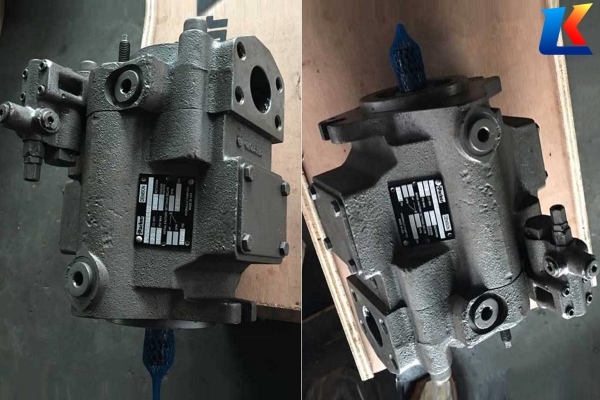
T6C025, T6C028, T6C031 series vane pump specifications

T6C series vane pumps are Denison’s high-pressure vane pump product line, known for its high working pressure, excellent efficiency and strong anti-pollution ability, and are widely used in industrial machinery and mobile equipment.Based on reliable search results, detailed specifications are provided for the T6C025, T6C028, and T6C031 models queried by users.The parameters include key configurations such as displacement, drive shaft type, rotation direction, oil port direction, design number and sealing level.The following information is comprehensively compiled from sources with high credibility, and priority is given to data sources with “very high” and “high” credibility.
T6C025 vane pump
Displacement: 79.3 ml/rev (industrial standard), providing high flow output, suitable for medium and high load scenarios.
Drive shaft type: Supports a variety of options, including 1 (SAE B flat key), 2 (non-SAE B flat key), 3 (SAE B spline), 4 (SAE BB spline), users can choose according to the equipment interface requirements.
Rotation direction: You can choose R (clockwise) or L (counterclockwise), the default configuration is R type.
Oil inlet direction: provide 00 (opposite side of the oil inlet), 01 (same side of the oil inlet), 02 (90° counterclockwise relative to the oil inlet), 03 (90° clockwise relative to the oil inlet) to enhance installation flexibility.
Design number: Formulated by the manufacturer (such as B1) to distinguish between design version and customization requirements.
Sealing grade: Optional 1 (S1, suitable for mineral oil-based hydraulic fluid), 4 (S4, suitable for anti-combustion hydraulic fluid) or 5 (S5, compatible with mineral oil and anti-combustion fluid, suction port pressure up to 7bar) to ensure media compatibility.

T6C028 vane pump
Displacement: 88.8 ml/rev (industrial standard), suitable for systems with higher flow requirements, such as large machinery and equipment.
Drive shaft type: consistent with T6C025, supports the same options (1/2/3/4), which is convenient for standardization and integration.
Rotation direction: R or L is optional, and the common configuration is R type.
Oil outlet direction: configure 00, 01, 02 or 03 to optimize the pipeline layout.
Design number: Designated by the manufacturer (such as B1) for version control.
Sealing level: optional 1, 4 or 5, suitable for different hydraulic media environments.
T6C031 vane pump
Displacement: 100.0 ml/rev (industrial standard), the largest displacement model in the series, suitable for heavy machinery.
Drive shaft type: same as before, support 1/2/3/ 4 options to ensure transmission compatibility.
Rotation direction: optional R or L, default R type.
Oil port direction: Provide 00, 01, 02, and 03 configurations to simplify system design.
Design number: Formulated by the manufacturer (such as B1) to identify a specific design iteration.
Sealing grade: optional 1, 4 or 5, covering a wide range of working conditions.
Common features of the series
Working pressure: The rated pressure is up to 275 bar, which supports high-pressure operation, reduces the size of the actuator and reduces installation costs; step-down use can extend life.
Efficiency performance: volumetric efficiency ≥94%, reducing heat generation; mechanical efficiency ≥94%, reducing energy consumption and improving system economy.
Speed range: 600-2800 rpm (for industrial use), supports low-speed start-up (600 rpm), and adapts to changeable working conditions.
Anti-pollution ability: The design of double-lip blades is used to withstand high-viscosity media (up to 860 cSt) and low-temperature environments to avoid the risk of stagnation.
Pressure pulsation: about±2 bar, which reduces pipeline noise and extends the life of circuit components.
Installation and applicability: support single pump configuration, rich options for oil ports and drive shafts; typical applications in construction machinery (such as die-casting machines, machine tools), mobile equipment (such as construction machinery) and marine hydraulic systems.
The above parameters are based on the current standard configuration, and the specific model may be adjusted due to the design number (such as B1) and the sealing level.It is recommended to refer to the latest manufacturer data when purchasing to match actual needs.