Vickers Variable Piston Pump PVXS-130-M-R-DF-0000 Instruction Manual
1. Introduction
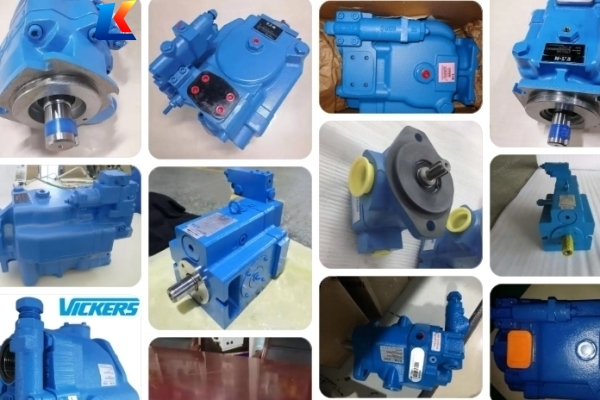
The VICKERS PVXS-130-M-R-DF-0000 is a high-performance, swashplate-type axial variable displacement piston pump, designed for open-loop hydraulic systems. It features reliable operation, long service life, and excellent pressure and flow control capabilities, making it widely applicable in construction machinery, metallurgical equipment, shipbuilding, and other industrial fields requiring stable hydraulic power output. This manual provides detailed information on the pump’s specifications, installation, operation, maintenance, and troubleshooting to ensure safe and efficient use.
2. Model Interpretation
The model code of the PVXS-130-M-R-DF-0000 pump is interpreted as follows to facilitate accurate identification and selection:
-
PVXS: Series identifier, indicating the open-loop variable displacement piston pump of the “X” series
-
130: Displacement size, 130 cm³/rev (8 in³/rev) nominal displacement
-
M: Metric standard configuration
-
R: Rotation direction, clockwise when viewed from the shaft end
-
DF: Control type, pressure compensator control
-
0000: Additional functions, no special additional functions (standard configuration)
3. Technical Specifications
|
Item
|
Specification
|
Unit
|
|---|---|---|
|
Nominal Displacement
|
130
|
cm³/rev
|
|
Nominal Pressure (100% Duty Cycle)
|
350 (5000)
|
bar (psi)
|
|
Maximum Pressure (per DIN 24312)
|
420 (6092)
|
bar (psi)
|
|
Rated Speed
|
1800
|
min⁻¹ (rpm)
|
|
Minimum Input Pressure
|
50 (700)
|
bar (psi)
|
|
Hydraulic Fluid
|
Hydraulic oil complying with DIN 51524 Part 2
|
–
|
|
Fluid Temperature Range (Startup/Operation)
|
-13 / -4 to 194 / 122
|
°F (°C)
|
|
Rotation Direction
|
Clockwise (viewed from shaft end)
|
–
|
|
Weight
|
234
|
lb
|
Note: Higher speeds are available upon request. Non-standard displacements (94/112 cm³/rev) are also optional for special applications.
4. Installation Instructions
4.1 Pre-Installation Preparation
-
Ensure the installation environment is clean and free of debris, dust, and other contaminants to avoid damaging internal components of the pump.
-
Prepare necessary installation tools, such as screwdrivers, wrenches, and micrometers, and check their accuracy and integrity.
-
Inspect the pump body, seals, and other components for damage, deformation, or missing parts. If any abnormalities are found, do not install and contact the supplier immediately.
4.2 Installation Position Selection
Select a stable installation position that can firmly fix the pump body, avoiding excessive vibration and noise during operation. Ensure the pump’s inlet and outlet directions are consistent with the system pipeline layout to facilitate smooth fluid flow and reduce pressure loss. The installation position should also allow easy access for future maintenance and inspection.
4.3 Installation Process
-
Place the pump on the predetermined installation base, align the mounting holes of the pump with the base, and use bolts to fix the pump firmly. Ensure the bolts are tightened evenly to prevent uneven stress on the pump body.
-
Connect the inlet and outlet pipelines to the pump according to the system pipeline diagram. Use appropriate sealing gaskets to ensure tight connection and no leakage. Avoid over-tightening the pipeline joints to prevent damage to the pipeline or pump ports.
-
Check all installed components to ensure they are in place, and confirm that the pipeline connections are correct and free of blockages. Verify the rotation direction of the pump shaft to ensure it is consistent with the motor rotation direction.
4.4 Post-Installation Debugging and Inspection
After installation, start the motor and run the pump at low speed for 5-10 minutes. Observe the pump’s operation status, including whether there is abnormal noise, vibration, or oil leakage. Check the inlet and outlet pressure to ensure they are within the specified range. If any abnormalities occur, stop the machine immediately, identify the cause, and eliminate the fault before restarting.
5. Operation Guidelines
5.1 Startup Operation
-
Before starting the pump, ensure the hydraulic system is filled with clean hydraulic oil, and the oil level is within the specified range.
-
Start the motor at low speed, and gradually increase the speed to the rated speed. During the startup process, pay attention to the pump’s operation sound and pressure changes.
-
Check the pressure compensator (DF control) to ensure it is working normally. The pump should automatically adjust the displacement according to the system pressure demand.
5.2 Normal Operation
During normal operation, monitor the pump’s operating parameters (pressure, speed, fluid temperature) regularly to ensure they are within the specified limits. Avoid operating the pump at maximum pressure for a long time to extend its service life. The fluid temperature should not exceed 194°F (90°C); if it is too high, check the cooling system and take corresponding measures.
5.3 Shutdown Operation
When shutting down the pump, first reduce the system pressure to the minimum, then stop the motor. After shutdown, check the pump for oil leakage and clean the surface of the pump and surrounding environment. If the pump will not be used for a long time, drain the hydraulic oil in the pump and pipeline to prevent corrosion.
6. Maintenance and Care
6.1 Routine Maintenance
-
Check the hydraulic oil level and quality regularly (recommended every 200 operating hours). If the oil is contaminated, discolored, or deteriorated, replace it with new hydraulic oil that meets the specifications.
-
Inspect the seals regularly for wear, aging, or damage. Replace worn or damaged seals in a timely manner to prevent oil leakage.
-
Clean the inlet filter regularly to ensure unobstructed oil intake and avoid cavitation caused by insufficient oil supply.
6.2 Periodic Maintenance
Perform comprehensive maintenance every 1000 operating hours, including:
-
Disassemble the pump and inspect internal components (cylinder block, plunger, swashplate, bearing, etc.) for wear, scratches, or deformation. Replace damaged components with original spare parts.
-
Clean all internal and external parts of the pump, and reassemble them in accordance with the installation requirements. Ensure the assembly is correct and the clearances are within the specified range.
-
Check the pressure compensator and adjust its settings if necessary to ensure it works accurately.
6.3 Maintenance Notes
-
Before performing maintenance, shut down the pump and relieve the system pressure to avoid personal injury or equipment damage.
-
Use only original VICKERS spare parts for replacement to ensure the pump’s performance and service life.
-
During maintenance, keep the working environment clean to prevent contaminants from entering the pump.
7. Troubleshooting
|
Fault Phenomenon
|
Possible Causes
|
Solution
|
|---|---|---|
|
No oil output or insufficient oil output
|
1. Insufficient oil level; 2. Clogged inlet filter; 3. Leakage in inlet pipeline; 4. Damaged cylinder block or plunger
|
1. Add hydraulic oil to the specified level; 2. Clean or replace the inlet filter; 3. Repair the inlet pipeline and eliminate leakage; 4. Replace the damaged cylinder block or plunger
|
|
Abnormal noise during operation
|
1. Cavitation due to insufficient oil supply; 2. Worn or damaged bearing; 3. Loose mounting bolts; 4. Contaminated hydraulic oil
|
1. Check the oil supply system and eliminate cavitation; 2. Replace the worn bearing; 3. Tighten the mounting bolts; 4. Replace the hydraulic oil
|
|
Oil leakage
|
1. Worn or damaged seals; 2. Loose pipeline joints; 3. Damaged pump body or cover
|
1. Replace the seals; 2. Tighten the pipeline joints; 3. Repair or replace the damaged pump body or cover
|
|
Failure to adjust displacement (DF control malfunction)
|
1. Blocked pressure compensator; 2. Damaged control valve; 3. Incorrect pressure setting
|
1. Clean the pressure compensator; 2. Replace the damaged control valve; 3. Adjust the pressure to the specified value
|
|
Excessively high fluid temperature
|
1. Malfunction of the cooling system; 2. Overload operation; 3. Contaminated hydraulic oil
|
1. Repair the cooling system; 2. Reduce the load and avoid overload operation; 3. Replace the hydraulic oil
|
8. Safety Precautions
-
Operators must read this manual carefully before using the pump and strictly follow the operation and maintenance guidelines.
-
Do not operate the pump beyond the specified pressure, speed, or temperature range to avoid equipment failure or safety accidents.
-
During operation, do not touch the rotating parts of the pump or high-temperature surfaces to prevent personal injury.
-
When performing maintenance or troubleshooting, ensure the system is depressurized and the power is cut off to avoid accidental startup.
-
Store hydraulic oil in a clean, dry place and avoid mixing different types of oil.