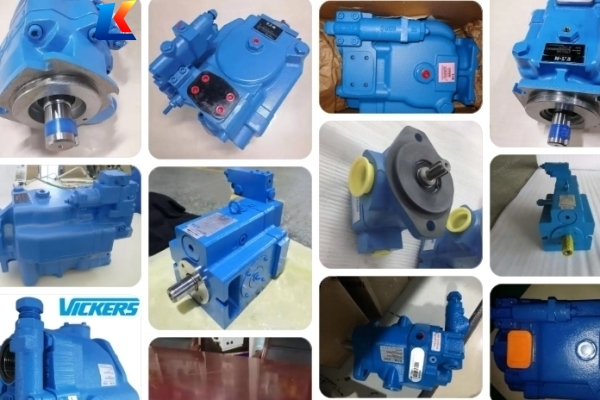
VICKERS steam turbine anti-fuel circulation system vane pump
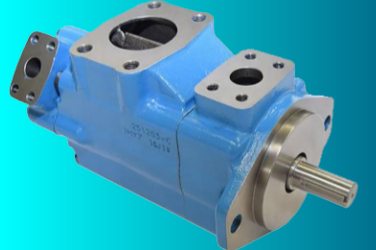
Analysis of vane pump of VICKERS anti-fuel circulation system of steam turbine
- Product positioning and core functions
THE VANE pumps of VICKERS (now part of the fluid power division of Eaton Group) assume the CORE tasks of stable oil supply and PRESSURE regulation in the anti-fuel circulation system of STEAM TURBINES. THEIR DESIGN focuses on the following characteristics:
High pressure adaptability
Some models (such as the F3V series) have a maximum working pressure of up to 210 bar, which meets the needs of the steam turbine control oil system for high-pressure oil and ensures the precise action of key components such as control valves and servo mechanisms.
Anti-fuel compatibility
In view of the special chemical properties of fuel-resistant fuels (such as phosphate-based oils), the pump body material and sealing structure have been optimized to avoid the risk of corrosion and leakage.For example, the F3V101S6S1C20 model is designed for 350MW subcritical coal-fired units and can operate stably in the anti-fuel regeneration system for a long time.
Low pulsation and low noise
The 12-blade system and the parent-child blade structure are adopted to significantly reduce flow pulsation and noise (as low as 62 dB(A)), reduce vibration interference to the steam turbine control system, and improve operating stability. - Technical characteristics and advantages
Energy-efficient design
The volumetric efficiency is over 90%: under the working pressure of 200-350 bar, the energy loss is low, the system heat generation is reduced, and the service life of the oil is extended.
Variable adjustment ability: The single-acting vane pump realizes displacement changes by adjusting the eccentricity, and adapts to the dynamic oil supply needs of the steam turbine when the load fluctuates.
Modularity and flexibility
Multi-pump configuration: provide single-unit (such as V10, V20), double-unit (such as 2520V, 3525V) and through-shaft drive pumps, support multi-loop integrated design, and save installation space and cost.
Adjustable installation direction: the inlet/outlet ports support four installation directions, which are suitable for steam turbine systems with different layouts.
Reliability and maintainability
Cartridge pump core: The movement is separated from the drive shaft, and the flow capacity can be replaced or repaired without disassembling the pump body, reducing downtime.
Hydraulic balance structure: The double-acting vane pump adopts concentric rotor design, and the radial hydraulic pressure is balanced to reduce bearing wear and extend service life. - Typical application scenarios
Steam turbine control oil system
Provide a stable high-pressure oil source for control valves and servo valves to ensure precise control of steam turbine speed and load.
For example, F3V series pumps are used in coal-fired units to resist fuel regeneration circulation, maintain oil cleanliness, and prevent valve jamming.
Anti-fuel cooling and filtration circuit
With the cooler and filter, the circulating pump ensures that the anti-fuel is continuously purified in the closed-loop system to avoid high-temperature oxidation and impurity pollution.
Emergency oil supply system
When the main pump fails, the dual pump configuration can be quickly switched to the backup circuit to ensure the safe shutdown of the steam turbine. - Precautions for selection and use
Model matching
Choose the pump type according to the steam turbine power and system pressure:
Low pressure scenario: VVS series variable pump (maximum pressure 100 bar), suitable for auxiliary oil circuit.
High-pressure scenario: VVP series high-pressure pump (maximum pressure 160 bar) or F3V series special pump (210 bar).
Refer to the displacement range (6-193 cm3/r) and the rotation speed (2400-3600 rpm) to ensure that it matches the system flow requirements.
Oil management
Viscosity control: The viscosity of the oil should be maintained at 17-37 mm2/s, and the temperature should not exceed 55℃ to avoid oil absorption difficulties or increased leakage.
Cleanliness requirements: The anti-fuel system is sensitive to particle pollution, and the quality of the oil needs to be filtered and monitored regularly.
Installation and maintenance
Strictly follow the steering signs to prevent damage to the pump body caused by reversal.
Regularly check the gap between the blade and the rotor (0.015-0.03mm for small pumps, 0.02-0.045mm for medium pumps), and adjust or replace worn parts in time.