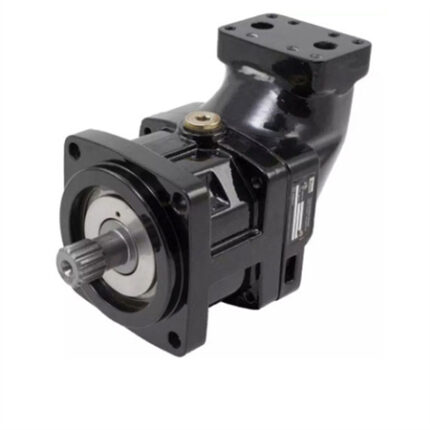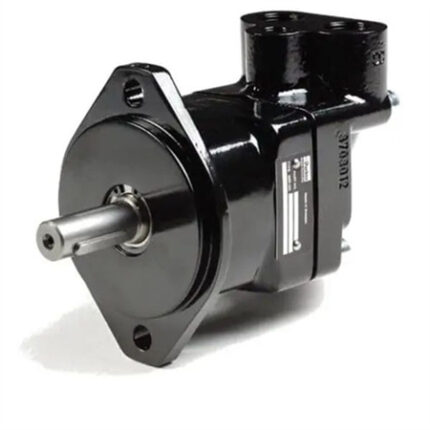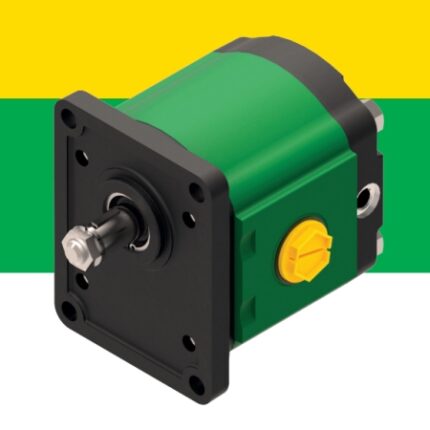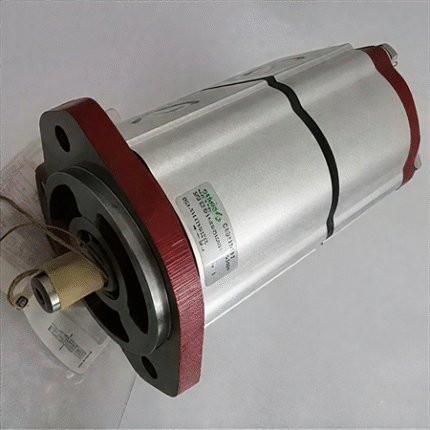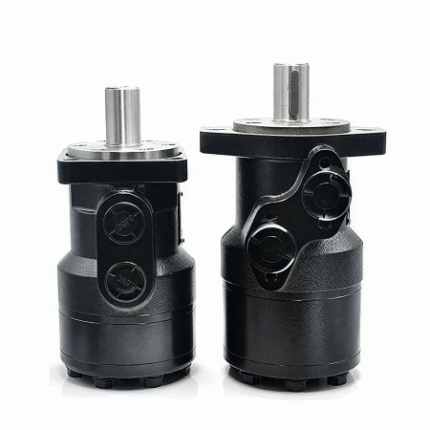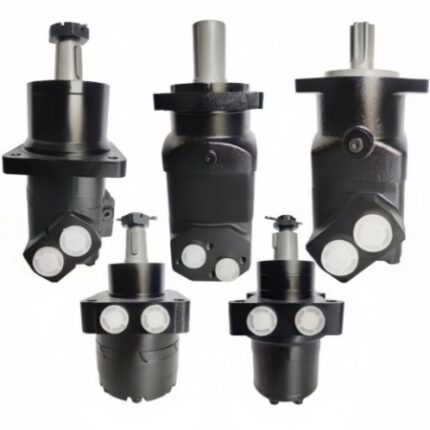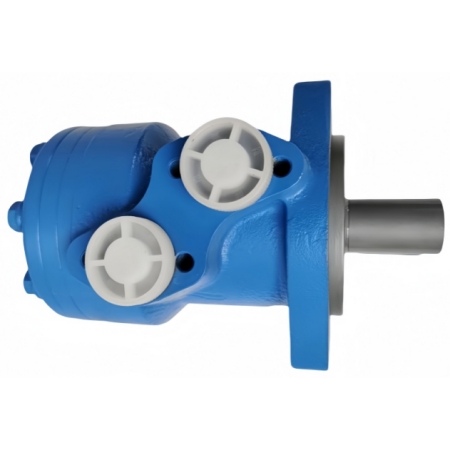
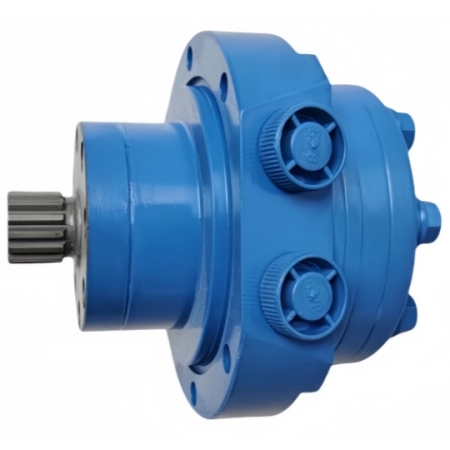
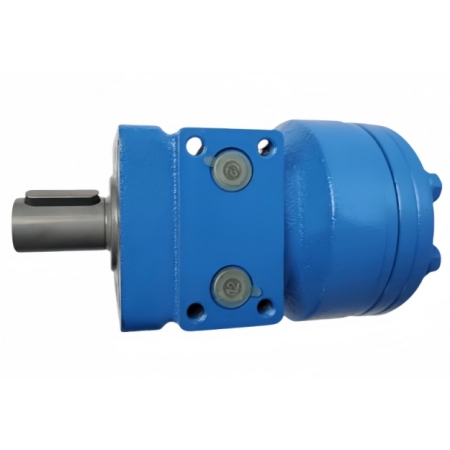
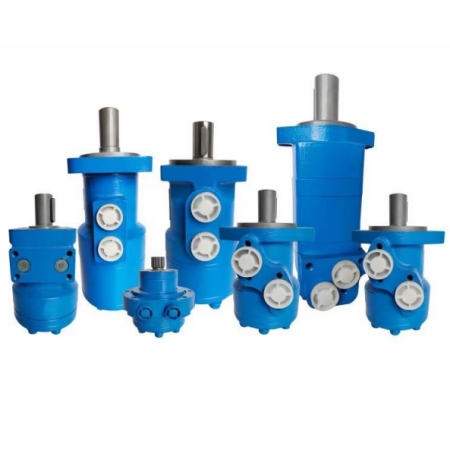
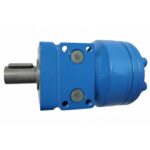
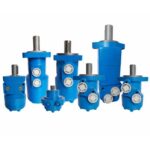
BM series Cycloid motor
BM/BMV/BMT/BMS/BMR/BMM/BMH series hydraulic motors are cycloid hydraulic motors, which are widely used in industrial scenes such as winches, winches, injection molding machines, mold equipment, etc.
Comparison table of core parameters
Series displacement range (cm3/rev) Maximum pressure (bar) Typical torque (N·m)@150bar maximum speed (rpm) Applicable scenarios
BM 50-125 175 BM-125:310 3000 light machinery, AGV trolley
BMV 195-801.8 210 BMV-800: 1900 1800 high pressure heavy duty (excavator arm)
BMT 80-801.8 175 BMT-800: 1750 2400 medium speed and high torque (conveyor belt)
BMS 50-395 175 BMS-395: 920 3000 compact equipment (agricultural machinery steering)
BMR 203.2–489.2 210 BMR-500: 1150 366 low speed and high torque (winch)
BMM 16-32 140 BMM-32:7.2 3500 micro-flow control (medical equipment)
BMH 80-489.2 240 BMH-500: 1470 1500 ultra-high pressure impact conditions
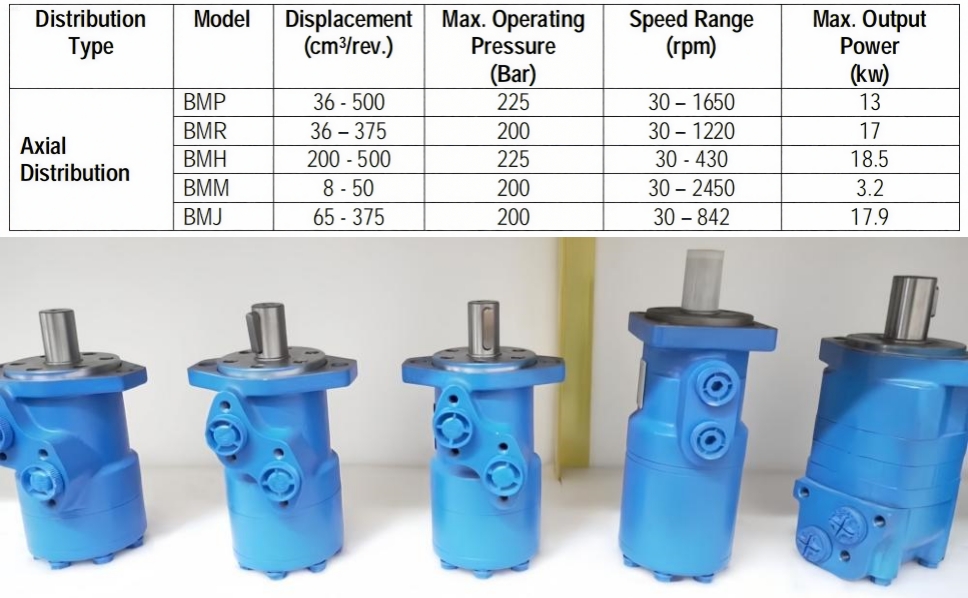
Summary of the main model specifications and parameters of BM series cycloid hydraulic motors:
1. Basic parameters of BM series
Displacement range: 50-630 mL/r
Rated flow rate: 20-80 L/min
Maximum speed: 200-500 r/min
Working pressure:
Rated pressure: 8-16 MPa
Maximum pressure: 10-16 MPa
Torque range:
Rated torque: 41-1094 N·m
Maximum torque: 52-875 N·m
2. Special model description
BMS series: designed for high-speed operating conditions (up to 630 r/min), with a total efficiency of 80%
BMH series: High pressure version (16 MPa), suitable for petroleum machinery
BMM series: Lightweight design, weighing only 12-19.2 kg
Note: The price range is affected by the supplier, purchase volume and configuration, and the specific requirements are subject to the real-time inquiry.