How to choose the right SQP single vane pump
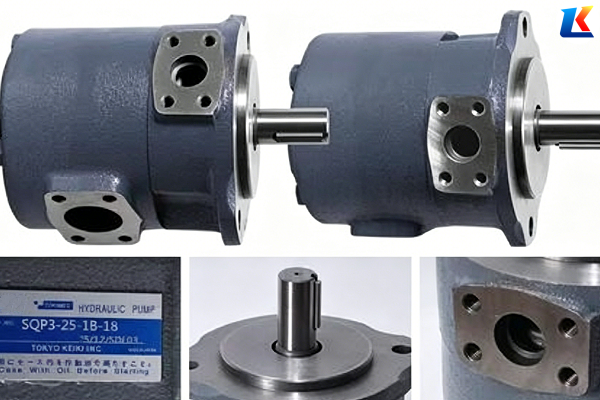
The core principles for choosing a TOKIMEC SQP single vane pump (low-noise fixed-displacement tandem vane pump) are: confirm system parameters → match model specifications → verify working condition compatibility → check installation and maintenance requirements. Below is a detailed guide.
1. Confirm Core Parameters (Starting Point of Selection)
|
Parameter
|
Determination Method
|
Key Selection Notes
|
|
Working Pressure
|
Measure the maximum and normal operating pressure of the system
|
1. The rated pressure of the SQP series is 21 MPa, and the peak pressure is 25 MPa. 2. For continuous operation, keep the working pressure 20%–30% lower than the rated value to extend service life. 3. Select the SQPS high-pressure series for operating pressure above 16 MPa.
|
|
Flow Rate Requirement
|
Calculate the maximum required flow: $$Q = \text{Displacement} \times \text{Rotational Speed} \times \text{Efficiency$$
|
1. Volumetric efficiency is generally 0.85–0.9. 2. Reserve 10%–20% flow margin to cope with pressure fluctuations. 3. Match the speed requirement of actuators.
|
|
Rotational Speed Range
|
Confirm the rated speed of the driving motor
|
1. Minimum speed: 600 rpm (to ensure sufficient oil suction). 2. Maximum speed: 1800 rpm for SQP1/SQP2; 1500 rpm for SQP3/SQP4. 3. Recommended operating speed: 800–1400 rpm.
|
|
Power Calculation
|
Formula: $$P(\text{kW}) = \dfrac{p(\text{MPa}) \times Q(\text{L/min})}{60 \div \eta$$
|
Ensure the motor power is properly matched to avoid overload.
|
2. SQP Model Code Explanation
Standard model format: (F3)-SQP(S)3-35-86C(2)-(LH)-18
|
Code
|
Meaning
|
Selection Tips
|
|
Oil type code
|
F3 = Phosphate ester fluid; F11 = Water-glycol fluid; No mark = Mineral hydraulic oil
|
Select according to the system fluid to prevent seal damage.
|
|
Series code
|
SQP = Standard type; SQPS = High-pressure type
|
Choose SQPS for high-pressure conditions, and SQP for standard working conditions.
|
|
Pump frame number
|
1 / 2 / 3 / 4
|
Displacement range increases sequentially: SQP1 (smallest), SQP4 (largest).
|
|
Displacement code
|
Numerals (e.g. 10, 14, 21, 35)
|
Indicates geometric displacement (mL/r), which determines output flow.
|
|
Mounting type
|
86C = Flange mounting; 86D = Foot mounting
|
Match the installation space and connection form of equipment.
|
|
Rotation direction
|
LH = Left-hand rotation; No mark = Right-hand rotation
|
Must be consistent with the rotation direction of the driving motor.
|
3. Detailed Selection Procedures
3.1 Select Pump Frame Number (Based on Flow Rate)
|
Pump Frame No.
|
Displacement (mL/r)
|
Applicable Flow (L/min)
|
Typical Applications
|
|
SQP1
|
2–14
|
10–80
|
Small machine tools, automated equipment
|
|
SQP2
|
10–21
|
50–120
|
Medium injection molding machines, hydraulic presses
|
|
SQP3
|
17–38
|
100–200
|
Large die-casting machines, construction machinery
|
|
SQP4
|
38–80
|
200–400
|
Heavy-duty hydraulic systems
|
3.2 Precise Displacement Matching
Calculation formula: $$\text{Displacement (mL/r)} = \dfrac{\text{Required Flow (L/min)} \times 1000}{\text{Rotational Speed (rpm)} \div \text{Efficiency (0.85–0.9)}$$ Select the standard displacement closest to the calculated value; a slightly larger displacement is preferred.
3.3 Hydraulic Fluid Selection
-
Recommended fluid: ISO VG32–VG68 anti-wear hydraulic oil, kinematic viscosity: 20–40 mm²/s.
-
Operating temperature: -10 ℃ ~ 50 ℃. A cooling system is required if oil temperature exceeds 60 ℃.
-
Special fluids: Choose F11 series for water-glycol fluid, F3 series for phosphate ester fluid.
3.4 Mounting Type Selection
-
86C Flange mounting: Compact structure, ideal for limited installation space.
-
86D Foot mounting: High stability, suitable for equipment with severe vibration.
-
Requirements: Ensure rigid mounting base; use shock-absorbing pads; coaxiality ≤ 0.05 mm.
3.5 Noise Reduction & Service Life Optimization
-
The SQP series features a pulse damping structure, with noise 5–10 dB lower than ordinary vane pumps.
-
Service life maintenance:
-
Keep fluid cleanliness at ISO 18/15; install precision filters.
-
Avoid long-term operation under maximum pressure or maximum speed.
-
Replace hydraulic oil and filters regularly (recommended every 2000 working hours).
-
4. Common Selection Mistakes & Notes
-
Ignore either pressure or flow: Insufficient flow slows down actuators; excessive pressure damages seals.
-
Mismatched rotational speed: Speed below the minimum value causes oil starvation, cavitation and excessive noise.
-
Incorrect hydraulic fluid: Different fluids require dedicated seals; mixed use leads to leakage and severe wear.
-
Improper installation: Poor coaxiality or weak base causes vibration, noise and shortened service life.
-
No performance margin: Reserve 10%–20% margin for pressure and flow to adapt to fluctuating working conditions.
5. Summary of Selection Process
-
Clarify operating requirements: system pressure, flow rate, motor speed, fluid type and working environment.
-
Select pump frame number and calculate required displacement according to flow demand.
-
Confirm complete model: series type, mounting form, rotation direction and fluid code.
-
Verify parameters: ensure pressure, flow and speed are within the allowable range; check motor power.
-
Confirm installation dimensions and space availability.
-
Purchase genuine products from official authorized suppliers for reliable quality and after-sales service.