Yuken vane pump noise problem solution
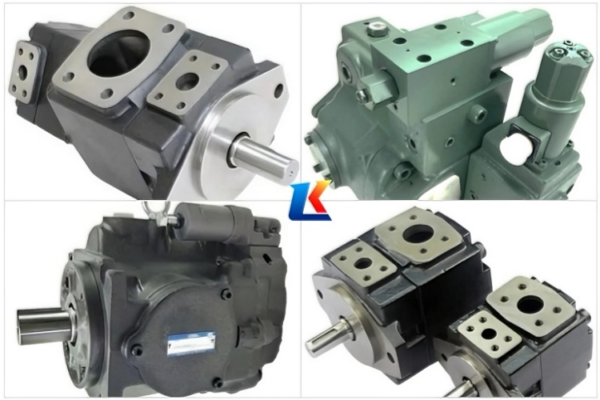
Yuken Vane Pump Noise Problem Solution
Yuken vane pumps are widely used in hydraulic systems for their high efficiency and low noise performance, with a standard operating noise of ≤75dB (measured at 1 meter) and some precision models as low as 57.3dB. However, abnormal noise (such as sharp metal friction, “crackling” cavitation sound, or dull continuous noise) often occurs during long-term operation, which not only affects the working environment but also indicates potential faults in the pump or hydraulic system. This solution integrates Yuken’s original maintenance standards and on-site practical experience to provide systematic troubleshooting and resolution methods, ensuring the stable operation of the pump and extending its service life.
1. Pre-Maintenance Safety Preparation & Tool Preparation
Before troubleshooting noise problems, it is necessary to ensure safe operation to avoid personal injury or secondary damage to the pump. Strictly follow the following safety specifications and prepare relevant tools and accessories.
1.1 Safety Operation Specifications (Mandatory)
-
Shut down and relieve pressure: Immediately stop the operation of the vane pump, cut off the corresponding power supply, and hang a “Under Maintenance, No Switching On” sign. Let the system stand for more than 30 minutes to release residual pressure, and manually rotate the shaft 3 times to confirm that the pressure is completely relieved to prevent high-pressure oil splashing and injury.
-
Environmental protection: Clean up debris in the maintenance area to keep it ventilated and dry, avoiding dust and impurities from entering the pump body. Operators should wear non-slip gloves and protective glasses to prevent contact with high-temperature oil or sharp components.
-
Oil handling: Drain part of the oil in the hydraulic system in advance (keep the minimum liquid level to prevent dust from entering the pipeline), store it in a clean container, and decide whether to reuse it after testing the oil condition.
1.2 Necessary Tools & Accessories
-
Basic tools: Torque wrench (with M16 adapter), hexagon wrench, screwdriver, puller, seal disassembly tool, pipe wrench.
-
Testing tools: Sound level meter, pressure gauge, vibration sensor (optional), oil cleanliness tester (NAS grade), vernier caliper.
-
Spare parts: Yuken original seals, bearings (matching the corresponding pump model), filter elements, hydraulic oil (ISO VG46 anti-wear hydraulic oil is recommended), coupling elastic elements, shock-absorbing pads (Shore hardness 50~60).
2. Noise Type Judgment & Preliminary Troubleshooting
Before disassembling the pump, first judge the noise type through “listening to the sound, observing the phenomenon, and measuring parameters” to quickly narrow down the troubleshooting scope and avoid blind disassembly. The corresponding relationship between noise type and possible faults is as follows:
|
Noise Type
|
Typical Phenomenon
|
Probable Fault Causes
|
Preliminary Inspection Method
|
|---|---|---|---|
|
Cavitation sound (“crackling”)
|
Noise intensifies with increased load, slight vibration of the pump body, visible bubbles in the oil, and possible heating of the suction filter
|
Suction pipeline air leakage, low oil tank level, clogged suction filter, excessive suction vacuum (>0.03MPa)
|
Check the oil tank level and the sealing condition of the suction pipe interface, disassemble the filter to observe the clogging degree, and measure the suction vacuum
|
|
Metal friction sound
|
Sharp noise, rapid temperature rise of the pump body, abnormal noise and jamming in severe cases, increased resistance when rotating the shaft after shutdown
|
Bearing wear (clearance exceeding 0.1mm), vane wear, valve plate ablation, internal foreign body jamming
|
Touch the bearing end of the pump body to judge the temperature, measure the vibration value of the motor and pump, and manually rotate the shaft to feel whether the resistance is uniform
|
|
Impact sound (“thumping”)
|
Regular noise, synchronized with the pump speed, obvious fluctuation of noise intensity when the load changes
|
Coupling misalignment, aging elastic elements, bent main shaft, loose swashplate rocker (for plunger pumps)
|
Check the alignment of the coupling, measure axial/radial runout, and observe whether the elastic elements are cracked or deformed
|
|
Dull noise
|
Low and continuous noise, slight vibration of the pump body, small system pressure fluctuation, and poor suction
|
Excessively high hydraulic oil viscosity, severe oil contamination (NAS grade exceeding 10), clogged return pipeline
|
Test the oil viscosity, observe the oil color (black and turbid indicates contamination), and check the pressure difference of the return filter
|
|
Resonance noise
|
Noise changes periodically with operating time, noise increases sharply at a specific speed, and obvious vibration of the pipeline
|
Improper pipeline fixation, insufficient pump installation stiffness, aging shock-absorbing pads, unreasonable pipe diameter matching
|
Check the pipeline support points and pipe clamp fixation, observe whether the shock-absorbing pads are deformed, and optimize the pipeline layout
|
3. Targeted Solutions for Common Faults
Based on the results of preliminary troubleshooting, implement precise maintenance for different fault causes, strictly follow Yuken’s original disassembly and assembly standards, focus on protecting precision components (such as vanes, valve plates), and avoid man-made damage.
3.1 Excessive Noise Caused by Cavitation (Most Common Fault)
Core cause: Air enters the hydraulic system, and the pressure in the pump drops sharply to form bubbles. The violent collapse of bubbles generates impact noise, which is mostly caused by seal failure on the suction side, insufficient oil level, or clogged filter. It is especially prone to occur when the hydraulic station of power machinery operates at low load for a long time.
Solution Steps:
-
Troubleshoot air leakage points: Disassemble the suction pipeline interfaces (flanges, joints), check whether the sealing gasket (thickness ≥3mm) is aged or damaged, and replace it with Yuken original seals. Apply soapy water to the interface, start the pump for no-load operation, and observe if there are bubbles. If so, re-tighten the interface bolts (M16 bolt torque ≥180N·m).
-
Handle suction obstacles: Replace the suction filter (use Yuken original filter element), clean the suction pipeline, and remove impurities and scale in the pipeline. Check the oil tank vent, and clean the blockage with compressed air or a clean cloth to ensure pressure balance inside and outside the oil tank.
-
Adjust oil condition: Add hydraulic oil to the standard liquid level (more than 50mm above the suction port) to avoid vortex suction. If there are too many bubbles in the oil, start the pump for no-load operation for 10~15 minutes, open the system air release valve to discharge air, and check the position of the return pipe to ensure that the return pipe port is inserted below the oil level to avoid air being brought in by the return oil.
-
Optimize suction conditions: If the suction vacuum is too high (>0.03MPa), adjust the pump installation height, shorten the suction pipeline length, and avoid excessively long suction pipeline and too many elbows. If necessary, add a pre-inflation device to reduce suction resistance.
3.2 Excessive Noise Caused by Mechanical Wear
Core cause: Wear of precision components inside the pump body and excessive fit clearance lead to metal friction or impact noise during movement. It is common in equipment with operating time exceeding 8000 hours, mainly involving bearings, vanes, valve plates and other components.
Solution Steps (Taking Yuken PV2R Series Vane Pump as an Example, Other Series Can Be Referenced):
-
Pump disassembly: Disassemble in the order of “end cover → main shaft → valve plate → rotor → vane → stator”, and mark the components (to avoid assembly dislocation). Handle with care during disassembly, wipe the surface of components with a clean cloth to avoid scratches and collisions, and do not knock precision components with brute force.
-
Component inspection and replacement:
-
Bearings: Measure the bearing clearance (standard range 0.01~0.05mm). If the clearance exceeds the standard, the ball surface is worn, or the cage is broken, replace it with Yuken original bearings of the same model, and apply special grease before installation.
-
Vanades and rotor: Check whether the vanes are stuck or worn, clean impurities in the pump body, adjust the fit clearance between vanes and stator, and replace damaged vanes or stator to ensure that the fit clearance of the moving pair meets the design requirements.
-
Valve plate: Check whether the end face has scratches or ablation (sealing belt damage), measure the flatness (≤0.005mm). If it exceeds the standard, perform precision grinding or replace it in pairs to ensure that the contact surface with the rotor is >85%.
-
-
Pump assembly: Assemble in the reverse order of disassembly. Apply clean hydraulic oil to the vanes before installing them into the rotor, align the positioning pin of the valve plate with the shell hole, and tighten the bolts step by step according to the torque (to prevent eccentric load deformation). After assembly, manually rotate the shaft to ensure flexible rotation, no jamming, and no abnormal noise.
3.3 Excessive Noise Caused by Installation Deviation
Core cause: Misalignment between the pump body and the motor, coupling failure, aging shock-absorbing pads, or improper pipeline fixation lead to vibration during operation, which is transmitted to the pump body to cause resonance noise. It has a more obvious impact in servo motor-driven pumps (such as ASE/ASR series).
Solution Steps:
-
Coupling correction: Disassemble the coupling, check whether the elastic elements are aged or cracked, and replace them with original elastic elements. Adjust the coaxiality of the pump body and the motor to ensure radial runout ≤0.1mm and axial runout ≤0.05mm. Reinstall the coupling and tighten the bolts, and manually rotate the shaft to confirm no eccentricity or jamming.
-
Pump installation adjustment: Check whether the anchor bolts of the pump body are loose and tighten them according to the original torque standard. Replace the aging and deformed shock-absorbing pads (Shore hardness 50~60) to ensure stable installation of the pump body and avoid severe vibration during operation. If the installation surface is uneven, add adjustment gaskets to ensure horizontal installation of the pump body.
-
Pipeline optimization: Check the fixation of the hydraulic pipeline, add pipe clamp fixation (especially for long pipelines and elbows) to avoid pipeline loosening. Optimize the pipeline layout, reduce the number of elbows, replace pipelines with mismatched diameters (avoid excessive fluid pulsation caused by too small diameters), and reduce the risk of pipeline resonance. In the hydraulic station of power machinery, a flexible joint can be added at the interface between the pipeline and the pump body to absorb vibration.
3.4 Excessive Noise Caused by Oil Quality or System Matching
Core cause: Improper selection of hydraulic oil, severe contamination, or mismatched system parameters (such as excessive or insufficient pressure, unreasonable flow) lead to unstable operation of the pump and generate noise.
Solution Steps:
-
Oil quality improvement: Drain the contaminated hydraulic oil completely, clean the oil tank and pipeline thoroughly, and inject Yuken recommended hydraulic oil (ISO VG46 anti-wear hydraulic oil is preferred). Regularly detect the oil cleanliness (maintain NAS grade ≤8) and replace the filter element every 2000~3000 operating hours.
-
System parameter adjustment: Check the system pressure and flow, adjust the relief valve and flow valve to ensure that the operating parameters of the pump are within the rated range. Avoid long-term operation of the pump at the maximum pressure or maximum speed, which can reduce noise and component wear.
-
Eliminate trapped oil noise: For variable vane pumps, check whether the valve plate has triangular grooves in the oil sealing area. If not, add triangular grooves to prevent pressure surges caused by trapped oil and eliminate trapped oil noise.
4. Preventive Maintenance Measures
To fundamentally reduce the occurrence of noise problems, regular preventive maintenance is essential. The following measures can effectively extend the service life of the Yuken vane pump and reduce noise:
-
Regular inspection: Check the pump body temperature, vibration, and noise every day during operation; check the oil level, oil color, and filter pressure difference every week; conduct a comprehensive inspection of the pump and hydraulic system every month, including seal condition, coupling alignment, and pipeline fixation.
-
Regular oil change: Replace the hydraulic oil every 6 months or 5000 operating hours (whichever comes first), and clean the oil tank and filter during oil change to avoid oil contamination.
-
Component replacement: Replace vulnerable parts (seals, filter elements, coupling elastic elements) regularly according to the service life specified in the Yuken manual; replace worn vanes, bearings, and valve plates in time to avoid fault expansion.
-
Installation optimization: When installing or reinstalling the pump, ensure the coaxiality of the pump and motor, use qualified shock-absorbing pads, and optimize the pipeline layout to avoid pipeline resonance. Keep the maintenance area clean to prevent impurities from entering the pump body.
-
Operational standardization: Avoid frequent start-stop and overload operation of the pump; preheat the hydraulic system for 5~10 minutes before starting the pump in low-temperature environments to ensure that the oil viscosity meets the operating requirements.
5. Summary
The noise problem of Yuken vane pump is mainly caused by cavitation, mechanical wear, installation deviation, and oil quality problems. The key to solving the problem is to first judge the noise type through preliminary troubleshooting, then implement targeted maintenance according to the fault causes, and strictly follow Yuken’s original standards in the operation process. At the same time, establishing a perfect preventive maintenance system can effectively reduce the occurrence of noise faults, ensure the stable and efficient operation of the vane pump, and reduce maintenance costs and downtime losses.