Proportional Relieving and Reducing Valves EHRBG
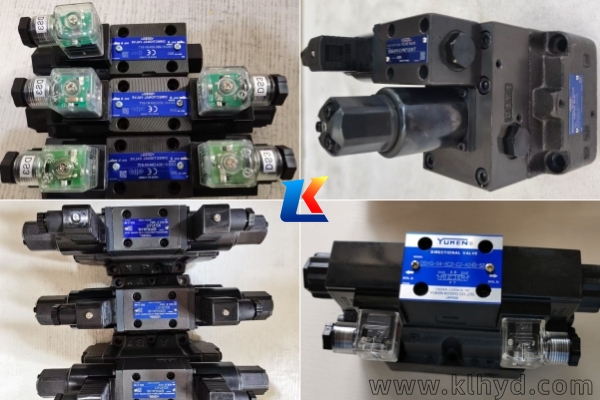
1. Product Overview
The EHRBG series proportional relieving and reducing valves are advanced electro-hydraulic control components developed by Yuken, mainly used in industrial hydraulic systems to achieve precise regulation and control of hydraulic oil pressure. This series of valves combines the advantages of electrical and hydraulic technologies, integrating a small, high-performance 1/8 electro-hydraulic proportional pilot relief valve with a reducing valve featuring a relief function. It can regulate the system pressure proportionally according to the input current signal, and has the characteristics of fast response speed, high control accuracy, long service life and stable performance, which can significantly improve the stability and durability of the hydraulic system. It should be noted that this type of valve needs to be used in conjunction with a matching power amplifier to ensure stable and reliable operation.
2. Working Principle
The EHRBG series valves adopt an indirect control structure, which is composed of a proportional electro-hydraulic pilot relief valve and a main reducing valve with a relief function. When the valve is working, the input electrical signal (current) is converted into a corresponding hydraulic control signal through the proportional pilot valve, and the opening degree of the main valve core is controlled by this hydraulic signal, thereby adjusting the output pressure of the valve outlet (secondary pressure).
The core working characteristic of the valve is that the secondary pressure is proportional to the input current: as the input current increases, the secondary pressure increases proportionally; on the contrary, the secondary pressure decreases accordingly. At the same time, the built-in relief mechanism enables the valve to quickly reduce the pressure even under large load conditions, avoiding system overpressure and ensuring the safe and stable operation of the hydraulic system.
3. Key Technical Parameters
|
Parameter Item
|
EHRBG-10
|
Note
|
|
|---|---|---|---|
|
Maximum Operating Pressure
|
24.5 MPa (250 kgf/cm²)
|
24.5 MPa (250 kgf/cm²)
|
Consistent for both models
|
|
Maximum Flow Rate
|
100 L/min
|
250 L/min
|
Tested under standard conditions
|
|
Maximum Relieving Flow Rate
|
35 L/min
|
15 L/min
|
Differential pressure between secondary and tank ports is 14 MPa
|
|
Pressure Adjustment Range
|
B: 0.8-6.9 MPa; C: 1.2-13.7 MPa; H: 1.5-20.6 MPa
|
B: 0.8-6.9 MPa; C: 1.2-13.7 MPa; H: 1.5-20.6 MPa
|
Corresponding to different model codes
|
|
Coil Resistance
|
10 Ω
|
10 Ω
|
Standard parameter
|
|
Hysteresis
|
Less than 3%
|
Less than 3%
|
Ensures control accuracy
|
|
Repeatability
|
Less than 1%
|
Less than 1%
|
Tested under standard conditions
|
|
Power Supply Voltage
|
DC 24 V (21-28 V DC)
|
DC 24 V (21-28 V DC)
|
Including ripple voltage
|
|
Maximum Power Consumption
|
28 W
|
28 W
|
Peak value during operation
|
|
Mounting Type
|
Sub-plate mounting
|
Sub-plate mounting
|
Matching sub-plates are available
|
4. Model Designation
The model of EHRBG series valves contains key information such as series, mounting type, size, pressure adjustment range and control type, and the specific designation rules are as follows (taking EHRBG-06-C-S-50 as an example):
-
EHRBG: Proportional electro-hydraulic relieving and reducing valve (series identifier);
-
06/10: Valve size, corresponding to CETOP 8 (3/4) and CETOP 10 (1 1/4) respectively;
-
B/C/H: Pressure adjustment range code, B corresponds to 0.8-6.9 MPa, C corresponds to 1.2-13.7 MPa, H corresponds to 1.5-20.6 MPa;
-
S: Control type, indicating open loop with sensor; no mark means open loop without sensor;
-
50: Design number, standard design code.
5. Application Fields
Due to its excellent pressure control performance, fast response speed and stable working characteristics, the EHRBG series proportional relieving and reducing valves are widely used in various industrial hydraulic systems, mainly including the following fields:
-
Construction machinery: Such as excavators, loaders, cranes, etc., used to control the pressure of hydraulic circuits and ensure stable operation of equipment;
-
Metallurgical machinery: Applied in hydraulic systems of rolling mills, smelting equipment, etc., to realize precise pressure regulation and protect equipment components;
-
Plastic machinery: Such as injection molding machines, die-casting machines, etc., to control the pressure of the hydraulic system during molding and improve product quality;
-
Other industrial fields: Including hydraulic presses, CNC machine tools, automated production lines and other equipment that requires precise pressure control of the hydraulic system.