Installation Precautions for YUKEN A3H/A3HG/A Series Piston Pumps
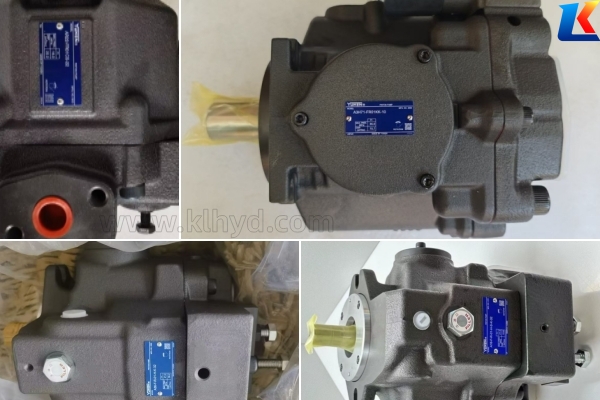
Installation Precautions for YUKEN A3H/A3HG/A Series Variable Displacement Piston Pumps
Before installing the A3H/A3HG/A series YUKEN variable displacement piston pump, please carefully read this manual and strictly follow the following precautions to ensure the pump operates safely, stably and with a long service life. Any improper installation may cause pump damage, oil leakage, abnormal operation or even safety accidents.
1. Installation Environment Requirements
1.1 The installation site should be clean, dry and well-ventilated, avoiding direct sunlight, high temperature, humidity, dust, corrosive gas and vibration sources. The ambient temperature should be kept between -10℃ and 50℃; if the temperature exceeds this range, appropriate heat insulation or heating measures should be taken.
1.2 The pump should be installed in a position that is easy to operate, inspect and maintain, with sufficient space around it (at least 30cm) for daily inspection, disassembly and maintenance.
1.3 Avoid installing the pump near flammable and explosive materials to prevent fire or explosion accidents caused by oil leakage.
2. Mounting Base and Fixing
2.1 The mounting base should be rigid, flat and have sufficient bearing capacity to avoid deformation during pump operation, which may lead to misalignment of the pump shaft and damage to the bearing or shaft seal.
2.2 Before installation, check the flatness of the mounting surface; the flatness error should not exceed 0.1mm per 100mm. Clean the mounting surface to remove oil, rust, debris and other impurities to ensure close fit between the pump and the base.
2.3 Use high-strength bolts that meet the specifications to fix the pump. Tighten the bolts evenly according to the specified torque (refer to the pump nameplate or technical manual for the specific torque value) to prevent loose bolts caused by vibration during operation.
2.4 When installing multiple pumps on the same base, ensure that the pump shafts are parallel to each other and the mounting surfaces are on the same horizontal plane.
3. Shaft Alignment and Connection
3.1 The pump shaft should be accurately aligned with the drive motor shaft. The coaxiality error should not exceed 0.1mm, and the angular deviation should not exceed 0.5° per 100mm. Misalignment will cause excessive wear of the pump shaft, bearing and shaft seal, and even lead to shaft breakage.
3.2 It is recommended to use a flexible coupling for connection. Avoid using rigid couplings, as they cannot absorb vibration and deviation, which will easily damage the pump. The coupling should be installed correctly, and there should be no eccentricity or skew.
3.3 Do not knock the pump shaft with a hammer or other tools during installation, so as not to damage the internal components (such as plungers, bearings, etc.) of the pump.
3.4 After installation, manually rotate the pump shaft to check whether it rotates flexibly without jamming, abnormal noise or obvious resistance. If there is any abnormality, stop installation and check the cause.
4. Pipeline Connection
4.1 Before connecting the oil inlet and outlet pipelines, thoroughly clean the pipelines to remove internal rust, debris, welding slag and other impurities, so as to prevent impurities from entering the pump and causing wear of internal components, blockage of oil passages or valve failure.
4.2 The oil inlet pipeline should be short and straight, with a diameter not smaller than the oil inlet of the pump, to reduce suction resistance and avoid cavitation. The oil outlet pipeline should be able to bear the maximum working pressure of the pump, and a pressure gauge and relief valve should be installed on the pipeline to monitor and adjust the system pressure.
4.3 The pipeline connection should be tight, and thread sealant or sealing gasket should be used at the joint to prevent oil leakage. Do not over-tighten the pipeline joint to avoid damaging the thread or seal.
4.4 The oil return pipeline should be connected to the oil tank smoothly, and the oil return port should be below the oil level of the tank to avoid oil splashing and air inhalation.
5. Oil Selection and Filling
5.1 Select the appropriate hydraulic oil according to the working conditions of the pump (such as working pressure, temperature, speed, etc.). It is recommended to use anti-wear hydraulic oil that meets the ISO VG 46 or ISO VG 68 standard. Do not use inferior oil or mixed oil of different types, which will affect the lubrication effect and damage the pump.
5.2 Before filling the oil, check the cleanliness of the hydraulic oil; the oil cleanliness should meet the NAS 8 class or higher. Fill the oil into the system through an oil filter to prevent impurities from entering.
5.3 The oil level of the hydraulic tank should be kept within the specified range (between the upper and lower oil level marks). Too low oil level will cause insufficient oil suction, cavitation; too high oil level will cause oil temperature rise and oil leakage.
5.4 After filling the oil, start the pump at low speed and run it for 5-10 minutes, then check whether the oil pipeline has leakage and whether the pump operates normally.
6. Electrical Connection (if applicable)
6.1 If the pump is equipped with an electric control device (such as a solenoid valve, pressure sensor, etc.), the electrical connection should be carried out by professional personnel in accordance with the electrical diagram. Ensure that the power supply voltage, frequency and wiring are correct to avoid short circuit, burnout of electrical components or misoperation of the pump.
6.2 The electrical wiring should be fixed firmly, and the connection part should be waterproof and moisture-proof to prevent electrical failure caused by water or moisture.
7. Post-installation Inspection and Trial Operation
7.1 After the installation is completed, conduct a comprehensive inspection: check whether the pump is fixed firmly, whether the pipeline connection is tight, whether the oil level is normal, whether the shaft alignment is accurate, and whether the electrical wiring is correct.
7.2 Conduct a no-load trial operation first: start the motor at low speed, let the pump run without load for 10-15 minutes, check whether the pump has abnormal noise, vibration, oil leakage, and whether the oil temperature rises normally (the oil temperature should not exceed 60℃).
7.3 After the no-load trial operation is normal, gradually increase the load to the rated working condition, and run it continuously for 30-60 minutes. During the operation, monitor the pump pressure, oil temperature, noise and vibration in real time. If any abnormality is found, stop the machine immediately for inspection and troubleshooting.
8. Other Precautions
8.1 Do not disassemble the pump without authorization before installation; if disassembly is necessary, it should be carried out by professional personnel in accordance with the technical manual to avoid damaging internal components.
8.2 During installation, avoid collision between the pump and other objects, so as not to damage the pump casing, oil port, variable mechanism and other parts.
8.3 The variable mechanism of the pump should be adjusted according to the system requirements before installation, and it is not allowed to adjust the variable mechanism at will during operation to avoid overload of the pump or system failure.
8.4 Regularly check and maintain the pump after installation and operation, and replace the hydraulic oil and filter element according to the specified cycle to ensure the stable operation of the pump.