YUKEN hydraulic pump PVL、PVR1
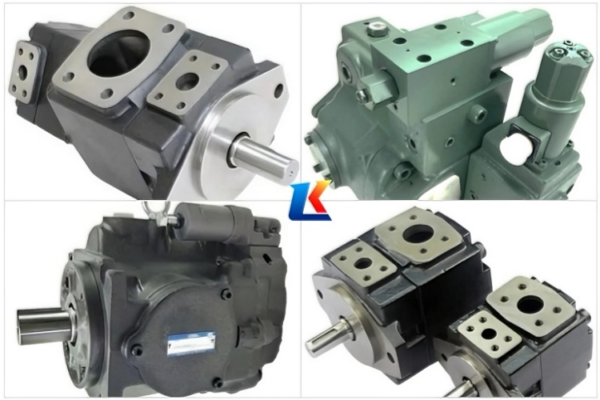
Parameters of YUKEN Hydraulic Pumps Models PVL and PVR1
1. Model Interpretation
YUKEN PVL and PVR1 are single vane pumps designed for different industrial applications. The PVL series is specifically engineered for small-sized machine tools requiring low pressure and small flow rates, while the PVR1 series (including PVR1T) offers a wider range of displacements and higher pressure capabilities for general industrial hydraulic systems. Both series adopt advanced vane pump technology to achieve high efficiency and reliable performance in various operating conditions.
1.1 PVL Series Model Coding Rules
-
PVL: Series code, indicating the PVL series compact single vane pump, characterized by small size, light weight, and low noise emission.
-
Displacement Code: Numerical value representing the geometric displacement in cm³/rev (e.g., PVL-4, PVL-6, PVL-10).
-
Mounting Type: F (flange mounting) or L (foot mounting).
-
Rotation Direction: R (clockwise when viewed from the shaft end) or L (counterclockwise when viewed from the shaft end).
-
Port Directions: A (upper direction) or B (side direction) for both suction and discharge ports.
-
Suffix Code: Last two digits represent seal type and special specifications (e.g., 20 for standard seals, 21 for high-temperature seals).
1.2 PVR1 Series Model Coding Rules
-
PVR1: Series code, indicating the PVR1 series single vane pump (PVR1T for the standard sub-series), suitable for general industrial applications requiring moderate pressure and flow.
-
Displacement Code: Numerical value representing the geometric displacement in cm³/rev (e.g., PVR1T-4, PVR1T-6, PVR1T-17).
-
Mounting Type: F (flange mounting) or L (foot mounting).
-
Rotation Direction: R (clockwise when viewed from the shaft end) or L (counterclockwise when viewed from the shaft end).
-
Port Directions: A (upper direction) or B (side direction) for both suction and discharge ports.
-
Suffix Code: Last two digits represent seal type and special specifications (e.g., 20 for standard seals, 80 for special design).
Complete Model Examples:
-
PVL-6-F-RAA-20: PVL series, 6 cm³/rev displacement, flange mounting, clockwise rotation, upper direction for both suction and discharge ports, standard seal type.
-
PVR1T-10-L-LBB-80: PVR1T series, 10 cm³/rev displacement, foot mounting, counterclockwise rotation, side direction for both suction and discharge ports, special design seal.
2. Technical Parameters
|
Parameter Item
|
PVL Series
|
PVR1 (PVR1T) Series
|
Unit
|
|---|---|---|---|
|
Geometric Displacement Range
|
4, 6, 10, 14
|
4, 6, 8, 10, 12, 15, 17
|
cm³/rev
|
|
Rated Working Pressure (Continuous)
|
7 (70 bar)
|
14 (140 bar)
|
MPa
|
|
Maximum Operating Pressure (Short-term)
|
10 (100 bar)
|
21 (210 bar)
|
MPa
|
|
Shaft Speed Range
|
600-1800 (recommended 1200)
|
600-1800 (recommended 1200)
|
r/min
|
|
Maximum Allowable Speed
|
1800 (at rated pressure)
|
1800 (at rated pressure), 2000 (at reduced pressure)
|
r/min
|
|
Noise Level (at 1800 r/min, no load)
|
≤65
|
≤68
|
dB(A)
|
|
Volumetric Efficiency
|
≥90% (at rated pressure and speed)
|
≥92% (at rated pressure and speed)
|
–
|
|
Overall Efficiency
|
≥85% (at rated pressure and speed)
|
≥87% (at rated pressure and speed)
|
–
|
|
Applicable Fluids
|
Petroleum-based hydraulic oil, anti-wear hydraulic oil (ISO VG 32-68)
|
Petroleum-based hydraulic oil, anti-wear hydraulic oil (ISO VG 32-68), phosphate ester fluids (special seal required)
|
–
|
|
Temperature Range
|
-10 to 80 (mineral oil)
|
-10 to 80 (mineral oil)
|
°C
|
|
Weight (Flange Mounting)
|
3.5-5.0 (depending on displacement)
|
5.0-7.5 (depending on displacement)
|
kg
|
|
Suction Pressure Range
|
-20 to +30 kPa (5.9 in. Hg vacuum to +4.3 PSIG)
|
-20 to +30 kPa (5.9 in. Hg vacuum to +4.3 PSIG)
|
kPa
|
3. Product Features
3.1 PVL Series Features
-
Ultra-Compact Design: Extremely small overall size and light weight, ideal for hydraulic systems with very limited installation space, especially small machine tools.
-
Ultra-Low Noise Performance: Adopts optimized vane and stator design, achieving noise levels as low as 65 dB(A) at rated speed, suitable for noise-sensitive environments.
-
Low Pressure Application Optimization: Specifically designed for low-pressure systems (up to 7 MPa), providing efficient operation and stable performance at lower pressure ranges.
-
Cost-Effective: Simple structure and fewer components result in lower manufacturing costs and maintenance expenses.
-
Easy Installation: Lightweight design and compact dimensions simplify mounting and alignment procedures.
3.2 PVR1 (PVR1T) Series Features
-
Wide Displacement Range: Offers displacements from 4 cm³/rev to 17 cm³/rev, meeting diverse flow requirements for general industrial applications.
-
High Pressure Capability: Maximum operating pressure up to 21 MPa (3050 psi), suitable for medium-pressure hydraulic systems requiring higher pressure operation.
-
Robust Construction: Heavy-duty design with reinforced components ensures durability and long service life even under harsh operating conditions.
-
Flexible Mounting Options: Available in both flange and foot mounting configurations to accommodate different system layouts.
-
Cartridge Kit Design: Main internal parts are built in cartridge kit form, minimizing downtime for replacement and maintenance without removing the pump from the system.
-
Multi-Fluid Compatibility: Can be used with petroleum-based hydraulic oils, anti-wear hydraulic oils, and phosphate ester fluids (with special seals).
4. Application Fields
4.1 PVL Series Applications
-
Small Machine Tools: Ideal for small-sized lathes, milling machines, drilling machines, and grinders requiring low pressure and small flow rates.
-
Precision Instruments: Suitable for hydraulic systems in measuring and testing equipment where compact size and low noise are critical.
-
Textile Machinery: Used in small adjustment and control mechanisms in spinning and weaving equipment.
-
Packaging Machinery: Power for small material feeding and sealing mechanisms requiring precise flow control.
-
Medical Equipment: Hydraulic systems in hospital beds, patient lifts, and other medical devices where quiet operation is essential.
4.2 PVR1 (PVR1T) Series Applications
-
General Industrial Machinery: Widely used as a hydraulic power source for various industrial equipment requiring medium pressure and flow.
-
Injection Molding Machines: Suitable for small to medium-sized injection molding machines’ clamping and ejector circuits.
-
Woodworking Machinery: Hydraulic systems for pressing, cutting, and shaping operations in small to medium-sized woodworking equipment.
-
Printing Machinery: Power for paper feeding, printing, and finishing mechanisms in offset and digital printing presses.
-
Construction Machinery: Auxiliary hydraulic systems for small excavators, loaders, and aerial work platforms.
5. Typical Model Examples
|
Model
|
Series
|
Displacement
|
Mounting Type
|
Rotation Direction
|
Port Directions
|
Application Scenario
|
|---|---|---|---|---|---|---|
|
PVL-6-F-RAA-20
|
PVL
|
6 cm³/rev
|
Flange (F)
|
Clockwise (R)
|
Suction/Discharge: Upper (A/A)
|
Small lathes, precision instruments
|
|
PVL-10-L-LBB-21
|
PVL
|
10 cm³/rev
|
Foot (L)
|
Counterclockwise (L)
|
Suction/Discharge: Side (B/B)
|
Textile machinery, packaging equipment
|
|
PVR1T-8-F-RAB-80
|
PVR1
|
8 cm³/rev
|
Flange (F)
|
Clockwise (R)
|
Suction: Upper (A), Discharge: Side (B)
|
Small injection molding machines
|
|
PVR1T-17-L-LAA-20
|
PVR1
|
17 cm³/rev
|
Foot (L)
|
Counterclockwise (L)
|
Suction/Discharge: Upper (A/A)
|
Woodworking machinery, printing presses
|
6. Installation and Operation Notes
-
Maintain hydraulic oil cleanliness at NAS 7 level or higher, and install a high-precision filter (≥10 μm) in the suction line to prevent wear of precision components.
-
Ensure proper priming before initial operation to prevent dry running damage to the pump. Fill the pump with hydraulic oil through the filling port before starting.
-
Start the pump under no-load condition for at least 10 minutes, then gradually increase pressure to rated value to ensure stable operation of the pump body and seals.
-
Maintain proper oil temperature between 20°C and 60°C for optimal performance and service life. Install a temperature control system if necessary.
-
Regularly inspect and replace hydraulic oil according to the operating environment and frequency (recommended every 2000-3000 hours of operation or 6 months, whichever comes first).
-
Follow specified torque values when assembling and disassembling to avoid damage to components. Refer to the YUKEN technical manual for detailed torque specifications.
-
Use only genuine YUKEN replacement parts and cartridge kits to ensure pump performance and reliability. Non-genuine parts may cause performance degradation and shorten service life.
-
Ensure proper alignment between the pump and motor to avoid shaft misalignment. Maximum permissible misalignment is less than 0.1 mm (.004 inches) TIR and maximum permissible misangular is less than 0.2°.
-
Do not exceed the maximum allowable speed and pressure specified in the technical parameters to prevent pump damage.
-
Regularly check for oil leakage, abnormal noise, and vibration during operation. If any abnormality is found, stop the pump immediately for inspection and maintenance.
-
Set the suction pressure within -20 to +30 kPa (5.9 in. Hg vacuum to +4.3 PSIG) at the pump inlet for optimal performance.