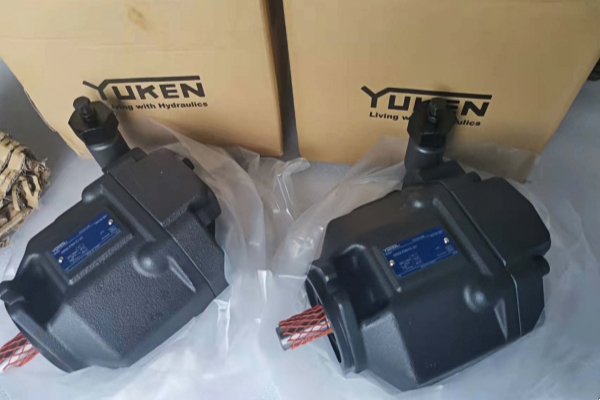
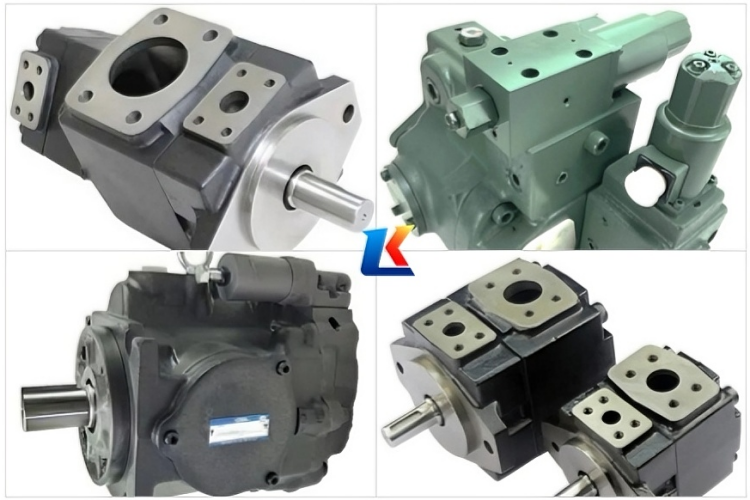
YUKEN variable piston pump hydraulic press application

Application of YUKEN variable piston pump in hydraulic press
As a key equipment that relies on hydraulic transmission to achieve pressure processing, hydraulic presses are widely used in metal forming, powder metallurgy, rubber vulcanization and other industrial fields. The performance of its core power unit directly determines the machining accuracy, production efficiency and operating stability.With its advantages of high efficiency and energy saving, precise control, and high reliability, YUKEN variable piston pumps have become the preferred power components for hydraulic systems of hydraulic presses, especially in the application of medium and high pressure and large-tonnage hydraulic presses. It has shown significant value.This article will elaborate on the application logic and practical value of YUKEN variable plunger pumps in hydraulic presses in terms of adaptability, core advantages, typical application scenarios, and key points of use and maintenance.
- The basis of adaptability of YUKEN variable piston pump and hydraulic press
The working characteristics of the hydraulic press require the hydraulic power unit to have a wide range of displacement adjustment capabilities, stable high-voltage output and flexible control modes to adapt to the pressure and speed requirements under different operating conditions-such as the rapid downward pressure of high pressure during metal stamping, the pressure stabilization and holding in the forming stage, and the low-speed reset in the return stage.The core design of YUKEN variable piston pump accurately matches this requirement, and its adaptability is mainly reflected in the following dimensions:
-Wide range of pressure and displacement coverage: core variable piston pump models such as the YUKENA series (such as A16, A22, A37, A70, A145, etc.) have displacement ranging from A few milliliters to hundreds of milliliters. The maximum pressure of the standard model can reach 28MPa, and the special high-pressure model can exceed 35MPa, which can match the power requirements of small and medium-sized desktop hydraulic presses to large heavy-duty hydraulic presses.
-Flexible variable adjustment mechanism: the swash plate variable mechanism is used to achieve stepless adjustment of displacement by adjusting the inclination of the swash plate, which can accurately match the flow output according to the load requirements of different working stages of the hydraulic press to avoid the overflow loss problem of traditional quantitative pumps.
-Multiple adaptations of control modes: it supports various modes such as pressure control, flow control, proportional control, and load-sensitive control. It can be flexibly switched through external current signals or hydraulic pilot pressure, which is perfectly adapted to the whole process control requirements of the hydraulic press from fast no-load operation to high-voltage voltage regulation. - The core advantages of YUKEN variable piston pumps in hydraulic press applications
Compared with ordinary hydraulic pumps, YUKEN variable piston pumps show three core advantages in hydraulic press applications, which directly improve the operating performance and economic value of hydraulic presses.:
(1) High efficiency and energy saving, reduce operating costs
The hydraulic press does not need to output a large flow during the holding stage, but the traditional quantitative pump needs to continuously output high-pressure oil, and the excess oil flows back through the relief valve, causing a lot of energy loss.The load-sensitive control technology of YUKEN variable plunger pump can automatically sense the load changes of the hydraulic press, and only output the pressure and flow required by the load, thereby reducing the overflow loss from the root cause.At the same time, it adopts low-friction auxiliary materials and optimized flow channel design to further reduce internal energy loss. Compared with ordinary quantitative pump +PQ proportional valve system, it can achieve a power-saving effect of 25% to 45%, and significantly reduce long-term operating costs.In addition, the heat generation of the system is greatly reduced, which not only saves cooling water consumption, but also extends the service life of hydraulic oil and sealing components, and indirectly reduces maintenance costs.
(2) Precise control to improve processing quality
The machining accuracy of the hydraulic press (such as the dimensional tolerance of stamping parts and the density uniformity of die castings) depends on the pressure and speed control accuracy of the hydraulic system.YUKEN variable plunger pump has excellent pressure and flow composite control capabilities, small pressure fluctuations and high linearity of flow adjustment, which can realize the precise control of the pressure regulator of the hydraulic press in the molding stage, and avoid processing defects caused by pressure fluctuations.For example, in the precision metal stamping scene, the proportional control mode of the pump can accurately adjust the stamping speed and pressure through the CNC signal to ensure the dimensional consistency of the stamping parts; in powder metallurgy pressing, stable pressure holding performance can improve the density uniformity of the pressed billet and reduce the scrap rate after sintering.
(3) High reliability, suitable for harsh working conditions
Hydraulic presses are often in harsh working conditions with long-term continuous operation and high-frequency load switching, which puts forward extremely high requirements for the reliability of hydraulic pumps.The key components of YUKEN variable piston pumps are made of high-strength alloy steel and wear-resistant ceramic materials, which have been precision machined and rigorously tested, and have a long trouble-free running time. Built-in overload protection, pressure shock absorption and other mechanisms can effectively resist the impact of sudden load changes in the hydraulic press and protect the pump body and the entire hydraulic SYSTEM.At the same time, its optimized plunger trajectory and distribution plate design reduce operating noise and vibration, improve the workshop working environment, and reduce the damage caused by vibration to the equipment structure. - Examples of typical application scenarios
YUKEN variable piston pumps have been widely used in various types of hydraulic press equipment, covering many industrial fields. Typical application examples are as follows:
(1) Small and medium-sized precision hydraulic presses (tonnage≤500T)
Such equipment is mostly used in precision machining scenarios such as electronic component stamping and small hardware forming, and has high requirements for control accuracy and energy saving.YUKENA37 series variable piston pumps are often used. Their compact structure and light weight can achieve accurate flow and pressure adjustment to ensure the machining accuracy of small workpieces. At the same time, load-sensitive control technology greatly reduces the energy consumption during no-load operation and adapts to the cost control needs of small and medium-sized enterprises.For example, in the mobile phone shell stamping production line, the A37 series pump drives the hydraulic press to achieve fast feeding, precise stamping and smooth return. The production efficiency is more than 15% higher than that of the traditional pump system, and the product pass rate is stable at more than 99.5%.
(2) Large and heavy-duty hydraulic presses (tonnage ≥1000T)
Such equipment is mostly used in heavy-duty scenarios such as automobile girder stamping, large-scale forging forming, thick plate bending, etc., which requires hydraulic pumps to have large flow, high pressure output capacity and strong stability.YUKENA70, A90, A145 and other large-displacement variable piston pumps are often used, with single or multiple pumps output in parallel, which can meet the needs of large hydraulic presses for rapid downward pressure and stable pressure retention.For example, in the 1600T girder stamping hydraulic press of an auto parts manufacturer, A145 series variable plunger pump is used, which can achieve a high pressure output of 28MPa, a stamping speed of 50mm/s, and the holding pressure accuracy is controlled within ±0.5MPa to ensure the dimensional accuracy and structural strength of the girder stamping; at the same time, the load-sensitive control of multi-pump linkage can automatically adjust the output of the pump set according to the stamping stage, which saves more than 30% power than traditional systems.
(3) Special hydraulic presses (such as powder metallurgy presses, rubber vulcanization presses)
Such equipment has the requirements of special working conditions, such as powder metallurgy presses that need to hold pressure for a long time to ensure the density of the billet, and rubber vulcanization presses that need to accurately control the temperature and pressure.YUKEN variable piston pumps can be adapted to needs through customized control modes. For example, in powder metallurgy presses, variable piston pumps with closed-loop pressure control are used to achieve stable pressure holding for up to several minutes, and the pressure fluctuation is less than ±0.3MPa. In rubber vulcanizing presses, the pump is linked with the temperature control system to achieve the pressure and temperature of the vulcanization process through precise flow adjustment. Collaborative control, improve the performance consistency of vulcanized products.
Fourth, the main points of use and maintenance in the application of hydraulic presses
In order to give full play to the performance of YUKEN variable plunger pumps and extend their service life, the following usage and maintenance specifications must be strictly followed in hydraulic press applications:
(1) Preparation before start-up
Check whether the cleanliness, oil level and viscosity of the hydraulic oil in the fuel tank meet the requirements. Insufficient cleanliness of the hydraulic oil will cause increased wear of the plunger and cylinder block, affecting the control accuracy and life of the pump; check whether the connection between the pump and the motor and the pipeline is firm to avoid loosening and cause vibration or leakage; manually rotate the coupling of the pump to confirm that the rotation is flexible and there is no stagnation, and to investigate internal mechanical failures.
(2) Operation process monitoring
When starting, it needs to be started without load, and then gradually loaded after the system pressure is stable to avoid motor overload or impact damage to the pump body caused by starting with load; regularly monitor the output pressure, flow rate, oil temperature and other parameters of the pump during operation to ensure that the oil temperature is controlled between 50℃ and 70℃. If the oil temperature is too high, the cooling system needs to be checked in time; listen to the operating sound of the pump and observe the vibration. If abnormal noise or vibration intensifies, it is necessary to stop and investigate problems such as loose parts, bearing damage or cavitation.
(3) Regular maintenance
Replace the hydraulic oil regularly in accordance with the cycle of 1000~3000 hours, and adjust the replacement cycle according to the use environment and oil test results; regularly check and replace the oil filter to keep the oil circuit clean; regularly check the wear of the plunger, cylinder block, oil distribution pan and other wearing parts, and find problems and replace them in time; keep the pump body and the surrounding environment clean during maintenance to avoid impurities entering the pump and affecting the assembly accuracy.
(4) Operation specifications and personnel training
Operators need to be familiar with the operating procedures of the pump to avoid illegal operations such as frequent start and stop, sudden increase or decrease in pressure, etc.; Operators are regularly trained to master the working principle, performance characteristics and fault judgment methods of the pump to ensure standardized operation and timely maintenance.
V. Summary and outlook
With its core advantages of high efficiency and energy saving, precise control, and high reliability, YUKEN variable piston pumps are perfectly adapted to the working characteristics of hydraulic presses. They have shown excellent application results in hydraulic presses of different tonnages and working conditions, not only improving the machining accuracy and production efficiency of the hydraulic presses, but also significantly reducing operating and maintenance COSTS.With the development of industrial intelligence, YUKEN variable piston pumps can realize remote monitoring and predictive maintenance through integrated sensors and Internet of Things modules, further improving the level of intelligence of hydraulic systems of hydraulic presses, and providing more reliable power support for the high-quality development of industrial pressure processing. Support.In the future, in high-end fields such as new energy auto parts manufacturing and aerospace precision molding, the application scenarios of YUKEN variable piston pumps will be further expanded, and its customized service capabilities will be better adapted to the needs of special working conditions.