Berarma vane pump 01-PLP-05-16- FHRM manual
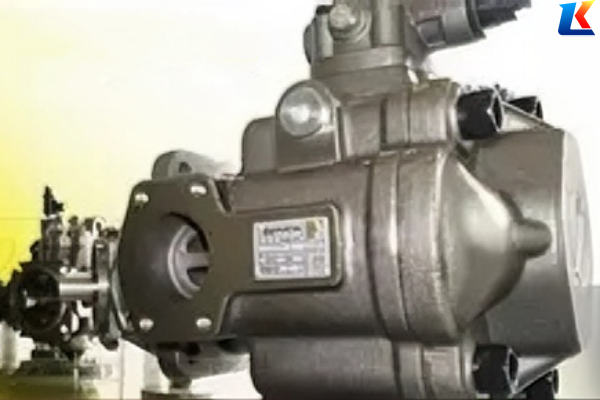
1. Product Overview
The Berarma 01-PLP-05-16-FHRM is a low-pressure variable displacement vane pump, belonging to the PLP series of Berarma hydraulic products. It is equipped with a mechanical pressure compensator, featuring compact structure, reliable performance, and easy maintenance. This pump is mainly applicable to low-pressure, small-flow hydraulic systems such as small machine tool lubrication, micro hydraulic stations, and light-duty precision machinery, providing stable hydraulic power for the normal operation of equipment. The model coding follows Berarma’s standard rules, where “01” represents the size class, “PLP” denotes the product series, “05-16” indicates the displacement specification, “F” stands for flange mounting, “H” is the high-pressure seal grade, “R” means right rotation (clockwise when viewed from the shaft end), and “M” represents the improved shaft seal type.
2. Technical Parameters
2.1 Basic Information
-
Brand: Berarma
-
Product Type: Variable Displacement Vane Pump
-
Model: 01-PLP-05-16-FHRM
-
Series: PLP Series
-
Application: Low-pressure hydraulic systems, small machine tool lubrication, micro hydraulic stations, light-duty precision machinery
2.2 Key Performance Parameters
-
Geometric Displacement: 16 cm³/rev (according to ISO 3662)
-
Actual Displacement: Approximately 16.5 cm³/rev (varies by ±3% due to manufacturing tolerances)
-
Maximum Working Pressure: 100 bar (continuous working pressure shall not exceed 80% of the maximum pressure to ensure long service life)
-
Speed Range: 800 – 1800 rpm; Recommended Rated Speed: 1450 rpm
-
Maximum Flow Rate: 23.2 L/min (at 1450 rpm)
-
Pressure Setting Range: 20 – 100 bar (manual pressure control as standard, mechanical pressure compensator)
-
Noise Level: 58 – 68 dB(A) (at rated speed and pressure)
2.3 Structural & Dimensional Parameters
-
Size Class: Size 1
-
Mounting Flange: ISO 3019-2 (UNI ISO 3019/2) 4-hole flange
-
Shaft Type: 22 mm diameter, improved shaft seal (Type M)
-
Rotation Direction: Right (clockwise) when viewed from the shaft end (Type R)
-
Screw Threads: BSP (UNI ISO 228/1) standard
-
Seal Kit: NBR (Nitrile Rubber), high-pressure seal grade (Type H)
-
Inlet Port: G3/4 (ø 20 mm)
-
Outlet Port: G1/2 (ø 15 mm)
-
Drain Port: G1/4 (maximum allowed drain port pressure: 1 bar; must be connected to the oil tank separately, not to the return line manifold)
-
Weight: Approximately 3.8 kg (single pump, standard control)
2.4 Hydraulic Fluid Requirements
-
Recommended Fluid: HM (ISO 6743-4), HLP (DIN 51524-2), HEES (ISO 15380); 20# hydraulic oil or 22# turbine oil is also applicable
-
Viscosity Range: 22 – 68 cSt (mm²/s) at operating temperature; maximum starting viscosity under full flow conditions: 400 cSt
-
Viscosity Index: Minimum 100 (ISO 2909)
-
Fluid Temperature Range: 15 – 60°C (inlet oil temperature ≤50°C, maximum ≤70°C; avoid long-term operation at high temperature)
-
Fluid Contamination Level: Maximum acceptable level 20/18/15 (ISO 4406) / Class 9 (NAS 1638); recommended level for longer service life 18/16/13 (ISO 4406) / Class 7 (NAS 1638) to reduce component wear
-
Inlet Pressure: 0.8 – 1.5 bar (absolute); avoid insufficient suction pressure to prevent vane damage
3. Installation Instructions
3.1 Installation Preparation
-
Confirm the system parameters: Record the working pressure, flow demand, and speed of the hydraulic system to ensure they match the pump’s technical parameters.
-
Check the pump appearance: Inspect the pump body for damage, cracks, or oil leakage; check whether the connecting parts are loose.
-
Prepare tools and accessories: Prepare hexagon wrench set, torque wrench, seal installation tool, and matching seals (O-rings, skeleton oil seals).
-
Clean the installation area: Ensure the mounting surface, pipeline interface, and connecting parts are clean and free of dirt, debris, or rust to avoid contaminating the hydraulic system.
3.2 Installation Steps
-
Fix the pump: Align the pump’s mounting flange with the base, install the mounting bolts symmetrically, and tighten them evenly according to the specified torque (refer to the product label for torque value) to ensure the mounting surface is flat and free of deviation.
-
Connect the pipeline: Connect the inlet and outlet pipelines according to the marked direction (inlet port for oil suction, outlet port for oil discharge); ensure the pipeline connection is tight and reliable to avoid oil leakage. The inlet pipeline diameter shall not be smaller than the pump’s inlet specification, and the length shall not exceed 1.5m to reduce suction resistance.
-
Connect the drive shaft: Connect the pump’s drive shaft to the motor shaft using a coupling, ensuring the coaxiality is ≤0.05mm; avoid direct radial or axial loads on the drive shaft. Do not knock the shaft end to prevent internal component damage.
-
Connect the drain pipeline: Connect the drain port to the oil tank separately, ensuring the pipeline is unobstructed; do not connect it to the return line manifold to avoid excessive drain pressure.
-
Install filters: Install a 10μm precision suction filter at the inlet to protect the pump body from contamination; install a return filter in the system to maintain oil cleanliness.
3.3 Post-Installation Inspection
-
Manually turn the pump shaft: Rotate the pump shaft by hand for 2-3 turns to ensure it rotates flexibly without jamming, abnormal noise, or resistance.
-
Check pipeline tightness: Check all pipeline connections, flange connections, and seal positions for looseness or oil leakage; re-tighten if necessary.
-
Check oil level and oil quality: Ensure the oil tank is filled with hydraulic oil that meets the requirements, and the oil level is within the specified range; check the oil quality to avoid using contaminated or expired oil.
4. Operation Guidelines
4.1 Start-Up Operation
-
Before starting the motor, confirm that all electrical and hydraulic connections are correct, and the pressure regulating valve is set to the minimum pressure (20 bar).
-
Start the motor in a no-load state, run it at low speed (800-1000 rpm) for 5 minutes, and check for abnormal phenomena such as oil leakage, abnormal noise, or overheating of the pump body.
-
Gradually increase the speed to the rated speed (1450 rpm), and adjust the pressure regulating valve to the working pressure required by the system; ensure the pressure and flow are stable.
-
After the pump runs stably for 10-15 minutes, check the oil temperature (normal temperature ≤60°C) and all connecting parts again for oil leakage.
4.2 Normal Operation
-
During operation, regularly monitor the pump’s working pressure, flow, oil temperature, and noise; if any abnormal conditions are found, stop the machine for inspection immediately.
-
Do not exceed the maximum working pressure and speed of the pump for a long time to avoid accelerating component wear and reducing service life.
-
Ensure the hydraulic oil is clean and the oil level is sufficient; add oil in a timely manner if the oil level is too low, and replace the oil and filter element regularly.
-
Avoid sudden start-up, stop, or pressure shock, which may cause damage to the pump’s internal components.
4.3 Shutdown Operation
-
First, reduce the system pressure to the minimum (20 bar) by adjusting the pressure regulating valve.
-
Stop the motor, and wait for the pump to stop rotating completely.
-
Cut off the power supply of the hydraulic system to ensure safe operation during maintenance.
-
If the pump is not used for a long time, drain the hydraulic oil in the pump and pipeline, clean the pump body and pipelines, and store it in a dry, ventilated, and dust-free environment.
5. Maintenance Procedures
5.1 Daily Maintenance
-
Check the oil level and oil quality daily before starting the machine; if the oil is turbid, emulsified, or contains impurities, replace it immediately.
-
Inspect the pump body, pipeline connections, and seal positions for oil leakage; replace the seal in a timely manner if leakage is found.
-
Listen to the pump’s operating noise; if there is abnormal noise (such as sharp friction sound or knocking sound), stop the machine for inspection.
-
Clean the surface of the pump and the surrounding area to avoid dust and debris accumulation.
5.2 Regular Maintenance
-
Every 200 hours of operation: Replace the hydraulic oil and filter element; clean the oil tank and pipeline.
-
Every 500 hours of operation: Disassemble the pump, inspect the wear of internal components (vanes, stator, rotor, distribution plate), and replace worn components if necessary; check the seal kit and replace it if it is aged or damaged.
-
Every 1000 hours of operation: Conduct a comprehensive inspection of the pump, including the drive shaft, bearing, pressure compensator, etc.; adjust the pressure compensator to ensure its sensitivity and accuracy.
5.3 Component Replacement Notes
-
When replacing components, use Berarma original accessories to ensure compatibility and performance consistency.
-
Before disassembly, release the system pressure and drain the hydraulic oil to avoid oil splashing and personal injury.
-
During disassembly and assembly, use special tools to avoid damaging the pump body and internal components; keep the operation environment clean to prevent impurities from entering the pump.
-
After replacing components, reassemble the pump in the reverse order of disassembly, and conduct a no-load test to ensure the pump operates normally.
6. Troubleshooting
|
Abnormal Phenomenon
|
Possible Causes
|
Solutions
|
|
Insufficient working pressure
|
1. The pressure compensator setting value is too low; 2. Vanes are stuck or worn; 3. Distribution plate is worn; 4. Oil leakage in the pipeline
|
1. Re-adjust the pressure compensator to the specified pressure; 2. Clean the vane assembly or replace worn vanes; 3. Check the distribution plate and replace it if necessary; 4. Tighten the pipeline connections or replace the seal
|
|
Abnormal noise increase
|
1. Air leakage at the suction end; 2. Misalignment between the pump and motor; 3. Hydraulic oil contamination or insufficient oil level; 4. Bearing wear
|
1. Check the suction pipeline and seal to eliminate air leakage; 2. Re-align the pump and motor to ensure coaxiality; 3. Replace the hydraulic oil and filter element, and add oil to the specified level; 4. Replace the bearing
|
|
Unstable flow
|
1. The flow regulator is not set correctly; 2. Excessive gap between vanes and stator; 3. Insufficient suction pressure; 4. Oil viscosity is too high or too low
|
1. Re-calibrate the flow regulating screw; 2. Check the wear of vanes and stator and replace them if necessary; 3. Adjust the suction pressure to the specified range; 4. Replace the hydraulic oil that meets the viscosity requirements
|
|
Oil leakage at the shaft end
|
1. Shaft seal is aged or damaged; 2. The drive shaft is worn; 3. Excessive drain pressure
|
1. Replace the shaft seal; 2. Repair or replace the drive shaft; 3. Check the drain pipeline to ensure it is unobstructed and the pressure is within the specified range
|
|
Pump body overheating
|
1. High oil temperature; 2. Insufficient lubrication; 3. Internal component friction; 4. Excessive working pressure
|
1. Check the cooling system to reduce oil temperature; 2. Add or replace hydraulic oil; 3. Disassemble the pump to check internal components and eliminate friction; 4. Adjust the working pressure to the specified range
|
7. Safety Precautions
-
Only trained and qualified personnel are allowed to install, operate, and maintain the pump. Before operation, read this manual carefully to understand the safety requirements and operation procedures.
-
During installation and maintenance, must cut off the power supply and release the system pressure to avoid personal injury caused by accidental start-up or oil pressure shock.
-
Do not touch the pump body, pipeline, or other high-temperature components during operation to avoid scalding.
-
The hydraulic oil used must meet the specified requirements; do not mix different types or grades of hydraulic oil to avoid reducing the performance of the pump and system.
-
When adjusting the pressure and flow, follow the system requirements and do not exceed the maximum limit of the pump to avoid equipment damage and safety accidents.
-
If the pump fails, stop the machine immediately for inspection; do not force operation to avoid expanding the fault range.
-
When storing and transporting the pump, avoid collision, extrusion, and moisture; store it in a dry, ventilated, and non-corrosive environment.
8. Replacement Tips
The Berarma PVS series vane pump can directly replace the PLP series, including the 01-PLP-05-16-FHRM model. The replacement model is 02-PVS1-16, which has the same installation dimensions, interface standards, and control methods as the PLP series, while the maximum working pressure is increased to 160 bar, with better performance and flexibility. When replacing, follow the replacement steps and key points in the relevant guidelines to ensure the compatibility and stable operation of the system.
9. After-Sales Service
For technical support, maintenance guidance, or accessory purchase, please contact Berarma authorized service center or the local distributor. Provide the pump model (01-PLP-05-16-FHRM) and fault description to obtain professional and timely services. The product has a standard quality guarantee period; please refer to the product label for specific details.