Parker PV series open loop variable swash plate axial piston pump
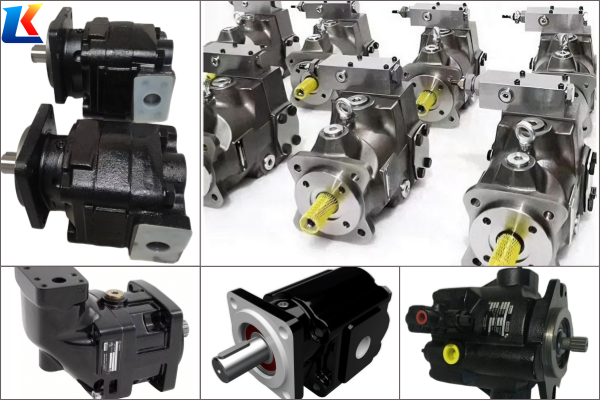
Core Overview
The Parker PV Series is an open circuit, variable displacement swash plate axial piston pump manufactured by Parker Hannifin Corporation (USA), featuring high pressure, high efficiency, and high reliability. It covers a displacement range of 16–270 cm³/rev (up to 360 cm³/rev for some models), with a rated pressure of 350 bar and a peak pressure of 420 bar, suitable for heavy-duty applications such as construction machinery, industrial hydraulics, and marine equipment.
I. Product Positioning and Structure
-
Type: Open circuit, variable displacement swash plate axial piston pump with 9-piston design, featuring low flow pulsation.
-
Core Design: Displacement adjustment is achieved by changing the swash plate angle; the cylinder block is optimized by finite element analysis, ensuring compact structure and high strength.
-
Installation Standard: Complies with SAE and VDMA-24560 standards, supporting metric/SAE 4-hole flanges with strong interchangeability.
-
Through-shaft Drive: Can be configured as single, double or multi-unit combinations to meet complex system requirements.
II. Core Technical Parameters
|
Parameter Item
|
Specification Value
|
|---|---|
|
Displacement Range
|
16–270 cm³/rev (mainstream); up to 360 cm³/rev for some models
|
|
Rated Working Pressure
|
350 bar (35 MPa)
|
|
Peak Pressure
|
420 bar (42 MPa)
|
|
Speed Range
|
300–2400 rpm (minimum 300 rpm)
|
|
Volumetric Efficiency
|
≥95% (under high-pressure conditions)
|
|
Drain Port Arrangement
|
Upward design, suitable for installation space
|
|
Variable Control
|
Multiple options including standard pressure regulator, power regulator, electro-hydraulic proportional control, etc.
|
III. Key Technical Features
-
Energy Efficiency: 9-piston + pre-compression volume technology, low flow pulsation, volumetric efficiency up to 95%+, and better energy consumption performance.
-
Fast Response: Large variable piston + strong return spring ensures timely response to changes in system pressure/flow.
-
Low Noise and Durability: Precision machining and wear-resistant materials (high-strength alloy cylinder block, wear-resistant pistons) ensure long service life and low noise.
-
Flexible Control: Multiple variable control schemes to adapt to different working conditions.
-
High Reliability: Through-shaft drive design, resistant to impact and vibration, suitable for heavy-duty continuous operation.
IV. Variable Control Modes
|
Control Type
|
Application Scenario
|
Features
|
|---|---|---|
|
Standard Pressure Regulator
|
Constant Pressure Systems
|
Maintains constant system pressure, simple structure and low cost
|
|
Power Regulator
|
Energy-saving Priority Scenarios
|
Automatically matches power output, avoids overload, and improves energy efficiency
|
|
Electro-hydraulic Proportional Control
|
Precision Control Requirements
|
Realizes stepless adjustment of flow/pressure, suitable for automated systems
|
V. Complete Model Series
-
Basic Models: PV016, PV020, PV023, PV032, PV040, PV046, PV063, PV080, PV092
-
Large Displacement Models: PV140, PV180, PV270, PV360 (for some scenarios)
VI. Typical Application Scenarios
-
Construction Machinery: Main pumps for 20–35 ton excavators, loaders, rotary drilling rigs, cranes, etc.
-
Industrial Equipment: High-pressure systems in metallurgical steel plants, hydraulic devices in power plants, oil drilling equipment, injection molding machines, forging presses.
-
Marine and Heavy Equipment: Ship hydraulic systems, mining machinery, port equipment.
VII. Comparison with Other Series (PV vs PVP vs PAVC)
|
Series
|
Rated Pressure
|
Displacement Range
|
Peak Pressure
|
Application Scenario
|
|---|---|---|---|---|
|
PV
|
350 bar
|
16–270 cm³/rev
|
420 bar
|
Heavy-duty construction machinery, industrial high-pressure systems
|
|
PVP
|
250 bar
|
16–140 ml/rev
|
350 bar
|
Medium-pressure industrial equipment
|
|
PAVC
|
210 bar
|
10–100 ml/rev
|
280 bar
|
Light-duty industrial and mobile equipment
|
Summary
With high pressure, high efficiency, and high reliability as its core, the Parker PV Series fully meets the needs of heavy-duty hydraulic systems through multiple variable control and through-shaft design, making it a mainstream choice in the fields of construction machinery and industrial hydraulics.