Parker PV series variable swash plate axial piston pump
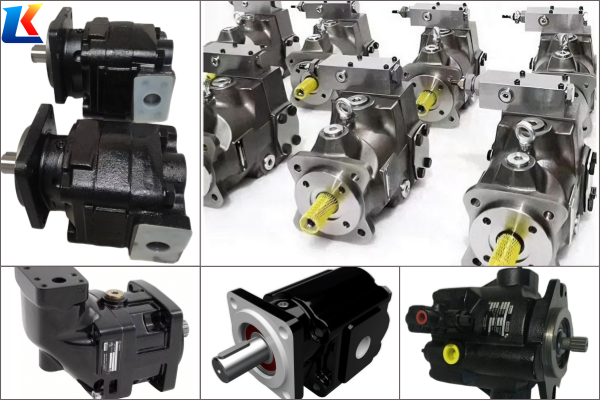
Parker PV Series Open-Circuit Variable Displacement Swash Plate Axial Piston Pumps
The Parker PV Series (now commonly referred to as the PVplus Series) is a high-performance open-circuit variable displacement swash plate axial piston pump launched by Parker Hannifin Corporation of the United States. Designed for harsh working conditions, it is widely used in industrial and marine fields, and is renowned for its high power density, excellent reliability and flexible control capability.
I. Core Technical Parameters
|
Parameter Item
|
Specification Range
|
Remarks
|
|---|---|---|
|
Displacement Range
|
16-360 cc/rev
|
Covers the full model range from PV016 to PV360
|
|
Working Pressure
|
350 bar continuous, 420 bar peak
|
Meets the requirements of high-pressure systems
|
|
Speed Range
|
Minimum 300 rpm, maximum varies by model
|
Compatible with various power sources
|
|
Structure Type
|
Swash plate axial piston, variable displacement control
|
Open-circuit design
|
|
Installation Standard
|
VDMA-24560, 4-hole flange
|
Metric/SAE interfaces optional
|
|
Control Method
|
Pressure control, flow control, power control, etc.
|
Flexible combination of multiple adjustment methods
|
II. Working Principle
The PV Series pump operates based on the swash plate axial piston principle:
-
The drive shaft drives the cylinder block to rotate, and the swash plate forces the pistons to make reciprocating linear movements in the cylinder block.
-
The reciprocating movement of the pistons changes the internal volume of the cylinder block, and the oil suction and discharge cycles are completed through the suction and discharge windows of the valve plate.
-
The variable displacement mechanism precisely adjusts the displacement (continuously adjustable from 0 to maximum displacement) by changing the swash plate angle.
-
The valve plate adopts an advanced design to ensure reliable sealing and low wear under high pressure.
III. Core Structural Features
-
Modular Design: The modular structure facilitates maintenance and replacement, provides high configuration flexibility, and supports strategic inventory management.
-
High Efficiency Performance: Optimized flow channel design and precision manufacturing processes ensure high efficiency and low energy consumption, reducing operating costs.
-
Rapid Response: The combination of a large variable displacement piston and a strong return spring achieves millisecond-level control response to adapt to dynamic load changes.
-
9-Piston Design: Compared with traditional 7-piston pumps, it has smaller flow pulsation, more stable operation and lower noise.
-
High Reliability: Heavy-duty bearing system and wear-resistant materials ensure long service life under harsh working conditions.
-
Multi-Functional Control: Supports multiple control combinations, including:
-
Standard pressure regulator
-
Power regulator (constant power control)
-
Load-sensing control
-
Electro-hydraulic proportional control, etc.
-
IV. Main Models and Nomenclature Rules
1. Common Models
PV016, PV020, PV023, PV028, PV032, PV040, PV046, PV063, PV080, PV092, PV140, PV180, PV270, PV360
2. Typical Model Interpretation (e.g., PV046R1K1T1NMMC)
-
PV046: Basic model (displacement 46 cc/rev)
-
R/L: Rotation direction (Right/Left rotation)
-
1: Control type code
-
K1: Regulator type
-
T1: Shaft end type
-
NMMC: Seal and installation options
V. Application Fields
With its excellent performance, the PV Series pump is widely used in:
-
Heavy Industry: Metallurgical equipment, mining machinery, injection molding machines, presses, test benches and hydraulic stations
-
Marine Industry: Marine deck machinery, steering gear systems, hydraulic power units
-
Energy Sector: Wind power equipment, oil drilling machinery, power station auxiliary machinery
-
Construction Machinery: Concrete pump trucks, cranes, loaders and other high-pressure hydraulic systems
-
Others: Aerospace ground equipment, special vehicle hydraulic systems
VI. Advantages and Value
-
Improve System Performance: High pressure and high flow output to meet the needs of complex hydraulic systems.
-
Reduce Operating Costs: High-efficiency design reduces energy consumption, and long service life reduces maintenance frequency and downtime.
-
Enhance Control Precision: Multiple control methods are available to achieve precise regulation and intelligent control of the system.
-
Global Support: Parker’s global service network provides technical support and spare parts supply to ensure continuous operation of equipment.
VII. Selection and Maintenance Points
-
Selection Suggestions: Select the appropriate model according to the system’s pressure, flow, speed and control requirements. Consult the Parker technical team if necessary.
-
Installation Requirements: Strictly follow the VDMA standard for installation, ensure coaxiality and installation torque, and use the recommended hydraulic oil.
-
Maintenance Cycle: Regularly replace the filter element and hydraulic oil according to the working conditions, monitor the oil temperature and pressure, and handle abnormalities in a timely manner.
-
Spare Parts Replacement: It is recommended to use Parker original spare parts to ensure the performance and service life of the pump.
With its technological advancement, reliability and versatility, the Parker PV Series axial piston pump has become the preferred solution for high-pressure open-circuit hydraulic systems, providing efficient and stable hydraulic power support for numerous industries around the world.