Parker PVP series open loop axial piston pump
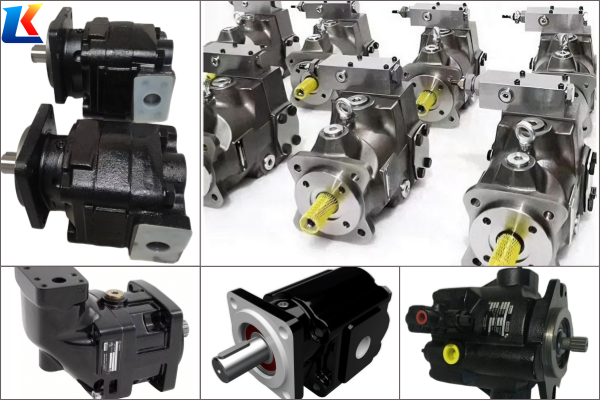
Parker PVP Series Open-Circuit Economical Axial Piston Pumps
The Parker PVP Series is a swashplate-type variable displacement axial piston pump specifically designed for open-circuit applications. With cost-effectiveness and reliable durability as its core advantages, it is widely used in industrial equipment and mobile machinery fields. This series offers a variety of displacement options and flexible control methods, performing excellently under medium-pressure working conditions, making it an ideal choice for users pursuing cost performance.
I. Core Technical Parameters
|
Parameter Item
|
Detailed Specifications
|
|---|---|
|
Displacement Range
|
16~140 ml/rev (Main Models: PVP016, PVP023, PVP033, PVP041, PVP048, PVP060, PVP076, PVP100, PVP140)
|
|
Rated Working Pressure
|
250 bar (3,600 psi) for continuous operation; peak pressure up to 310 bar (4,500 psi)
|
|
Speed Range
|
Maximum up to 1800 RPM, minimum speed 300 RPM
|
|
Structure Type
|
Swashplate-type axial piston, dedicated to open circuits, supporting single pump or multi-pump combination
|
|
Through-shaft Capacity
|
Equipped with a through-shaft structure, which can be used for multi-pump series drive
|
|
Working Medium
|
Mineral oil, synthetic hydraulic oil and other hydraulic fluids that meet industrial standards
|
II. Key Features and Advantages
1. Economical Design, Reducing Comprehensive Costs
-
Efficient and Energy-Saving: Adopts advanced valve distribution technology to reduce internal leakage, improve volumetric efficiency, and lower energy consumption costs
-
Easy Maintenance: Two-piece housing design for quick disassembly and maintenance, reducing downtime
-
Durable Components: Replaceable bronze-clad valve plates and piston shoe plates extend service life and reduce replacement costs
-
High Cost Performance: While ensuring performance, it is priced economically, suitable for projects with limited budgets
2. Reliable Performance, Stable Operation
-
High-Strength Cast Iron Housing: Provides excellent rigidity and vibration resistance, ensuring stable operation under harsh working conditions
-
Low Noise Level: Optimized internal structure design reduces pressure pulsation and fluid noise, improving the working environment
-
Fast Response: The control mechanism is sensitive, can quickly adapt to load changes, and improve system dynamic performance
-
Strong Self-Priming Capacity: Reliable self-priming can be achieved at higher speeds, reducing the need for auxiliary equipment
3. Flexible Adaptation, Wide Application
-
Multiple Control Methods: Supports multiple control options such as pressure compensation, power compensation, and remote control to meet different system requirements
-
Easy Installation: Optional metric pilot, shaft and port configurations, adapting to equipment installation of different global standards
-
Multi-Pump Combination: Supports parallel or series use of multiple pumps, which can meet the flow and pressure requirements of complex hydraulic systems
III. Control Method Options
The PVP series offers a variety of control options to adapt to the needs of different application scenarios:
|
Control Type
|
Functional Features
|
Applicable Scenarios
|
|---|---|---|
|
Pressure Compensation Control (Standard Configuration)
|
Maintains constant system pressure, automatically adjusts displacement, and prevents overload
|
Constant pressure systems, such as hydraulic fixtures and press machines
|
|
Power Compensation Control
|
Limits output power, prevents overload of engines or motors, and improves energy utilization
|
Mobile machinery, such as construction machinery and agricultural machinery
|
|
Remote Control
|
Adjusts displacement through external signals (electrical or hydraulic signals) to achieve precise control
|
Automated production lines, precision machine tools
|
|
Pressure + Power Compound Control
|
Has both pressure and power limiting functions, providing double protection
|
Complex working conditions, such as mining machinery and heavy equipment
|
IV. Structural Design Highlights
-
Swashplate Working Principle: The drive shaft drives the cylinder block to rotate, and the swashplate pushes the plunger to reciprocate, realizing oil suction and oil discharge through the change of the volume of the sealed cavity
-
Symmetrical Design: Optimized flow channel design reduces pressure loss and fluid noise
-
High-Strength Bearings: Uses high-quality bearings to bear axial and radial loads, extending service life
-
Standardized Interfaces: ISO standard mounting flanges and oil ports for easy system integration and replacement
V. Typical Application Fields
With its reliable performance and economic advantages, the PVP series is widely used in the following fields:
-
Industrial Machinery: Machine tools, forging equipment, metallurgical machinery, plastic machinery, hydraulic workstations
-
Mobile Machinery: Construction machinery, agricultural machinery, mining machinery, forestry machinery, material handling equipment
-
Special Vehicles: Sanitation vehicles, aerial work platforms, fire vehicles, port machinery
-
Energy Field: Power station auxiliary equipment, wind power generation hydraulic systems, petroleum machinery
-
Other Applications: Ship deck machinery, aviation ground equipment, test bench systems
VI. Selection and Notes
-
Displacement Selection: Calculate the appropriate displacement according to the required flow and speed of the system (Q = n × V × ηv, where ηv is the volumetric efficiency)
-
Pressure Matching: Ensure that the system working pressure does not exceed the rated pressure of the pump, and avoid long-term operation at peak pressure
-
Control Method: Select the appropriate control type according to the system function requirements, such as pressure compensation control for constant pressure systems
-
Installation and Maintenance:
-
Ensure the pump’s installation foundation is firm to avoid vibration affecting performance
-
Correctly connect the oil inlet and outlet to ensure oil cleanliness (NAS Class 9 or higher is recommended)
-
Regularly check oil temperature and contamination, and replace hydraulic oil and filter elements as required
-
Use original accessories during maintenance to ensure performance and safety
-