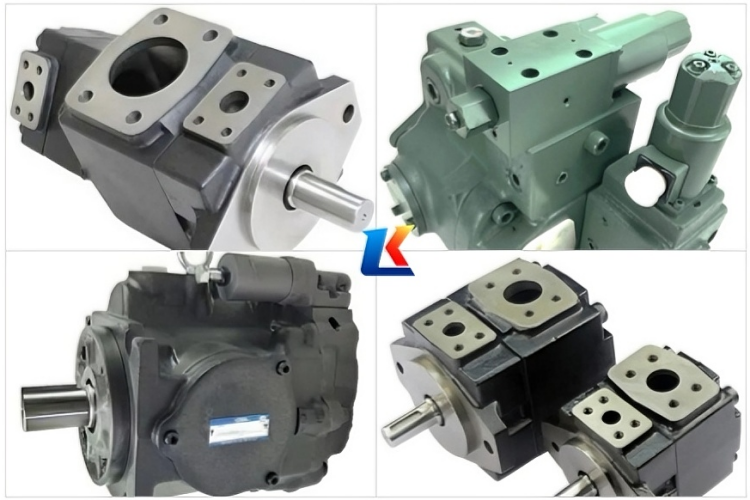
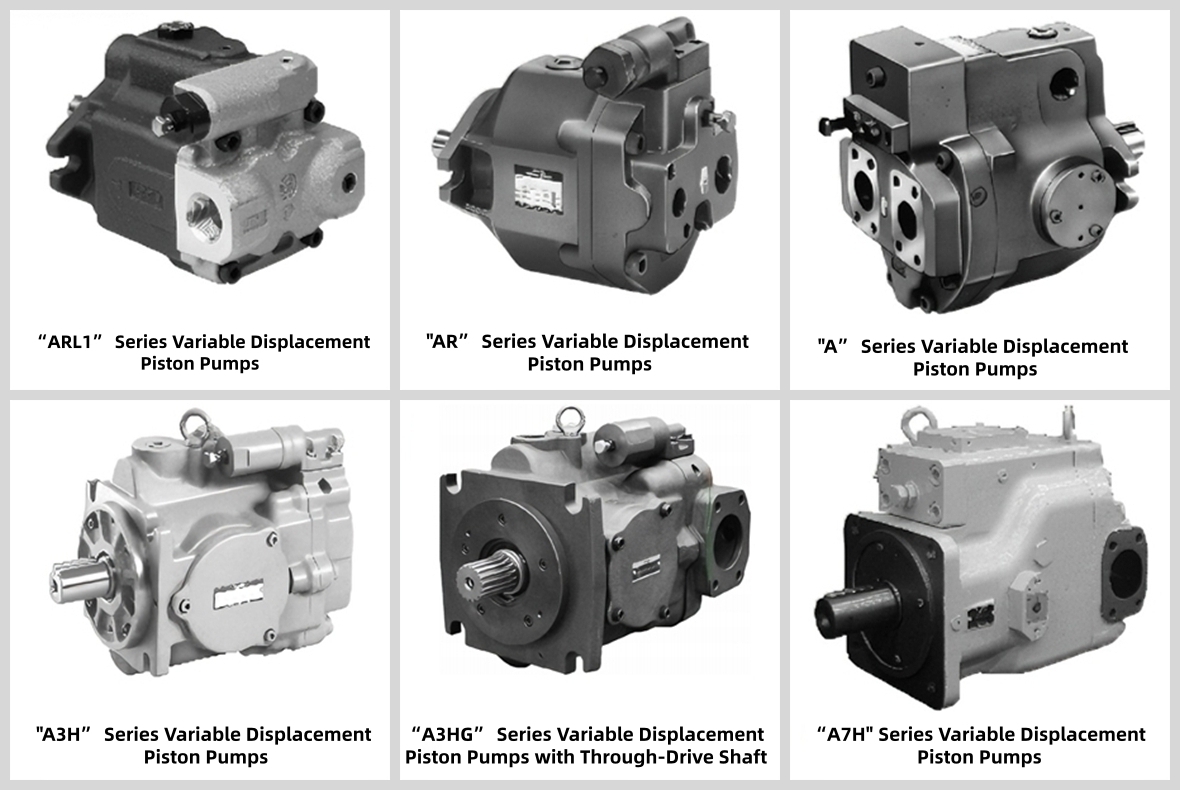
YUKEN vane pump pv2r13-19-94- f-reaa-43
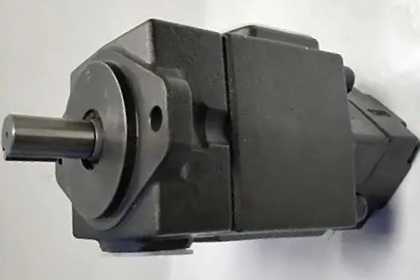
YUKEN Vane Pump PV2R13-19-94- F-REAA-43 model description and application analysis
- Model decomposition and parameter analysis
Brand identity
YUKEN: The brand of Japan YUKEN Industry Co., Ltd., a well-known manufacturer in the global hydraulic field, its products are known for their low noise, high pressure and high performance.
Series code
PV2R: A series of high-pressure vane pumps designed for low noise, covering a displacement range of 6-237cc/rev, with a maximum pressure of 21MPa, made of aluminum alloy and suitable for electric drive.
Pump code
13: The specific models in the PV2R series distinguish between different displacement combinations.
Displacement parameters
The displacement of the front pump is 19: the unit ml/rev, which means that the output flow rate of the front pump is 19 ml per revolution.
The displacement of the rear pump is 94: in ml/rev, the output flow rate of the rear stage pump is 94 ml per revolution.
Double-coupling structure: two PV2R-type single pumps driven by the same axis are connected in parallel, which can independently supply oil to the two circuits to meet the needs of multi-channel hydraulics.
Installation form
F: Flange installation, easy to quickly connect with the hydraulic system, high stability.
Direction of rotation
R: Rotate clockwise (observed from the shaft end), which needs to be matched with the steering of the drive motor to avoid performance degradation or damage caused by reversal.
Interface direction
EAA:
E: The direction of the oil discharge port (you need to refer to the official manual of YUKEN to confirm the specific orientation, usually “E” may indicate a lateral direction or a specific angle).
AA: The direction of the oil suction port (“A” usually means upward, and the double “A” may be a standard configuration or a special design).
Design number
43: Version or design iteration identification, which may involve material, sealing structure, or performance optimization. - Core application scenarios
Industrial hydraulic system
Injection molding machinery: provide high pressure, stable flow, control mold opening and closing and injection pressure.
Construction machinery: it is used to drive hydraulic cylinders for excavators, cranes and other equipment to ensure accurate movement.
Machine tools: provide power for the feed system of CNC machine tools to achieve high-precision machining.
High pressure demand area
Metallurgical industry: The hydraulic system that drives rolling mills and forging equipment can withstand extreme working conditions.
Automobile manufacturing: used in die-casting machines and stamping lines to ensure the forming quality of body parts.
Large traffic demand scenario
Ship equipment: provide continuous high-flow hydraulic power for steering gear and deck machinery.
Wind power equipment: drive yaw system and pitch system to adapt to harsh outdoor environments. - Performance advantages
Efficient and stable
The blade is precisely matched with the rotor groove, the volumetric efficiency is high, and the flow pulsation is small.
The double-coupling structure reduces pressure fluctuations and ensures synchronous operation of multiple loops.
Low noise design
Optimize the flow channel and blade profile, reduce hydraulic shock and vibration, and noise ≤65dB.
Long life and reliability
The aluminum alloy shell is lightweight and corrosion-resistant. Key components (such as stators and blades) are made of high-strength materials with a life span of more than 10,000 hours.
Precision control of axial clearance (0.015-0.03mm for small pumps, 0.02-0.045mm for medium pumps) to reduce leakage.
Easy maintenance
Modular design, vulnerable parts such as oil distribution pan and stator can be quickly replaced, reducing downtime. - Precautions for selection and use
Parameter matching
Confirm the required flow rate of the system (front pump 19ml/rev +rear pump 94ml/rev) and pressure (≤21MPa) to avoid overload.
The direction of rotation (clockwise) must be consistent with the steering of the motor to prevent reversal.
Installation and interface
Flange installation (F) MUST ensure that the butt surface is flat and the bolt fastening torque meets the standard.
The direction of the oil discharge port (EAA) and the oil suction port must match the layout of the pipeline to reduce the elbow and local resistance.
Oil requirements
The viscosity range is 17-37mm2/s, and the temperature is ≤55℃ to prevent the oil from deteriorating or leaking.
The filtration accuracy is ≥NAS 6 to avoid impurities from wearing the blades and stators.
Operation monitoring
Regularly check the axial clearance and oil cleanliness, and replace the filter element in time.
Avoid dry rotation or overload, and prevent wear and tear of the suction area on the inner surface of the stator.