Vickers hydraulic pump PVXS series product manual
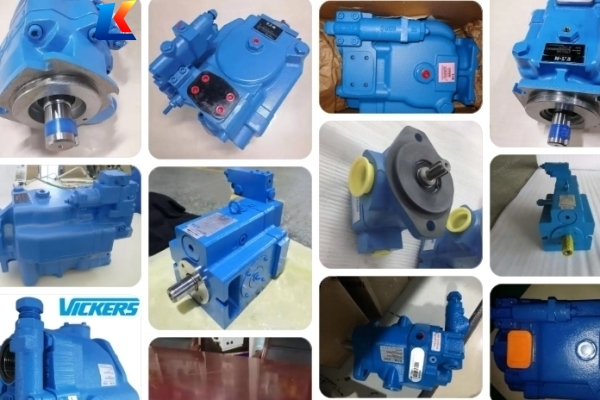
1. Introduction
The Vickers PVXS Series is a high-pressure, high-performance open-loop axial piston pump designed and manufactured by Danfoss Vickers, dedicated to providing stable and efficient power output for industrial hydraulic systems. With its robust structure, excellent pressure resistance, and flexible control options, this series is widely used in harsh working conditions such as marine energy, heavy industry, and special engineering, meeting the high-demand requirements of high-pressure, heavy-load, and long-term continuous operation.
Adopting a swash plate design and pressure-balanced structure, the PVXS Series features oversized shafts and bearings, ensuring reliable operation and a long service life. Its “building block” modular design allows for flexible configuration of control components, making it suitable for a variety of hydraulic system optimization needs. This manual provides detailed instructions on the technical parameters, model interpretation, installation, operation, maintenance, and troubleshooting of the PVXS Series, aiming to guide users in correct use and maximize the pump’s performance and service life.
2. Model Code Interpretation
The model code of the PVXS Series hydraulic pump contains key configuration information, which is helpful for users to select, install, and maintain the product. Taking the typical model “PVXS-130-M-R-LR-0000” as an example, the detailed interpretation is as follows:
-
PVXS: Series identifier, indicating Vickers open-loop in-line variable axial piston pump, adopting “X” series 20 design, with high reliability and low noise, suitable for high-pressure working conditions.
-
130: Nominal displacement specification, corresponding to a displacement of approximately 130 cm³/r (7.9 in³/rev), meaning the theoretical output hydraulic oil volume per revolution of the pump shaft is about 130 cubic centimeters.
-
M: Measurement standard, representing metric specifications, adapted to metric installation and connection dimensions.
-
R: Rotation direction, indicating clockwise rotation (right-hand rotation) when viewed from the pump shaft extension end, suitable for power systems with clockwise drive.
-
LR: Control mode, belonging to pressure compensation control, which can realize constant system pressure control, and the flow rate is adaptively adjusted according to system demand.
-
0000: Additional configuration identifier, indicating no additional special configurations (no mechanical adjustment stop, no through-shaft drive, etc.), which is a standard basic configuration version.
For other models in the series (such as PVXS066, PVXS090, PVXS180, PVXS250), the interpretation rules are consistent, and the difference mainly lies in the displacement specification (the number after PVXS) and optional configuration parameters.
3. Technical Specifications
The following are the standard technical parameters of the PVXS Series hydraulic pump (theoretical values, excluding efficiency and tolerances; values rounded). For specific parameters of different models, please refer to the order confirmation document:
|
Parameter
|
Specification
|
Unit
|
|---|---|---|
|
Displacement Range
|
66 – 250
|
cm³/rev (4.0 – 15.2 in³/rev)
|
|
Continuous Working Pressure
|
350 (5000 psi)
|
bar
|
|
Peak Working Pressure
|
420 (6090 psi)
|
bar
|
|
Speed Range
|
150 – 1800
|
r/min
|
|
Theoretical Flow (at 1800 r/min, max displacement)
|
99 – 450 (26.1 – 118.9 USgpm)
|
L/min
|
|
Volumetric Efficiency
|
≥ 95
|
%
|
|
Total Efficiency
|
≥ 90
|
%
|
|
Operating Noise
|
65 – 78
|
dB(A)
|
|
Recommended Hydraulic Oil
|
L-HM32, 46, 68 low-temperature high-pressure anti-wear hydraulic oil
|
–
|
|
Oil Cleanliness Requirement
|
≥ NAS 8 (ISO 18/15)
|
–
|
|
Working Oil Temperature
|
15 – 65 (ideal: 50±4)
|
℃
|
|
Ambient Temperature
|
-20 – 80
|
℃
|
|
Weight
|
55 – 234
|
kg
|
4. Structural Features
The PVXS Series hydraulic pump adopts advanced structural design, combining reliability and performance, with the following key features:
-
Swash Plate Axial Piston Design: The axial piston structure with swash plate ensures stable operation and long service life, effectively reducing internal wear and improving volumetric efficiency.
-
Oversized Shafts and Bearings: Equipped with oversized shafts and high-strength bearings, it enhances the pump’s load-bearing capacity and shock resistance, adapting to heavy-load and high-vibration working conditions.
-
Pressure-Balanced Structure: Rotating and pressure-loaded components adopt a pressure-balanced design, reducing internal stress and improving the pump’s overall stability and service life.
-
Modular “Building Block” Design: The modular design allows for flexible configuration of integrated pilot pumps, filters, pressure relief valves and other components, expanding the application range and facilitating maintenance and replacement of parts.
-
High-Pressure and Corrosion-Resistant Design: The pump body is made of high-strength materials with anti-corrosion treatment, which can withstand ultra-high pressure and harsh working environments such as marine and chemical industries.
-
Low Noise Performance: Adopting patented timing configuration to reduce noise and pressure pulsation of output flow, adapting to industrial environments with high noise requirements.
5. Installation Instructions
5.1 Installation Preparation
-
Before installation, check whether the pump model, specifications and accessories are consistent with the order requirements, and confirm that there is no damage, deformation or foreign matter inside the pump.
-
Prepare installation tools (such as torque wrenches, alignment tools), and check the cleanliness of the installation site to avoid dust, debris and other impurities entering the pump body or hydraulic system.
-
Check the hydraulic oil to be used, ensure that it meets the recommended specifications and cleanliness requirements, and pre-filter the oil if necessary.
5.2 Installation Steps
-
Mounting the Pump: Install the pump on the mounting bracket or base using flange mounting (complying with ISO 3019/2 series flange specifications). Ensure that the mounting surface is flat and clean, and the fixing bolts are tightened according to the specified torque to avoid vibration during operation.
-
Shaft Alignment: Align the pump shaft with the motor shaft, ensuring that the coaxiality error is within 0.006 inches (total indicator reading). The tighter the alignment, the quieter the pump operation and the longer the service life. Use a coupling to connect the two shafts, and avoid over-tightening or misalignment.
-
Pipeline Connection: Connect the suction and discharge pipelines according to the pump’s port specifications. The suction pipeline should be as short and straight as possible, with no excessive elbows or restrictions, to avoid cavitation caused by insufficient suction. The discharge pipeline should be equipped with a pressure gauge and a relief valve to protect the pump and system. All pipeline connections should be tight to prevent oil leakage. The suction line diameter should be equal to the suction port, and the return line should terminate below the oil level to prevent splashing and air intake.
-
Oil Filling: Fill the hydraulic system with qualified hydraulic oil according to the specified oil level. Ensure that the oil level is higher than the suction port during the entire working cycle to avoid the pump sucking air. After filling, check for oil leakage at each connection point.
5.3 Installation Precautions
-
Before installation, relieve all pressure in the hydraulic system and disconnect the power supply to avoid safety accidents.
-
Do not hit the pump body or shaft during installation to prevent damage to internal components.
-
Reserve sufficient maintenance space around the pump to facilitate later inspection, maintenance and part replacement.
-
Ensure that the rotation direction of the pump is consistent with the direction indicated on the pump body. Counterclockwise rotation can be provided on request.
6. Operation Guide
6.1 Pre-Startup Check
-
Check the oil level of the hydraulic system again to ensure it is within the specified range.
-
Check the tightness of all pipeline connections and fixing bolts, and re-tighten if there is any looseness.
-
Check the pressure gauge, relief valve and other instruments to ensure they are accurate and in good working condition.
-
Manually rotate the pump shaft 2-3 turns to ensure it rotates flexibly without jamming or abnormal noise, which helps to lubricate internal components and avoid dry friction at startup.
-
Check the control system (such as pressure compensation valve, electric proportional control) to ensure it is in the correct working state.
6.2 Startup Operation
-
Start the motor at low speed (1/3 of the rated speed) and run it for 2-3 minutes to allow the hydraulic oil to circulate and the pump to be fully lubricated.
-
Gradually increase the motor speed to the rated speed, and observe the pump’s operation status: check for abnormal noise, vibration, oil leakage and other phenomena; monitor the pressure gauge and temperature gauge to ensure the pressure is stable and the oil temperature is within the normal range.
-
After the pump runs stably for 5-10 minutes, adjust the relief valve and control components according to the system requirements to set the working pressure and flow rate, and confirm that the system operates normally.
6.3 Operation Monitoring
-
During operation, regularly monitor the working parameters of the pump, including working pressure, oil temperature, flow rate, noise and vibration. If any abnormal situation is found, stop the machine for inspection in time.
-
The working pressure should not exceed the continuous working pressure of the pump, and the peak pressure should not last for more than 10 seconds to avoid damage to the pump body and internal components.
-
The oil temperature should be controlled between 15-65℃. If the temperature is too high, check the cooling system and oil quality; if the temperature is too low, preheat the hydraulic oil to avoid affecting the lubrication effect.
-
Avoid long-term operation under extreme working conditions such as over-rated pressure, frequent pressure impact or extremely low speed, which will shorten the service life of the pump.
6.4 Shutdown Operation
-
First reduce the system pressure to the minimum by adjusting the relief valve or control components.
-
Stop the motor and wait for the pump to stop rotating completely.
-
Close the power supply and the main valve of the hydraulic system to prevent oil leakage or accidental startup.
-
If the pump is not used for a long time, drain the hydraulic oil in the pump and system, clean the pump body and pipelines, and seal the ports to prevent dust and moisture from entering.
7. Maintenance and Maintenance
7.1 Daily Maintenance (Daily)
-
Check the oil level of the hydraulic system and add hydraulic oil in time if it is insufficient. Record the oil level and oil quality status.
-
Check for oil leakage at the pump body, pipeline connections, shaft seals and other parts. If leakage is found, replace the sealing件 in time and tighten the connections.
-
Clean the surface of the pump and the surrounding area to keep it clean and free of dust and debris.
-
Monitor the noise and vibration of the pump during operation, and record any abnormal changes.
7.2 Regular Maintenance (Monthly/Quarterly/Annual)
7.2.1 Monthly Maintenance
-
Check the filter element of the hydraulic system. If it is dirty or clogged, clean or replace it in time to ensure the oil cleanliness. The filter should be checked according to the pressure difference indicator or maintenance cycle.
-
Check the tightness of the pump’s fixing bolts and pipeline connections, and re-tighten if there is any looseness.
-
Check the wear of the shaft seal. If there is oil leakage at the shaft seal, replace the shaft seal in time, and check whether the shaft neck is worn or scratched.
7.2.2 Quarterly Maintenance
-
Take an oil sample for analysis to monitor the viscosity, acid value and pollution degree of the hydraulic oil. If the oil quality deteriorates, replace the hydraulic oil completely and clean the oil tank and pipelines.
-
Check the operation status of the control components (such as pressure compensation valve, electric proportional valve), clean the valve core and valve seat, and ensure flexible operation and accurate control.
-
Check the wear of key components such as the swash plate, piston and valve plate, and replace them if there is excessive wear.
7.2.3 Annual Maintenance
-
Disassemble the pump for comprehensive inspection and maintenance. Clean all internal components, check the wear of the piston, cylinder block, swash plate, bearing and other components, and replace the worn parts and sealing件.
-
Check the coaxiality of the pump shaft and motor shaft again, and re-align if necessary.
-
Test the pump’s performance (such as flow rate, pressure, efficiency) after assembly to ensure it meets the technical specifications.
7.3 Maintenance Precautions
-
Before any maintenance operation, relieve all pressure in the system and disconnect the power supply to avoid safety accidents. Hang a warning sign to prevent accidental startup.
-
Use special tools for disassembly and assembly to avoid damaging the pump body and internal components. Do not knock or strike the components.
-
Replace worn parts with original Vickers accessories to ensure compatibility and performance. Do not use inferior accessories.
-
After maintenance, fill the pump with hydraulic oil and manually rotate the pump shaft to ensure flexible operation before starting the machine.
-
Establish a maintenance record, record the maintenance time, content, replaced parts and other information for future reference.