Variable Volume Vane Pumps (VPVQ, VPVQQ series)
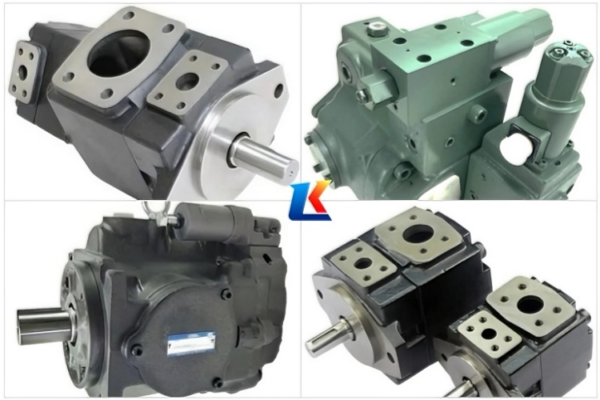
Variable Volume Vane Pumps (VPVQ, VPVQQ Series) by YUKEN
The VPVQ and VPVQQ series are high-performance variable volume vane pumps produced by YUKEN (Japan), specifically designed for industrial hydraulic systems. Among them, the VPVQ is a single unit variable volume vane pump, and the VPVQQ is a dual unit variable volume vane pump. Both are renowned for high efficiency and energy saving, low noise, long service life and easy maintenance, and are widely used in various industrial equipment such as machine tools, injection molding machines, and hydraulic presses.
I. Product Overview
|
Series
|
Type
|
Core Positioning
|
Application Scenarios
|
|
VPVQ
|
Single Unit Variable Volume Vane Pump
|
Standard single pump with adjustable flow and pressure
|
Small and medium-sized hydraulic systems, single actuator control
|
|
VPVQQ
|
Dual Unit Variable Volume Vane Pump
|
Dual pump combination, capable of independent or synchronous control
|
Large and complex hydraulic systems, multi-actuator coordinated work
|
Both series adopt an advanced variable mechanism design, which can automatically adjust the displacement according to the system pressure demand, realizing on-demand oil supply and significantly reducing energy consumption and system heating.
II. Core Technical Features
1. High Efficiency and Energy Saving Design
-
High Volumetric Efficiency: Adopts precision-machined arc vanes and high-order non-impact transition curves of the stator to reduce flow loss and pressure pulsation.
-
Automatic Flow Compensation: The variable mechanism adjusts the displacement in real time according to the load pressure, avoiding energy waste caused by overflow of excess flow.
-
Low Friction Design: Hydraulically balanced vane structure reduces friction loss between vanes, stator and rotor.
2. Low Noise Operation
-
The stator adopts high-order non-impact transition curves, making the vane movement more stable and reducing noise and vibration.
-
Optimized oil suction and discharge channel design reduces fluid impact and cavitation.
-
The noise level is 3-5dB lower than that of traditional vane pumps, suitable for noise-sensitive environments.
3. Long Service Life and High Reliability
-
Cartridge-type Core Structure: The main internal parts are made into independent components, which can be quickly replaced on site, shortening downtime.
-
Wear-resistant Materials: Vanes are made of special wear-resistant alloy, and the stator is made of high-hardness heat-treated materials to improve service life.
-
Hydraulic Balance Design: The shaft and bearings adopt hydraulic unloading to reduce bearing load and extend bearing life.
-
Wide Viscosity Adaptation Range: It can work stably within the viscosity range of 10-400cSt, adapting to different working conditions.
4. Easy Maintenance
-
Replaceable Core Kit: Wear parts can be replaced without disassembling the pump body, with low maintenance cost.
-
Standardized Interface: The installation dimensions comply with international standards, facilitating system integration and replacement.
-
Convenient Condition Monitoring: The operation status of the pump can be monitored in real time through pressure and flow sensors.
III. Key Technical Parameters
|
Parameters
|
VPVQ Series
|
VPVQQ Series
|
|
Maximum Working Pressure
|
21MPa (3000PSI)
|
21MPa (3000PSI)
|
|
Displacement Range
|
5-237mL/r
|
47-260mL/r (Dual Pump Combination)
|
|
Speed Range
|
800-1800rpm
|
800-1800rpm
|
|
Control Method
|
Pressure Compensation Control (DR), Remote Pressure Control (LR), Dual Pressure Control, etc.
|
Dual pump independent control, each can be configured with different control methods
|
|
Installation Method
|
Flange Mounting, Direct Motor Mounting
|
Flange Mounting
|
|
Rotation Direction
|
Clockwise (Standard), Counterclockwise (Optional)
|
Clockwise (Standard), Counterclockwise (Optional)
|
|
Oil Temperature Range
|
-10°C to +80°C
|
-10°C to +80°C
|
IV. Model Explanation
Take VPVQ-PSSF-06DR-60 as an example:
|
Code Segment
|
Meaning
|
|
VPVQ
|
Single Unit Variable Volume Vane Pump Series
|
|
PSSF
|
Control Method and Installation Form: P – Pressure Compensation, SS – Standard Control, F – Flange Mounting
|
|
06
|
Displacement Specification: 06 corresponds to approximately 28mL/r
|
|
DR
|
Control Type: Pressure Compensation Control
|
|
60
|
Standard Model Suffix
|
Example of VPVQQ series model: VPVQQ-PSAO-06C-PSAO-06CA-60, which includes two independent pump units (06C and 06CA), each can be configured with different control methods.
V. Application Fields
-
Machine Tool Industry: CNC machine tools, machining centers, grinders, milling machines, etc., providing stable feed and spindle control.
-
Plastic Machinery: Injection molding machines, blow molding machines, extruders, etc., used for mold clamping, injection, ejection and other action control.
-
Hydraulic Presses: Four-column hydraulic presses, bending machines, punch presses, etc., providing high-pressure and large-flow power.
-
Construction Machinery: Small loaders, forklifts, cranes, etc., used for working device and travel system control.
-
Automation Equipment: Production line automation, robots, testing equipment, etc., providing precise hydraulic control.
VI. Selection Points
-
Pressure Matching: Select according to the maximum working pressure of the system to ensure it does not exceed the rated pressure of the pump.
-
Flow Calculation: Calculate the required flow according to the speed and cylinder diameter of the actuator, and select the appropriate displacement specification.
-
Control Method: Select Pressure Compensation (DR), Remote Control (LR) or Dual Pressure Control according to system requirements.
-
Installation Form: Select flange mounting or direct motor mounting according to the equipment space and layout.
-
Oil Requirements: Use hydraulic oil with a cleanliness level of NAS 7 or higher, and the viscosity should be controlled between 10-400cSt.
VII. Maintenance
-
Regular Inspection: Check the oil cleanliness, oil temperature, noise and leakage every 500 hours.
-
Filter Replacement: Replace the suction filter and return filter every 1000 hours.
-
Oil Replacement: Replace the hydraulic oil every 2000 hours or 6 months.
-
Core Maintenance: Check the wear condition of the core every 5000 hours, and replace the core kit if necessary.
-
Notes: Ensure the pump is filled with oil before starting to avoid dry operation; avoid working under conditions exceeding the rated pressure for a long time.
With their excellent performance and reliability, the VPVQ and VPVQQ series variable volume vane pumps have become the ideal choice for industrial hydraulic systems. For more detailed technical parameters and selection guidelines, please refer to the official YUKEN product catalog or contact an authorized distributor for professional support.